
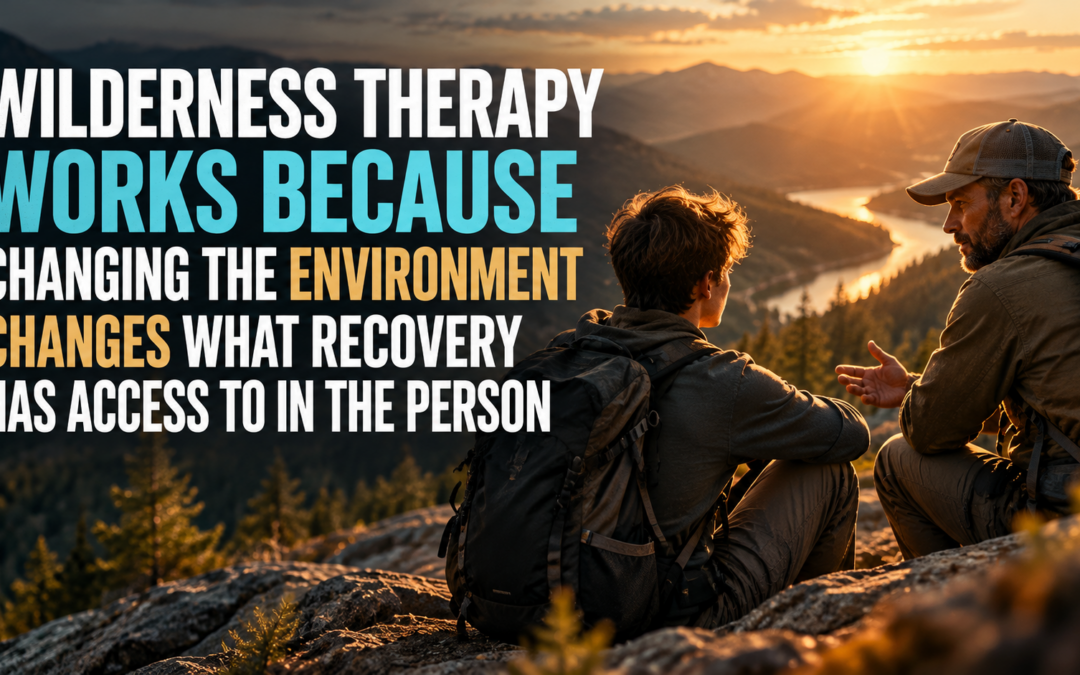
Wilderness therapy is a form of treatment that moves healing outdoors, and for many people that change of setting opens doors that years of office visits never quite reached. If you or someone you love has sat through counseling sessions feeling guarded, numb or stuck, that experience is more common than you might think. It does not mean you are resistant to help.
Sometimes the room itself becomes part of the problem. Familiar walls, familiar routines and familiar stress can keep old defenses firmly in place, even when a person truly wants to change.
A new environment can loosen that grip. Fresh air, physical challenge and distance from daily triggers often give people space to feel, reflect and connect in ways that once felt out of reach.
Families often notice this shift first, when a loved one who rarely opens up begins to talk on a trail or around a campfire. Recovery is possible, and sometimes it starts with a different view.
What Is Wilderness Therapy?
Wilderness therapy is a structured, clinically guided approach that uses outdoor settings, group living and hands-on challenges to support mental health and substance use recovery. Trained therapists lead the experience, so it blends evidence-based counseling with time in nature.
Programs may include hiking, camping, team problem-solving and quiet reflection. Each activity serves a clinical purpose, from building coping skills to practicing honest communication.
Who Does Wilderness Therapy Help?
Wilderness therapy often helps adolescents, young adults and adults who have struggled to engage in traditional talk therapy. It can support people living with anxiety, depression, trauma or a substance use disorder.
It may also fit people who feel disconnected from their emotions or their families. Not everyone needs this approach, and a thorough assessment helps decide whether it fits.
How Is It Different From a Camping Trip?
Wilderness therapy differs from a camping trip because licensed clinicians design every part of it around treatment goals. Recreation can feel good, but it does not include assessment, therapy sessions or a plan for what comes next.
Think of the outdoors as the setting, not the treatment itself. The healing comes from skilled guidance paired with that setting.
How Does Changing the Environment Change What Recovery Can Reach?
Changing the environment changes what recovery can reach because it removes everyday triggers and lowers emotional defenses, giving a person access to feelings and strengths that daily life keeps buried. In a new setting, old patterns lose some of their automatic pull.
At home, a phone buzzes, a stressful text arrives or a familiar route passes a place tied to past use. Those cues keep the mind on alert. Outdoors, many of them simply disappear.
Why Does Distance From Triggers Matter?
Distance from triggers matters because cravings and stress responses are often linked to specific people, places and routines. When those cues fade into the background, the brain has more room to focus on healing.
This distance is temporary by design. The goal is to build skills in a calmer space, then carry them back into daily life.
How Does Nature Help People Open Up?
Nature helps people open up by easing the pressure that face-to-face conversations can create. Walking side by side on a trail often feels less intense than sitting across from someone in an office.
Many people find it easier to share hard memories while their hands and feet are busy. Quiet moments outdoors also make room for reflection that a packed schedule rarely allows.
Why Do Physical Challenges Build Confidence?
Physical challenges build confidence because completing a hard hike or setting up camp offers real proof that a person can do difficult things. That proof can be powerful for someone who feels defined by past setbacks.
In wilderness therapy, these moments also reveal how a person handles frustration, fear and teamwork. A therapist can then turn a tough climb into a lesson about coping.
What Happens During Wilderness Therapy?
During wilderness therapy, participants follow a daily rhythm of outdoor activity, group sessions, individual counseling and personal reflection, all guided by trained staff. The structure keeps the experience safe and focused while leaving room for growth.
Days might begin with shared chores, move into a group challenge and end with a talk around the campfire. Journaling and quiet time help people notice what they are learning.
Which Therapies Are Part of the Experience?
Wilderness therapy often weaves in proven approaches such as cognitive behavioral therapy (CBT), a practical method that helps you notice and shift unhelpful thoughts. Some programs also use skills from dialectical behavior therapy (DBT), which focuses on managing intense emotions.
Group work builds trust and honest communication. Many programs also include family sessions, since lasting change tends to hold better when loved ones grow too.
How Do Programs Keep People Safe?
Quality programs keep people safe through trained field staff, medical screening, clear safety plans and steady communication with families. Before anyone begins, a care team should review physical health, mental health and any risk of withdrawal.
Ask any program about staff credentials, licensing and how it handles emergencies. Clear answers are a sign of reliable care.
How Does Wilderness Therapy Support Dual Diagnosis Care?
Wilderness therapy can support dual diagnosis care by addressing both the emotional pain and the substance use patterns that often feed each other. A dual diagnosis, also called a co-occurring disorder, means a person is living with a mental health condition and a substance use disorder at the same time.
Many people use alcohol or drugs to quiet anxiety, depression or memories of trauma. Without treatment for both, one condition can keep pulling a person back toward the other. Wilderness therapy can help people see those links more clearly.
Why Does Integrated Care Still Matter?
Integrated care still matters because wilderness therapy works best as one part of a coordinated plan, not a replacement for medical and psychiatric support. Medication management, psychiatric follow-up and ongoing therapy keep both conditions in view.
At Evolve Indy, care brings therapists and medical staff together around one shared plan that treats mental health and substance use side by side. Your history and goals shape every step.
Where Does Wilderness Therapy Fit Within the Levels of Care?
Wilderness therapy fits alongside a broader continuum of care that often includes detox, residential treatment, a Partial Hospitalization Program (PHP) and an Intensive Outpatient Program (IOP). The right path depends on each person’s needs, safety and home environment.
Some people need medically supervised detox first, especially after heavy alcohol, opioid or benzodiazepine use. Experiential work tends to land best once the body is stable.
What Do the Other Levels of Care Offer?
Each level of care offers a different amount of structure and support:
- Residential treatment: You live at a facility full-time with around-the-clock clinical and medical care.
- PHP: You receive several hours of treatment most weekdays and return home each evening.
- IOP: You attend structured therapy a few days a week while keeping up with work, school or family.
What Happens After Wilderness Therapy Ends?
After wilderness therapy ends, most people step into ongoing care such as residential treatment, PHP, IOP or outpatient therapy. This transition protects progress, because the real test comes when a person returns to familiar surroundings.
A strong aftercare plan helps turn lessons from the trail into habits at home. Stepping up or down between levels is a normal part of recovery.
How Do You Know Wilderness Therapy Might Be Right for You?
Wilderness therapy may be right for you or a loved one when traditional settings have not helped someone open up or build lasting momentum. You do not need to reach a crisis point to explore new options.
Consider these points as you think about your next step:
- This approach may help when talk therapy in an office has felt guarded or stuck.
- Experiential care makes sense when someone responds better to action than to conversation.
- Wilderness therapy is worth discussing when distance from daily triggers could give recovery room to start.
- Integrated care is important when anxiety, depression or trauma seem tied to substance use.
- Medical detox should come first when stopping a substance brings shaking, sweating or other withdrawal symptoms.
- Immediate help is necessary when someone has thoughts of self-harm, and you can call or text 988 at any time.
The right program will explain its clinical approach clearly and welcome your questions. That first conversation should leave you feeling informed, not pressured.
Common Questions Before Starting Treatment
Is wilderness therapy safe?
Wilderness therapy can be safe when it is run by licensed clinicians and trained field staff with clear medical and emergency plans. Ask about credentials, staff ratios and how health concerns are handled. A trustworthy program will answer openly.
Do I need to be in great physical shape?
No, most programs adjust activities to each person’s health and fitness. A medical screening before starting helps the team plan safely. The goal is growth, not athletic performance.
Can families be involved?
Yes, many programs include family therapy, regular updates or education. Family involvement helps loved ones understand recovery and prepare for the return home.
Does insurance cover wilderness therapy?
Coverage for wilderness therapy varies widely by plan and program. An admissions team can help you verify benefits and compare options before you commit.
A New Setting Can Open a New Path
Wilderness therapy works because changing the environment changes what recovery has access to in the person. When distractions fall away and new challenges appear, many people reconnect with emotions, strengths and hope they thought were gone.
No single approach fits everyone, and healing rarely follows a straight line. With the right blend of clinical care and support, meaningful change is possible.
If you or someone you love is exploring treatment, the caring team at Evolve Indy is here to help. Reach out today to ask questions, verify your insurance or talk through which level of care fits your needs. You do not have to find the path alone.