
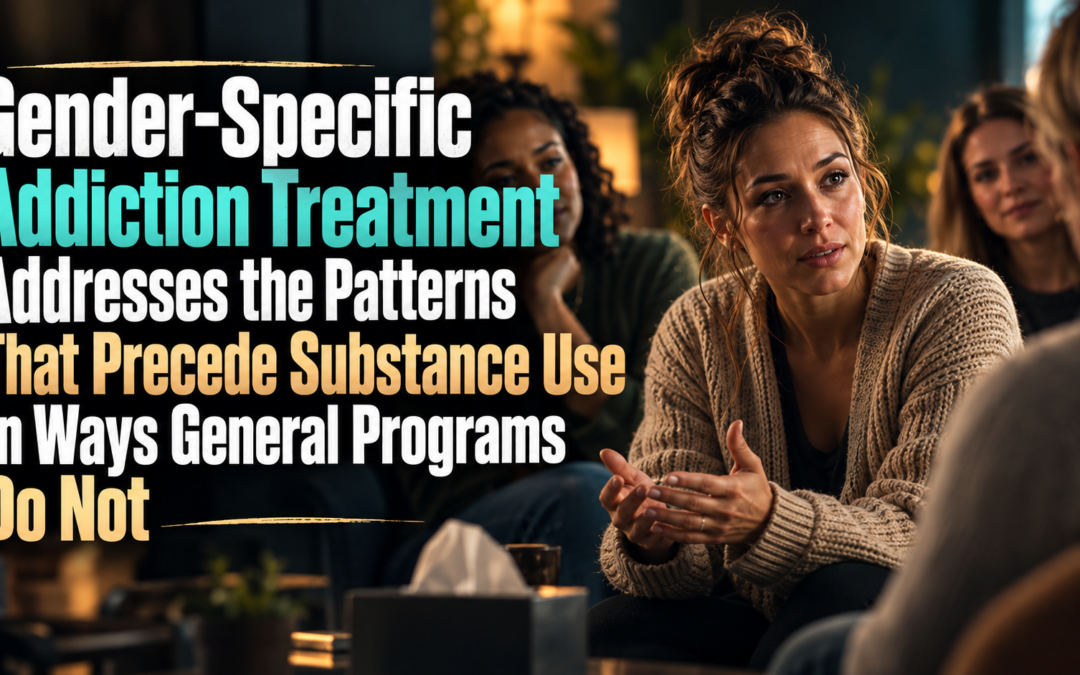
Gender-Specific Addiction Treatment gives people a place to heal alongside others who share similar life experiences, pressures and patterns that often began long before the first drink or pill. If you have ever sat in a mixed group and held back the most important part of your story, you are not alone. Many people find it hard to talk about abuse, parenting fears, body image or the pressure to appear strong when the room does not feel safe.
That hesitation is not a weakness. It is a natural response to experiences that often carry deep shame and are closely tied to gender.
When those patterns stay unspoken, treatment can only reach the surface. Care built around how gender shapes stress, trauma and relationships can help you say what has gone unsaid. For many individuals in recovery, that is where real healing begins.
What Is Gender-Specific Addiction Treatment?
Gender-Specific Addiction Treatment is care in which people of the same gender attend therapy, groups and programming together, with clinical content shaped around the experiences that commonly affect them. It still includes the evidence-based therapies found in any quality program. The difference lies in who is in the room and which topics receive focus.
Programs often offer separate men’s and women’s groups, and some also provide affirming spaces for transgender and nonbinary individuals. The goal is not separation for its own sake. It is creating a setting where honesty feels possible.
Who Does Gender-Specific Addiction Treatment Help?
Gender-Specific Addiction Treatment helps adults whose substance use is tied to experiences they find hard to discuss in mixed company. This often includes survivors of sexual or domestic violence, parents worried about their families and people who feel pressure to hide emotional pain.
It also helps people who become distracted by relationships or attraction in mixed settings. Removing that dynamic lets more energy go toward healing.
Why Do General Programs Miss the Patterns That Precede Substance Use?
General programs often miss these patterns because they focus on the substance itself, while the reasons for using frequently differ by gender. A one-size-fits-all approach can treat the drinking or drug use and leave the root untouched.
Research shows that gender can shape why people start using, how quickly use progresses and what triggers a return to use. Gender-Specific Addiction Treatment is built to address those differences directly.
How Does Trauma Show Up Differently?
Trauma often shows up differently because women are more likely to experience sexual assault and intimate partner violence, while men are more likely to face physical assault, combat or serious accidents. Any of these experiences can lead to post-traumatic stress disorder (PTSD) and to substance use as a way to cope.
Many survivors will not discuss abuse when someone of the gender that harmed them is present. Gender-Specific Addiction Treatment gives that story a safer place to be told.
What Role Do Shame and Social Expectations Play?
Shame and social expectations play a large role because each gender often receives different messages about struggle. Women may feel judged as mothers or partners, while men are often taught to hide fear and sadness behind toughness.
Those messages can delay help for years. A man may drink rather than admit depression, and a woman may hide pill use to protect her family’s image.
How Do Relationships and Body Image Factor In?
Relationships and body image often shape substance use in ways tied to gender. Some women begin using alongside a partner, and some people of any gender use stimulants to control weight or appetite.
Men may use substances to fit in with work or social circles that reward heavy drinking. Gender-Specific Addiction Treatment explores these patterns openly so they do not quietly pull you back.
Do Hormones and Biology Matter?
Yes, biology matters because hormones and body chemistry affect how substances are processed and how cravings feel. Research suggests women often move from first use to dependence more quickly than men, a pattern sometimes called telescoping.
Hormonal shifts during the menstrual cycle, pregnancy or menopause can also influence mood and cravings. Medical teams providing Gender-Specific Addiction Treatment can plan care with these factors in mind.
What Therapies Are Used in Gender-Specific Addiction Treatment?
Gender-Specific Addiction Treatment uses the same evidence-based therapies found in strong general programs, delivered with a gender-informed focus. Cognitive behavioral therapy (CBT), a practical approach that helps you notice and shift unhelpful thoughts, is widely used to address triggers and harsh self-talk.
Trauma-focused therapies such as eye movement desensitization and reprocessing (EMDR) help the brain process painful memories. Dialectical behavior therapy (DBT) builds skills for handling intense emotions and relationship stress.
Groups may explore parenting, healthy boundaries, anger, grief or identity. Family therapy helps loved ones understand recovery and rebuild trust.
How Does Dual Diagnosis Care Fit In?
Dual diagnosis care fits in by treating mental health conditions and substance use together in one plan. A dual diagnosis, also called a co-occurring disorder, means living with both at the same time.
Depression, anxiety and PTSD often sit beneath substance use. At Evolve Indy, integrated care brings therapists and medical staff into one coordinated plan built around your history and goals.
Which Levels of Care Offer Gender-Specific Addiction Treatment?
Gender-Specific Addiction Treatment can be part of residential care, a Partial Hospitalization Program (PHP) or an Intensive Outpatient Program (IOP). Many people move between levels as they heal.
- Residential treatment: You live at a facility full-time with around-the-clock support, which removes daily triggers.
- PHP: You receive several hours of treatment most weekdays and return home each evening.
- IOP: You attend structured therapy a few days a week while you keep working or caring for family.
Stepping up or down is a normal part of recovery. It simply means your care is responding to what you need right now.
Is Gender-Specific Addiction Treatment Better Than a Mixed Program?
Gender-Specific Addiction Treatment is not the right fit for everyone, but it often helps people whose trauma, shame or relationship patterns are tied to gender. Mixed programs can work well for people who feel comfortable sharing openly in any group.
The best choice depends on your history and your comfort. A thorough assessment can help you decide with confidence.
How Do You Know Gender-Specific Addiction Treatment Is Right for You?
Gender-Specific Addiction Treatment may be right for you when parts of your story feel too painful or personal to share in a mixed group. You do not need to reach a crisis point to deserve care.
Consider these points as you think about your next step:
- This approach makes sense when you have experienced sexual or domestic violence and feel unsafe discussing it around certain people.
- A gender-specific group helps when past treatment felt distracting because of relationships or attraction.
- Focused support matters when shame about parenting, work or appearing strong keeps you silent.
- Integrated care is worthwhile when depression, anxiety or trauma seem tied to your substance use.
- Medical guidance is important when pregnancy, menopause or other hormonal changes affect your health or cravings.
When you contact a program, ask how its groups are structured and how it supports people of every gender identity. If you are in crisis, call or text 988 to reach the Suicide and Crisis Lifeline at any time.
Common Questions Before Starting Treatment
Will I still learn the same recovery skills?
Yes, you will learn the same core skills found in any quality program. Relapse prevention, coping strategies and emotional regulation remain central. The difference is that these skills are applied to the challenges you are most likely to face.
Is this kind of care inclusive of transgender and nonbinary people?
Many programs place people according to their gender identity and offer affirming support. Policies vary, so ask the admissions team directly how they honor your identity. You deserve care where you feel respected.
Can my family be involved?
Yes, family involvement is often a valuable part of treatment. Family therapy and education help loved ones understand recovery and offer steady support at home.
Does insurance cover gender-specific care?
Many insurance plans cover addiction treatment, including Gender-Specific Addiction Treatment, though benefits vary by plan. The admissions team at Evolve Indy can verify your coverage so you know what to expect up front.
Healing Begins Where Your Story Feels Safe to Tell
Gender-Specific Addiction Treatment addresses the patterns that precede substance use in ways general programs do not. When trauma, shame, relationships and biology are named and treated, recovery gains a steadier foundation.
Asking for help takes courage, and you do not have to carry this alone. Recovery is possible with the right support around you.
If you or someone you love is ready to explore options, the compassionate team at Evolve Indy is here to help. Reach out today to ask questions, verify your insurance or take the first step toward care that honors your whole story.