
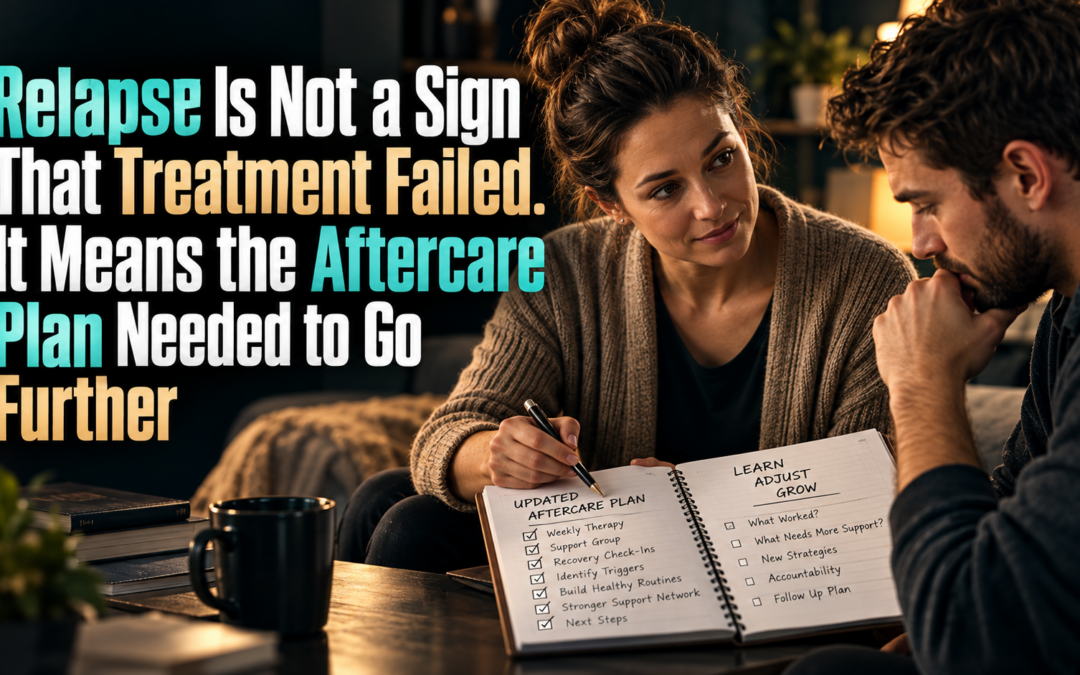
A relapse can feel like the floor dropping out from under you, especially after weeks or months of hard work in treatment. If you or someone you love has returned to drinking or drug use, you may be asking whether any of that effort mattered.
Many people feel shame, anger or deep discouragement in this moment. Families often wonder what they missed. The person in recovery may quietly decide they are simply not able to get better.
That conclusion is understandable, but it is not accurate. A return to use usually points to a gap in support after treatment ended, not a failure of the person or the progress they made. The skills you built are still there, and so is the path forward.
Recovery from a substance use disorder is rarely a straight line. What happens next can be shaped by honest reflection, steady support and a plan that reaches further than the last one.
What Is Relapse, Clinically Speaking?
Relapse is a return to substance use after a period of abstinence or reduced use, and clinicians view it as a common part of managing a chronic condition. It signals that the current level of support needs adjusting.
The National Institute on Drug Abuse (NIDA) estimates that 40 to 60 percent of people treated for a substance use disorder experience relapse. NIDA notes that this rate is similar to rates for other chronic illnesses, such as high blood pressure and asthma.
No one tells a person with asthma that their inhaler failed when symptoms flare. Their care is simply adjusted, and addiction deserves the same response.
How Is a Lapse Different From a Relapse?
A lapse is a brief, one-time return to use, while a relapse usually means falling back into a pattern of regular use. Both deserve attention. A lapse caught early can be a chance to strengthen your plan before old habits fully return.
Many clinicians also describe relapse as a process that starts before the first drink or pill. Emotional strain, skipped meetings, poor sleep and thoughts of “just once” can build quietly for weeks.
Does Relapse Mean Treatment Didn’t Work?
No, relapse does not erase what treatment accomplished. The coping skills, insight and relationships you built remain available, even if they felt out of reach during a hard moment.
Think of treatment as pouring a foundation. A return to use shows where the structure above it needed more support, not that the foundation was never there.
Why Do Gaps in Aftercare Lead to Relapse?
Gaps in aftercare lead to relapse because support often drops sharply right when a person faces old triggers again. Inside a program, counselors, peers and daily structure are close at hand. After discharge, much of that disappears overnight.
Aftercare is the ongoing plan of therapy, peer support, medical care and step-down treatment that continues after formal treatment ends. When that plan is thin or vague, the person in recovery carries the heaviest weeks largely alone.
What Happens in the First Weeks After Discharge?
The first weeks after discharge bring a return to familiar places, relationships and stressors that may be tied to past use. A tense phone call, a payday or a drive past an old hangout can stir cravings that felt quiet in treatment.
Friends and family may assume the hardest part is over. Meanwhile, the person is still learning to manage difficult emotions without the routine that once held them steady.
Why Does Lower Tolerance Raise the Stakes?
Lower tolerance raises the stakes because the body quickly loses its ability to handle opioids after a period without them. If someone returns to an amount they once used, overdose risk climbs, especially with fentanyl common in the illegal drug supply.
Keeping naloxone, often sold as Narcan, at home is a practical and caring step. It can reverse an opioid overdose and is available without a prescription at most pharmacies.
What Does a Stronger Aftercare Plan Look Like?
A stronger aftercare plan is personal, layered and built before discharge, with clear steps for the moments when cravings or stress return. It treats recovery as ongoing care rather than a finish line.
An aftercare plan that goes further often includes:
- Step-down care that eases you from intensive treatment to lighter support over time.
- Regular therapy, such as cognitive behavioral therapy (CBT), a practical approach that helps you notice and shift unhelpful thoughts.
- A written relapse prevention plan that names personal triggers, early warning signs and specific people to call.
- Peer support through alumni groups, 12-step meetings or other recovery communities.
- Continued medication-assisted treatment (MAT) when it is part of your care, so prescriptions and follow-up visits continue without a gap.
- Family therapy that helps loved ones offer support without adding pressure.
At Evolve Indy, care follows a continuum, so support can increase or decrease as your needs change. You do not have to start over from scratch.
How Can You Use a Relapse to Strengthen the Plan?
You can use a relapse to strengthen the plan by looking honestly at the days and weeks before it. Maybe sleep slipped, a stressful event went unspoken or therapy tapered off too soon.
Those answers point directly to what the next plan needs. This reflection is about learning, not blame.
Which Levels of Care Help You Regain Stability?
Residential treatment, a Partial Hospitalization Program (PHP) and an Intensive Outpatient Program (IOP) can all help you regain stability after a return to use, depending on your safety, symptoms and home environment. Stepping up to more support is a sign of responsive care, not a step backward.
If physical dependence has returned, medically supervised detox may come first. It helps your body stabilize safely before deeper work begins.
What Is Residential Treatment?
Residential treatment means living at a facility full-time with around-the-clock clinical and medical support. It removes daily triggers and offers a safe place to reset when home stress or cravings feel overwhelming.
What Is a Partial Hospitalization Program?
A PHP provides several hours of structured treatment most weekdays while you return home each evening. It fits people who need daily support and have a stable, safe place to live.
What Is an Intensive Outpatient Program?
An IOP offers structured therapy a few days a week so you can keep working, studying or caring for family. It often works well when a return to use was brief and home feels supportive.
How Does Dual Diagnosis Affect Relapse Risk?
Dual diagnosis raises relapse risk when a mental health condition goes untreated alongside a substance use disorder. Clinicians also call this a co-occurring disorder, and anxiety, depression, trauma and bipolar disorder are common examples.
Many people first used substances to quiet emotional pain. If that pain resurfaces after treatment with nothing in place to meet it, the urge to use often returns with it.
Why Does Integrated Care Matter?
Integrated care matters because it treats mental health and substance use together in one coordinated plan. At Evolve Indy, therapists and medical staff work from a shared understanding of your history, so neither condition gets left behind.
For many people, identifying an untreated condition is the missing piece. It can explain past setbacks and make the next plan far more complete.
How Do You Know What Your Next Step Should Be?
Your next step should match how much support you need right now, and a thorough assessment can help clarify that. You do not need to wait for another crisis to reach out.
Consider these points as you think about what comes next:
- Reaching out makes sense when a single lapse has started turning into a regular pattern of use.
- A higher level of care is worth considering when your home has substances present or feels unsafe.
- Medical support is important when stopping again brings shaking, sweating, nausea or intense cravings.
- Integrated care matters when anxiety, depression or trauma symptoms grew stronger before you returned to use.
- A revised aftercare plan helps when your previous plan ended at discharge or felt too general.
- Immediate help is necessary when you have thoughts of harming yourself, and you can call or text 988 at any time.
The right program will talk about what happened without judgment. It will also explain its recommendation clearly and welcome your questions.
Common Questions After a Return to Use
Should I tell my care team about a relapse?
Yes, telling your care team is one of the most helpful steps you can take. They can adjust your plan, add support or recommend a different level of care. Honesty gives them what they need to help you.
Will I have to start treatment all over again?
Not necessarily. Your care team builds on what you already learned and focuses on the gaps that led to the return to use. Many people move into the level of care that fits their current needs rather than repeating the same program.
How can families respond after a relapse?
Families can respond by staying calm, expressing concern without blame and encouraging a call to a treatment provider. Family therapy can also help loved ones set healthy boundaries while staying connected.
Does insurance cover returning to treatment?
Many insurance plans cover addiction treatment at several levels of care, though benefits vary by plan. The admissions team at Evolve Indy can verify your coverage so you know what to expect up front.
A Setback Can Become the Start of a Stronger Plan
Relapse is not a sign that treatment failed. It means the aftercare plan needed to go further, with more support, clearer steps and care that reaches every part of your recovery.
The progress you made still counts. With honest reflection and the right level of care, you can build on it.
If you or someone you love is ready to talk, the compassionate team at Evolve Indy is here to help. Reach out today to ask questions, verify your insurance or create an aftercare plan built around your life. You do not have to begin again alone.