
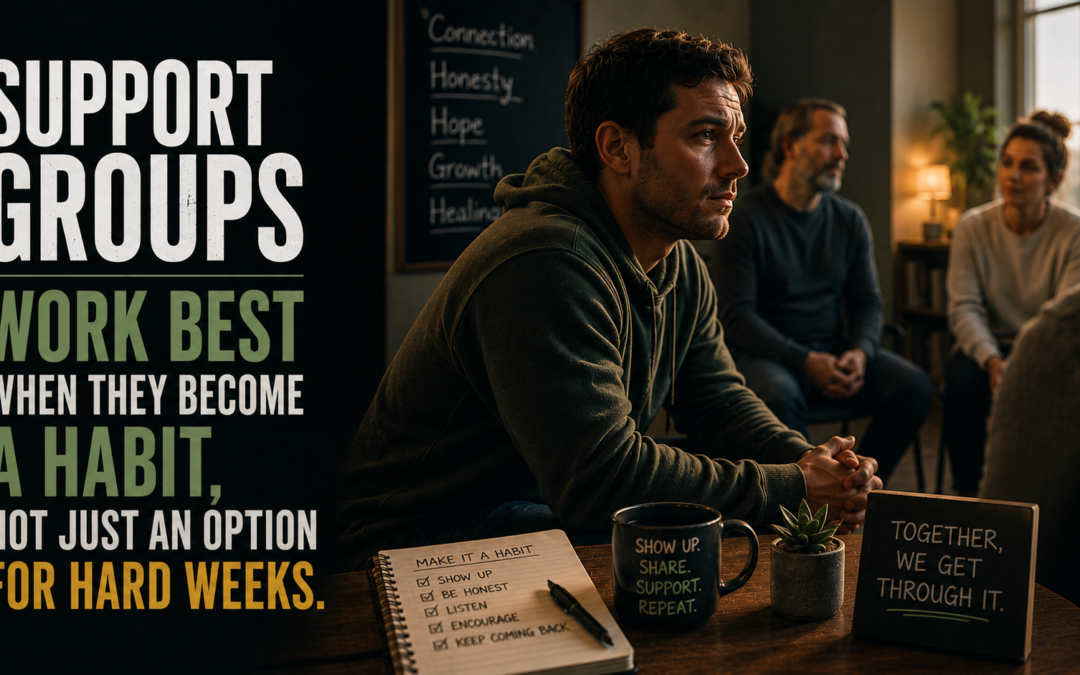
Support groups work best when they become a steady habit in your life, not a resource you reach for only when a hard week hits. If you have ever waited until things felt unbearable before reaching out, you already understand how quickly isolation can build when connection is treated as an emergency measure.
You are not alone in this, and there is no shame in the way you have coped so far. Many people in recovery lean on community only during a crisis, then quietly drift away once things feel calmer.
That pattern is understandable, and it deserves gentle honesty. The truth is that consistency changes what these groups can offer you. Let’s look at what that looks like and why it matters so much.
What Are Support Groups in Addiction and Mental Health Recovery?
Support groups are regular gatherings where people facing similar challenges share experiences, encouragement, and practical coping tools. They create a safe, welcoming space where you can speak honestly without fear of judgment.
These groups may focus on substance use recovery, mental health, or both together. Some are led by trained facilitators, while others are guided by peers who understand the journey firsthand.
Think of a support group as a room full of people who truly get it. You do not have to explain from scratch, because the others already understand the weight you carry.
Who Do Support Groups Help?
Support groups help anyone navigating recovery, grief, mental health struggles, or the strain of caring for a loved one. This includes people early in sobriety, those years into recovery, and family members affected by addiction.
They also welcome people who feel isolated, overwhelmed, or unsure where to turn. You do not need a specific diagnosis to benefit from shared connection.
If you have ever felt like no one around you understands, these groups may offer the belonging you have been missing.
What Can You Expect at Your First Meeting?
You can expect a welcoming, low-pressure environment where you are free to listen or share as much as you feel comfortable. No one will force you to speak before you are ready.
Most meetings open with a brief introduction, followed by members sharing experiences or reflections. Confidentiality is a core value, so what is said in the room stays in the room.
Your first meeting may feel unfamiliar, and that is completely normal. Many people feel nervous at first, then leave feeling lighter than they expected.
Why Do Support Groups Work Best as a Habit Instead of an Option for Hard Weeks?
Support groups work best as a habit because consistent connection builds the trust and stability that occasional attendance cannot. When you show up regularly, relationships deepen and your support system grows stronger over time.
Waiting for a crisis often means reaching out when you are already depleted. By then, you may feel too exhausted or ashamed to walk through the door.
Regular attendance changes that dynamic. It keeps you connected during the calm stretches, so support is already in place when the hard weeks arrive.
How Does Consistent Attendance Differ From Occasional Attendance?
Consistent attendance builds lasting relationships, while occasional attendance offers only brief, surface-level relief. Showing up week after week allows people to know your story and notice when you are struggling.
Occasional attendance can still help in a difficult moment. Yet it rarely creates the steady foundation that protects your recovery over the long term.
Consider two people in recovery. One attends every week and has a group that checks in during a rough patch. The other appears only in a crisis, facing near strangers who do not yet know their history.
Why Does Routine Strengthen Recovery?
Routine strengthens recovery because predictable structure reduces the uncertainty that often fuels relapse or emotional overwhelm. A regular meeting becomes an anchor in your week.
When support is built into your schedule, you do not have to decide whether you “need it enough” to go. The decision is already made, which removes a common barrier.
Over time, this rhythm becomes part of who you are. Showing up stops feeling like effort and starts feeling like home.
What Role Does Community Play in Long-Term Recovery?
Community plays a central role in long-term recovery because connection is one of the strongest protections against relapse and isolation. Healing rarely happens alone, and shared experience reminds you that you are not facing this by yourself.
Isolation tends to feed both addiction and mental health struggles. A caring community gently counters that pull by keeping you engaged and seen.
At its heart, community offers something simple and powerful: belonging. When you feel like you matter to others, staying committed to recovery becomes easier.
How Does Shared Experience Reduce Shame?
Shared experience reduces shame by showing you that your struggles are human and that others have walked a similar path. Hearing someone describe your exact feelings can bring immediate relief.
Shame thrives in secrecy and silence. Speaking openly in a supportive room helps loosen its grip.
Many people say their turning point came when they realized they were not broken or alone. That realization often begins inside a support group.
How Does Accountability Support Progress?
Accountability supports progress by giving you people who notice your presence, celebrate your wins, and gently check in when you slip away. This kind of care keeps you moving forward.
When others expect to see you, showing up feels more meaningful. You begin attending not out of pressure, but because these people genuinely matter to you.
Over time, that accountability becomes internal. You start honoring your commitments because your recovery truly matters to you.
What Are the Warning Signs That Someone Needs More Support?
The warning signs that someone needs more support include withdrawing from others, skipping routines, and returning to old coping patterns. These shifts often appear quietly before a larger crisis unfolds.
Watch for changes in mood, sleep, or energy that linger for more than a couple of weeks. Notice whether someone stops attending meetings or pulls away from people who care.
Some signs are easy to overlook. Canceling plans repeatedly, expressing hopelessness, or leaning on substances again can all point to a need for deeper care.
When Should You Seek More Than a Support Group?
You should seek more than a support group when symptoms interfere with daily life or when safety becomes a concern. Groups are a powerful tool, yet they are not a replacement for professional treatment.
If low mood, anxiety, or cravings feel unmanageable, a higher level of care may be needed. Combining group support with professional treatment often works better than either alone.
If you or someone you love ever has thoughts of self-harm, please treat that as an urgent reason to seek help right away. You deserve immediate care and compassion in those moments.
How Does Evolve Indy Integrate Group Support Into Care?
Evolve Indy integrates group support into care by weaving peer connection throughout every stage of treatment. Group therapy sits alongside individual counseling and medical support within one coordinated plan.
This approach treats you as a whole person, not a set of symptoms. Care begins with a thorough assessment, then a dedicated team builds a plan around your history, needs, and goals.
Group sessions give you a place to practice honesty, build relationships, and feel understood. These connections often become a foundation you carry well beyond treatment.
How Do Support Groups Fit Into Different Levels of Care?
Support groups fit into different levels of care by adapting to your needs as you progress. Because recovery rarely moves in a straight line, having flexible options keeps your care aligned with where you actually are.
In a partial hospitalization program, group sessions offer daily connection and structure. In an intensive outpatient program, they provide steady accountability while you keep up with work and family.
As you step down through levels of care, group support remains a constant. That continuity helps you stay connected long after the most intensive stage ends.
How Do You Know It Is Time to Make Support Groups a Habit?
You know it is time to make support groups a habit when you notice yourself reaching for connection only during hard weeks. Building consistency now can protect your recovery before the next difficult stretch arrives.
Consider these signs as you think about your next step:
- Making group attendance a habit makes sense when you tend to isolate during calm periods and struggle to reconnect later.
- Regular support helps when you want relationships that know your story rather than near strangers in a crisis.
- Consistency matters when your recovery feels steadier with structure and predictable routine.
- A committed group fits when you want accountability from people who celebrate your progress and notice your absence.
- Ongoing connection is worthwhile when you are ready to treat recovery as a lifelong practice rather than an occasional repair.
Trust the community that listens closely and treats you with respect. Choosing consistent support is a personal decision, and it should feel welcoming from your very first visit.
Common Questions About Support Groups
How often should I attend a support group?
Most people benefit from attending a support group weekly or on a regular, predictable schedule. Consistency helps relationships deepen and keeps support in place before hard weeks arrive. Your care team can help you find a rhythm that fits your life and recovery goals.
Can support groups replace professional treatment?
No, support groups work best alongside professional treatment rather than in place of it. Groups offer connection and shared understanding, while treatment provides clinical care tailored to your needs. Combining both often creates a stronger, more complete foundation for recovery.
What if I feel too anxious to speak in a group?
You never have to speak before you feel ready, and simply listening is always welcome. Many people spend their first few meetings quietly observing until they feel comfortable. Over time, sharing often becomes easier as trust and familiarity grow.
Are support groups confidential?
Yes, confidentiality is a core value of nearly every support group. What members share in the room is meant to stay there, which helps create a safe space for honesty. This trust is part of what makes these groups so meaningful.
Make Connection a Habit, Not a Last Resort
Support groups work best when they become a steady habit rather than an option you reach for only during hard weeks. Consistent connection builds the relationships, accountability, and belonging that help recovery hold through both calm stretches and difficult ones.
Recovery is possible, and you do not have to carry it alone. Showing up regularly is a quiet act of courage that strengthens your foundation over time.
If you or someone you love is ready to build lasting support, the compassionate team at Evolve Indy is here to help. Reach out today to ask questions, learn about your options, or take the next step toward a more connected, hopeful future. You do not have to begin this journey alone.