
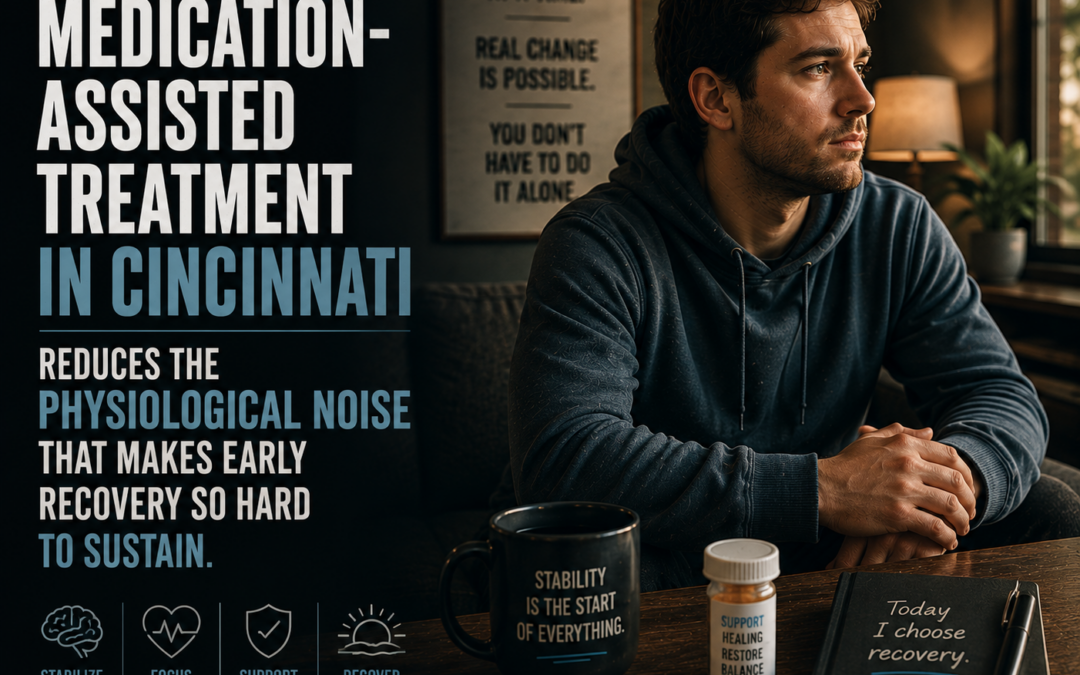
Medication-Assisted Treatment in Cincinnati eases the intense cravings and withdrawal symptoms that make the earliest days of recovery so hard to hold onto. If you or someone you love has tried to stop using substances only to feel overwhelmed by the body’s reaction, that struggle is real and it is not a sign of weakness.
Early recovery can feel like fighting your own body every hour of the day. Your mind wants to heal, yet the physical distress keeps pulling you back.
The good news is that you do not have to face that fight without support. With the right care, the body can steady itself so the deeper work of recovery becomes possible. Let’s look at what this approach involves and how it can help you or someone you care about find firmer ground.
What Is Medication-Assisted Treatment in Cincinnati?
Medication-Assisted Treatment in Cincinnati is a form of care that combines approved medications with counseling and behavioral therapy to treat substance use disorders. It addresses both the physical and emotional sides of recovery at the same time.
The medications help calm cravings and ease withdrawal, while therapy helps you build new coping skills. Neither piece works as well alone, which is why the two are used together.
Think of it as steadying the body so the mind can do the deeper work. When the physical noise quiets down, healing becomes far more possible.
Who Does Medication-Assisted Treatment Help?
Medication-Assisted Treatment helps people who struggle with opioid or alcohol use disorders and want support managing cravings and withdrawal. It often reaches those who have tried to quit before and found the physical symptoms too overwhelming to sustain.
This approach also supports people early in recovery who need stability before they can fully engage in therapy. It fits those who want a medical, evidence-based path forward.
You do not need to have tried and failed many times to qualify for this care. Wanting real support is reason enough.
What Substances Does It Address?
Medication-Assisted Treatment most commonly addresses opioid use disorder and alcohol use disorder. These conditions involve powerful physical dependence that can make stopping on your own especially difficult.
For opioid recovery, medications can reduce cravings and ease withdrawal without producing the same high. For alcohol recovery, certain medications can lower the urge to drink or discourage use.
Each medication serves a specific purpose. A care team helps match the right option to your needs and history.
How Does Medication-Assisted Treatment in Cincinnati Quiet the Physiological Noise of Early Recovery?
Medication-Assisted Treatment in Cincinnati quiets the physiological noise of early recovery by reducing the intense cravings and withdrawal symptoms that dominate the first weeks. When the body stops sounding constant alarms, your mind gains the space to focus on healing.
Early recovery often floods a person with physical distress, from nausea and pain to anxiety and sleeplessness. These symptoms can feel loud enough to drown out any other progress.
By easing that distress, the right medication lets you think clearly and engage in therapy. The goal is not to replace effort but to make effort possible.
Why Are Cravings and Withdrawal So Hard to Manage Alone?
Cravings and withdrawal are hard to manage alone because they stem from real changes in the brain and body caused by substance use. These are physical responses, not simply a matter of willpower. When substances leave the body, the nervous system can react strongly. This may bring pain, agitation and an overwhelming urge to use again just to feel normal. Understanding this helps remove shame from the struggle. You are not failing when your body reacts this way, and support can make a genuine difference. Medication-Assisted Treatment (MAT) is one such form of support, using clinically approved medications to help ease withdrawal symptoms and reduce cravings, making recovery more manageable.
Does the Medication Replace One Substance With Another?
No, Medication-Assisted Treatment does not simply swap one substance for another. The medications used are prescribed, monitored and given at controlled doses that stabilize the body rather than produce a high.
These medications are part of a supervised medical plan, not a source of intoxication. They help restore balance so you can function and heal.
This is a common and understandable concern. Recovery through this approach is grounded in evidence and guided by trained professionals.
What Medications Are Commonly Used?
The medications commonly used in this approach depend on the substance involved and your individual health history. Each one is prescribed and monitored by trained medical professionals as part of a broader plan.
For opioid use disorder, medications can reduce cravings and blunt withdrawal so the body can settle. For alcohol use disorder, other medications can lower the urge to drink or make drinking less appealing.
A care team reviews your history before recommending any option. The right choice is always personal, shaped around your needs and goals.
How Are the Right Medications Chosen?
The right medications are chosen through a thorough assessment of your health, substance use and recovery goals. This evaluation helps a care team understand what will genuinely support you.
The team considers the substance involved, how long you used it and any co-occurring conditions. They also factor in your overall health and personal preferences.
This careful approach protects your safety. Every recommendation connects back to your specific situation rather than a fixed formula.
Why Does Therapy Still Matter Alongside Medication?
Therapy still matters because medication eases the physical struggle, but lasting change grows from the work you do in counseling. The two support different parts of your recovery, and together they reach the whole person.
Cognitive behavioral therapy, a practical approach that helps you notice and shift unhelpful thoughts, teaches you to recognize the triggers that lead to substance use. Once you see those patterns clearly, you can learn to respond to them in healthier ways.
Group therapy adds connection and shared experience, which reduces isolation. Care is personalized at Evolve Indy®, so your history and goals shape the plan your team builds with you.
Can It Treat Mental Health Conditions Too?
Yes, this approach often works alongside care for mental health conditions. Many people turn to substances to cope with anxiety, depression or past trauma, and treating only one issue can leave the other unaddressed.
This overlap is known as a co-occurring disorder or dual diagnosis. It is more common than many people realize.
At Evolve Indy, integrated care addresses both together. Treating them at the same time gives you a more complete and lasting path toward feeling well.
Why Does Treating Both Conditions Matter?
Treating both conditions matters because each one can quietly worsen the other. Untreated anxiety or depression can raise the risk of returning to substances, while ongoing substance use can deepen those same symptoms.
When care addresses only the substance use, the emotional weight can pull you backward. When it addresses only the mental health condition, the recovery piece can feel unsupported.
Integrated care closes that gap. Treating both together gives your progress a steadier foundation.
HHow Does Medication-Assisted Treatment Fit Into the Levels of Care at Evolve Indy?
Medication-Assisted Treatment fits into a broader continuum of care that adjusts to your needs as you progress. Medication-Assisted Treatment helps stabilize the early stages, while other levels of care support long-term healing.
Because recovery is rarely a straight line, having options keeps your treatment aligned with where you actually are. Some people begin with more intensive Medication-Assisted Treatment support and step down over time.
This flexibility is a genuine strength. A clear continuum of care means your Medication-Assisted Treatment support can shift as your needs change.
What Is a Partial Hospitalization Program?
A Partial Hospitalization Program provides several hours of daily treatment while you return home each evening. It offers intensive support without requiring an overnight stay, and can be combined with Medication-Assisted Treatment for a well-rounded approach.
This level of care fits people whose needs are serious yet manageable outside a residential setting. It often serves as a bridge between full-time Medication-Assisted Treatment and lighter support.
The daily structure helps steady early recovery. You receive meaningful care while staying connected to home life.
What Is an Intensive Outpatient Program?
An Intensive Outpatient Program offers structured therapy several days a week while you continue living at home. It can incorporate Medication-Assisted Treatment while leaving room for work, school and family.
This level of care works well for people with a stable home environment and strong motivation. It also supports those stepping down from more intensive Medication-Assisted Treatment.
The flexibility helps you practice new skills in real life. You heal while staying connected to the routines that support you.
How Do You Know This Approach Might Be Right for You?
You know this approach might be right for you when cravings and withdrawal have made past attempts at recovery feel impossible to sustain. You do not need to reach a breaking point to deserve this support.
Consider these signs as you think about your next step:
- This approach makes sense when physical cravings have overpowered your efforts to stop before.
- Medical support helps when withdrawal symptoms feel too severe to face on your own.
- This care fits when you want an evidence-based plan guided by trained professionals.
- Integrated treatment matters when substance use overlaps with anxiety, depression or trauma.
- A structured plan is worthwhile when you feel ready to commit but need help steadying your body first.
Trust the program that listens closely and answers your questions honestly. Choosing care is a personal decision, and it should feel supportive from the very first conversation.
Common Questions Before Starting Treatment
Is Medication-Assisted Treatment safe?
Yes, Medication-Assisted Treatment is safe when prescribed and monitored by trained medical professionals. The medications are approved for treating substance use disorders and given at carefully managed doses. Your care team monitors your response and adjusts the plan as needed.
How long does treatment last?
The length varies based on your needs and progress. Some people benefit from short-term support, while others continue for a longer period to maintain stability. Your care team works with you to set a timeline built around your goals rather than a fixed rule.
Will I become dependent on the medication?
The medications used are designed to stabilize your body, not to create a high or worsen dependence. Any adjustments happen gradually and under medical supervision. The goal is always to support your health and recovery.
Do I still need therapy if I take medication?
Yes, therapy remains an essential part of this approach. Medication eases the physical struggle, but counseling helps you build the skills and understanding that support lasting change. The two work best together, which is why they are combined.
You Do Not Have to Fight Your Own Body Alone
Medication-Assisted Treatment in Cincinnati reduces the physiological noise that makes early recovery so hard to sustain, giving you the stability to focus on real, lasting healing. By easing cravings and withdrawal, it clears space for the deeper work of recovery.
Recovery is possible, and reaching out for help is a sign of strength rather than weakness. You do not have to navigate this journey alone, and you do not have to rely on willpower alone to carry you through.
If you or someone you love is ready to explore treatment options, the compassionate team at Evolve Indy is here to help. Reach out today to ask questions, learn about your options or take the next step toward a healthier, more hopeful future. You do not have to begin it alone.