
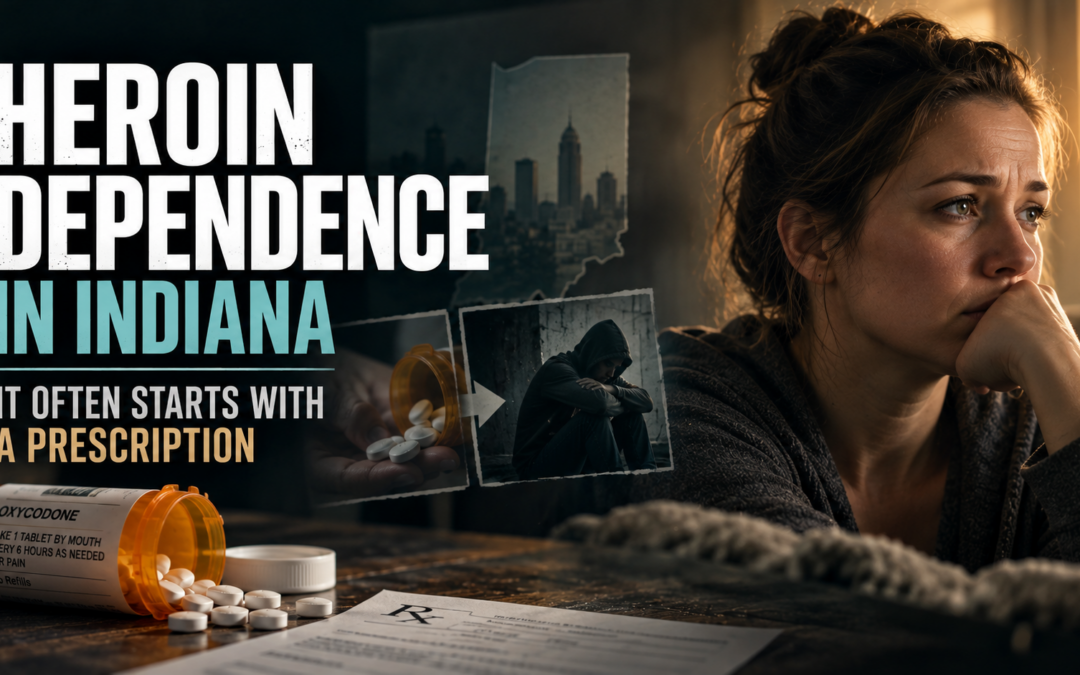
Heroin dependence in Indiana often begins not on a street corner but in a medicine cabinet, following a prescription that once seemed completely routine. If someone you love has reached this point, you may feel shocked, frightened or unsure how it ever happened.
You are not naive, and neither is the person you care about. This path is far more common than most people picture, and it rarely looks the way movies suggest.
Many people who struggle with heroin first took a legally prescribed opioid for real pain. Somewhere along the way, that use turned into dependence, then into something harder to control.
Understanding how this happens can replace blame with clarity. It can also help you see that recovery is possible, no matter how the path began.
How Does Prescription Opioid Use Turn Into Heroin Dependence in Indiana?
Prescription opioid use can turn into heroin dependence in Indiana when a person’s body becomes dependent on the medication and access to it ends. Heroin often becomes a cheaper, more available substitute once prescriptions run out.
Opioid medications and heroin affect the brain in very similar ways. Over time, the body adjusts and needs more of the substance to feel normal.
When a prescription stops, withdrawal can feel unbearable. Some people turn to heroin not to get high, but simply to avoid feeling sick.
Why Are Prescription Opioids So Easy to Depend On?
Prescription opioids are easy to depend on because they change brain chemistry, even when taken as directed. Regular use can create physical dependence within weeks for some people.
This dependence is not a moral failing. It reflects how these medications interact with the body’s pain and reward systems.
Many people are caught off guard by how quickly it happens. They followed the instructions and still ended up struggling.
What Makes the Shift to Heroin Feel Logical?
The shift to heroin can feel logical when a person is already dependent and their supply of pills disappears. Heroin is often less expensive and easier to find than prescription opioids.
For someone facing painful withdrawal, that choice can feel less like a decision and more like survival. The goal becomes avoiding sickness, not chasing pleasure.
Seeing this clearly helps remove judgment. It reveals a health crisis rather than a character flaw.
Who Does This Path Affect?
This path affects people of every age, income level and background, not a narrow or predictable group. It reaches teenagers, working parents, professionals, athletes and older adults recovering from surgery.
Many people who develop heroin dependence started with legitimate pain treatment. Their story often begins with an injury, a procedure or a chronic condition.
Because this path is so ordinary, it can touch almost any family. If it has touched yours, you are far from alone.
Can This Happen to Someone With No History of Substance Use?
Yes, this can happen to someone with no prior history of substance use. Physical dependence can develop from prescribed medication alone, without any earlier warning signs.
This is one reason the path surprises so many families. The person may have never used any substance recreationally before.
Recognizing this can ease guilt and confusion. It shifts the question from “how could they” to “how do we help.”
What Are the Warning Signs Worth Watching For?
The warning signs of opioid or heroin dependence include changes in mood, behavior, sleep and physical health. When these signs appear together over time, they deserve attention and care.
Watch for a growing focus on obtaining or using medication. Notice whether someone runs out of prescriptions early or visits multiple doctors.
Some signs are physical. Drowsiness, small pupils, weight changes and flu-like symptoms can all point to a deeper struggle.
What Emotional or Behavioral Changes Might You Notice?
You might notice withdrawal from loved ones, secrecy, irritability or a loss of interest in daily life. These shifts often build slowly, which can make them easy to overlook.
Financial trouble or missing belongings can also appear. These changes frequently reflect the growing cost of dependence.
If your instincts tell you something is wrong, trust them. Early support can make a meaningful difference.
How Do Mental Health Conditions Connect to Heroin Dependence in Indiana?
Mental health conditions connect to heroin dependence in Indiana because emotional pain and substance use often feed each other. Many people use opioids to quiet anxiety, depression or the weight of past trauma.
This overlap is known as a co-occurring disorder or dual diagnosis. It is far more common than many people realize.
Treating only the substance use can leave the deeper pain untouched. Integrated care that addresses both offers a more complete path toward healing.
Why Does Treating Both Conditions Matter?
Treating both conditions matters because each one can quietly worsen the other. Untreated depression or anxiety can raise the risk of returning to substances.
When care addresses only the heroin use, the emotional weight can pull a person backward. When it addresses only the mental health side, the recovery piece can feel unsupported.
At Evolve Indy, integrated care treats both together. This whole-person approach gives recovery a steadier foundation.
What Levels of Care Support Recovery From Heroin Dependence in Indiana?
Several levels of care support recovery from heroin dependence in Indiana, and the right one depends on your needs and circumstances. Because recovery rarely moves in a straight line, having options keeps care aligned with where you actually are.
Some people begin with more intensive support and step down over time. Others move between levels as their situation changes.
This flexibility is a genuine strength. A clear continuum of care means you are never locked into a single setting that no longer fits.
What Role Does Medication-Assisted Treatment Play?
Medication-Assisted Treatment plays an important role by easing cravings and withdrawal so the body can stabilize. It combines approved medications with counseling and therapy.
For opioid recovery, these medications reduce withdrawal without producing the same high. This helps quiet the physical distress that makes early recovery so hard.
The medication is prescribed and monitored by trained professionals. It becomes one part of a broader plan, not a standalone fix.
What Is Residential Treatment?
Residential treatment is a level of care where you live at a facility full-time while receiving structured therapy and daily support. It removes everyday triggers so you can focus fully on healing.
This setting suits people who need distance from a difficult environment or benefit from around-the-clock support. The steady routine often brings a welcome sense of calm.
For many, this becomes a strong starting point. It builds a foundation before transitioning to less intensive care.
What Is a Partial Hospitalization Program?
A Partial Hospitalization Program provides several hours of daily treatment while you return home each evening. It offers intensive support without requiring an overnight stay.
This level of care fits people whose needs are serious yet manageable outside a residential setting. It often serves as a bridge between full-time care and lighter support.
What Is an Intensive Outpatient Program?
An Intensive Outpatient Program offers structured therapy several days a week while you continue living at home. It provides real accountability while leaving room for work, school and family.
This level of care works well for people with a stable home environment and strong motivation. It also supports those stepping down from more intensive treatment.
How Do You Know It Is Time to Seek Help?
You know it is time to seek help when opioid or heroin use starts to interfere with health, relationships or daily life. You do not need to reach a crisis point to deserve support.
Consider these signs as you think about your next step:
- Reaching out makes sense when prescription use has grown into something that feels out of control.
- Medical support helps when withdrawal symptoms make stopping feel impossible on your own.
- Care matters when you notice a loved one running out of medication early or hiding their use.
- Integrated treatment is worthwhile when substance use overlaps with anxiety, depression or trauma.
- Professional help is appropriate when past attempts to quit have not lasted.
Trust the program that listens closely and answers your questions honestly. Choosing care is a personal decision, and it should feel supportive from the very first conversation.
Common Questions Before Starting Treatment
Does starting with a prescription mean recovery is different?
No, recovery works whether dependence began with a prescription or another path. What matters most is meeting the person where they are. A thorough assessment helps a care team build a plan around the real story.
Is heroin withdrawal dangerous?
Heroin withdrawal is rarely life-threatening, but it can be intensely uncomfortable and hard to face alone. Medical support helps ease symptoms and lowers the risk of returning to use. Professional care makes this stage far more manageable.
Can heroin dependence really be treated successfully?
Yes, many people recover from heroin dependence with the right combination of care and support. Treatment that addresses both the physical and emotional sides offers the strongest foundation. Recovery is a journey, and lasting change is possible.
What if my loved one is not ready for help?
You can still reach out to learn about options and prepare for the moment they are ready. Many programs offer guidance to families navigating this exact situation. Your support and knowledge can make a real difference.
Recovery Is Possible, No Matter How the Path Began
Heroin dependence in Indiana often follows a quiet trail that begins with a prescription rather than a street-level choice, and understanding that truth can replace blame with compassion. What you or your loved one is facing is real, and it is treatable with the right care.
Recovery is possible, and reaching out for help is a sign of strength rather than weakness. You do not have to navigate this journey alone, and you do not have to carry the weight of it in silence.
If you or someone you love is ready to explore treatment options, the compassionate team at Evolve Indy is here to help. Reach out today to ask questions, learn about your options or take the next step toward a healthier, more hopeful future. You do not have to begin it alone.