
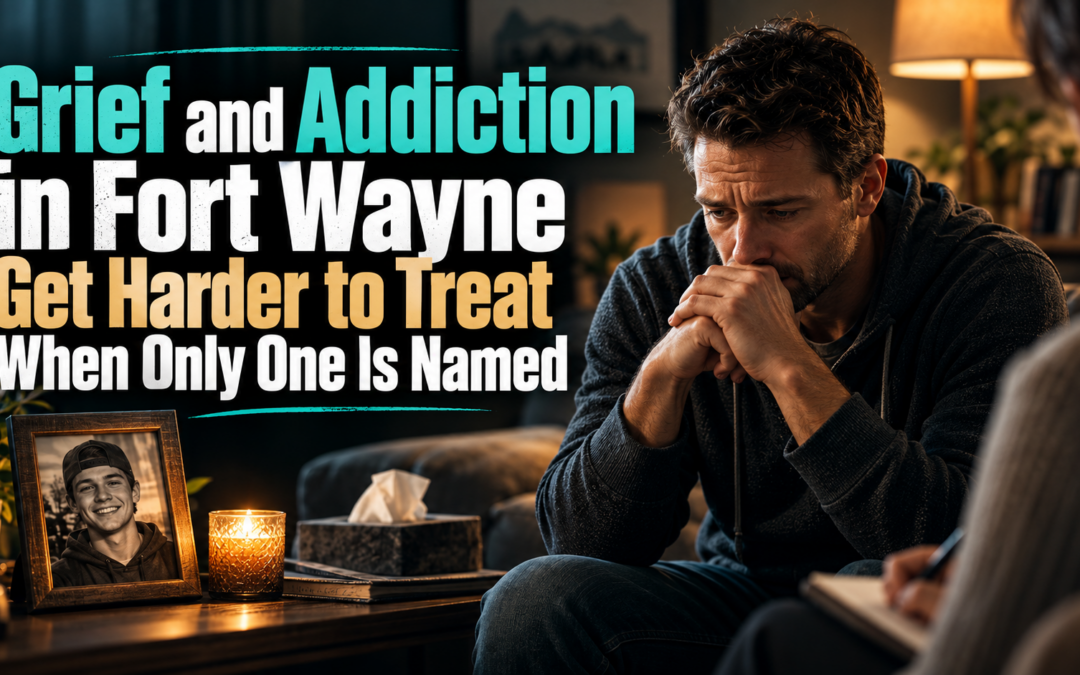
Grief and addiction in Fort Wayne often arrive together, yet many people only ever hear one of them named. Maybe a counselor focused on your drinking but never asked about the parent you lost two years ago. Maybe friends rallied around your loss while quietly worrying about how much you were using to get through each night.
If that sounds familiar, you are not doing anything wrong. Loss can make every day feel heavy, and reaching for something that dulls the ache is a deeply human response. Over time, though, that relief can turn into a pattern that adds new pain to the old.
When grief and addiction in Fort Wayne are treated as two separate problems, one usually gets left behind. Care can hold both at once, and naming both is often the moment healing starts to feel possible.
Why Do Grief and Addiction in Fort Wayne So Often Show Up Together?
Grief and addiction in Fort Wayne so often show up together because substances can seem to quiet pain that feels impossible to sit with. Alcohol may soften the loneliness of an empty house. Pills may make it easier to sleep through the hours when missing someone feels sharpest.
That relief is real in the moment, which is what makes it so hard to give up. Yet substances tend to delay grief rather than resolve it, so the pain waits underneath.
For many families, grief and addiction in Fort Wayne begin quietly, with one extra drink at night that slowly becomes routine. Because the change is gradual, it is easy to miss until it feels hard to stop.
How Can Grief Lead to Substance Use?
Grief can lead to substance use when a person has no safe outlet for sorrow, guilt or anger after a loss. The loss might be a death, a divorce, a miscarriage, a job or a sense of who you used to be.
Some grief also goes unrecognized by others, such as the loss of an ex-partner or a friend who died by overdose. Clinicians call this disenfranchised grief. When no one acknowledges the pain, people often find private ways to numb it.
How Can Addiction Create Its Own Grief?
Addiction can create its own grief by costing people relationships, health, trust and years they cannot get back. Many individuals in recovery mourn the person they were before substances took hold.
Families grieve too. Parents and partners often describe mourning someone who is still alive, a loss that can feel confusing and lonely.
Early sobriety can even bring grief for the substance itself. For a long time, it may have felt like a constant companion.
What Happens When Only One Is Named?
When only one condition is named, the unnamed one usually keeps pulling the person backward. This is why grief and addiction in Fort Wayne get harder to treat over time when care looks at just half the picture.
Each condition feeds the other. Unprocessed grief fuels cravings, and continued substance use keeps grief frozen in place.
What If Treatment Focuses Only on the Substance Use?
If treatment focuses only on the substance use, the grief underneath often resurfaces once the numbing stops. Early sobriety can feel like losing someone all over again, because muted feelings return at full strength.
Without tools to meet that wave, a return to use can feel like the only way through. That is not a personal failure. It is a sign the loss needed care too.
Programs that treat grief and addiction in Fort Wayne as one connected story can prepare you for that wave before it arrives.
What If Care Focuses Only on the Loss?
If care focuses only on the loss, ongoing substance use can quietly block the grieving process. Alcohol and drugs blunt emotions, which makes it hard to feel, process and move through sorrow.
A person might attend grief counseling every week and still feel stuck. The missing piece is often the substance use no one asked about.
What Does Integrated Treatment for Grief and Addiction in Fort Wayne Look Like?
Integrated treatment for grief and addiction in Fort Wayne addresses the loss and the substance use together in one coordinated plan. Instead of sending you between separate providers, a single care team works from a shared understanding of your story.
At Evolve Indy, care begins with a thorough assessment of your history, your losses and your substance use. Your goals and your pace shape the plan your team builds with you.
Which Therapies Help With Grief and Substance Use?
Several evidence-based therapies help people process loss while building healthier ways to cope. Cognitive behavioral therapy (CBT), a practical approach that helps you notice and shift unhelpful thoughts, can ease guilt and the “what if” thinking that often follows a death.
Grief-focused counseling gives the loss itself room to be spoken. Group therapy connects you with others who understand both the sorrow and the pull of substances, which can ease the isolation many people feel.
When Does Grief Need Specialized Attention?
Grief needs specialized attention when intense longing and pain stay just as strong a year or more after a loss and disrupt daily life. This pattern is now recognized as prolonged grief disorder, a condition that responds to targeted care.
Grief after a traumatic loss, such as an overdose death, can also overlap with post-traumatic stress. A care team can identify these patterns and treat them alongside recovery.
How Can Families Be Part of Healing?
Families can be part of healing through family therapy and education about how addiction and loss affect the whole household. Family sessions recognize that grief and addiction in Fort Wayne rarely affect just one person.
When loved ones understand what you are carrying, support at home becomes steadier. Healing tends to hold better when the people closest to you grow alongside you.
Which Levels of Care Can Support Grief and Addiction in Fort Wayne?
Residential treatment, partial hospitalization and intensive outpatient programs can all support grief and addiction in Fort Wayne, depending on your needs and home environment. Whatever the starting point, care for grief and addiction in Fort Wayne should be able to step up or down as your needs change.
- Residential treatment means living at a facility full-time with around-the-clock support, which helps when home holds painful reminders or daily triggers.
- A Partial Hospitalization Program (PHP) provides several hours of treatment most weekdays while you return home each evening.
- An Intensive Outpatient Program (IOP) offers structured therapy a few days a week so you can keep working and caring for family.
If physical dependence is present, medically supervised detox may come first. It helps your body stabilize safely so the deeper emotional work can begin.
Why Do Anniversaries Matter in Planning Care?
Anniversaries, birthdays and holidays matter because they often bring a sudden surge of grief and cravings. For grief and addiction in Fort Wayne, these dates often deserve their own plan.
Your team can help you prepare for the first holiday season or the anniversary of a death. Having support lined up ahead of time can make those days feel less overwhelming.
How Do You Know It Is Time to Seek Help for Grief and Addiction in Fort Wayne?
It is time to seek help when drinking or drug use has become your main way of getting through a loss. You do not need to wait for a crisis to deserve support.
Consider these signs as you think about your next step:
- Reaching out makes sense when you drink or use to sleep, avoid memories or get through hard days.
- Integrated care is worthwhile when past addiction treatment never asked about the losses in your life.
- Support matters when grief feels just as raw months later and substance use has grown alongside it.
- Family involvement helps when loved ones are grieving too and conversations at home feel strained.
- Immediate help is important when you have thoughts of harming yourself or of joining someone you lost.
If you are in crisis, call or text 988 to reach the Suicide and Crisis Lifeline any time, day or night. The right program will ask about both your losses and your substance use from the very first conversation.
Common Questions Before Starting Treatment
Is it normal to use substances after a loss?
Many people turn to alcohol or drugs after a loss, and it is an understandable response to deep pain. When that use becomes regular or hard to control, it is a signal to reach out. Getting support early can keep grief and addiction in Fort Wayne from deepening together.
Will treatment make me relive my loss?
No, you will not be pushed to talk about your loss before you are ready. Care moves at your pace and builds coping skills first. Many people find that speaking about their loved one in a safe setting brings relief rather than more pain.
Can I get help if the person I lost died from an overdose?
Yes, and this kind of loss deserves specific attention. Grief after an overdose death often carries guilt, anger or fear about your own use. A care team can address those layers alongside your recovery.
Does insurance cover this kind of treatment?
Many insurance plans cover addiction and mental health treatment, though benefits vary by plan. The admissions team at Evolve Indy can help verify your coverage before you begin. That way you know what to expect up front.
Your Loss and Your Recovery Both Deserve Care
Grief and addiction in Fort Wayne get harder to treat when only one is named, and they become far more treatable when both are seen together. Your sorrow is real, and so is the strength it takes to look for help.
Recovery will not erase the love behind your grief. It can help you carry that love without needing substances to get through each day.
If you or someone you love is ready to talk, the caring team at Evolve Indy is here to listen. Reach out today to ask questions, verify your insurance or take the first step toward care that honors both your loss and your recovery. You do not have to walk this road alone.