
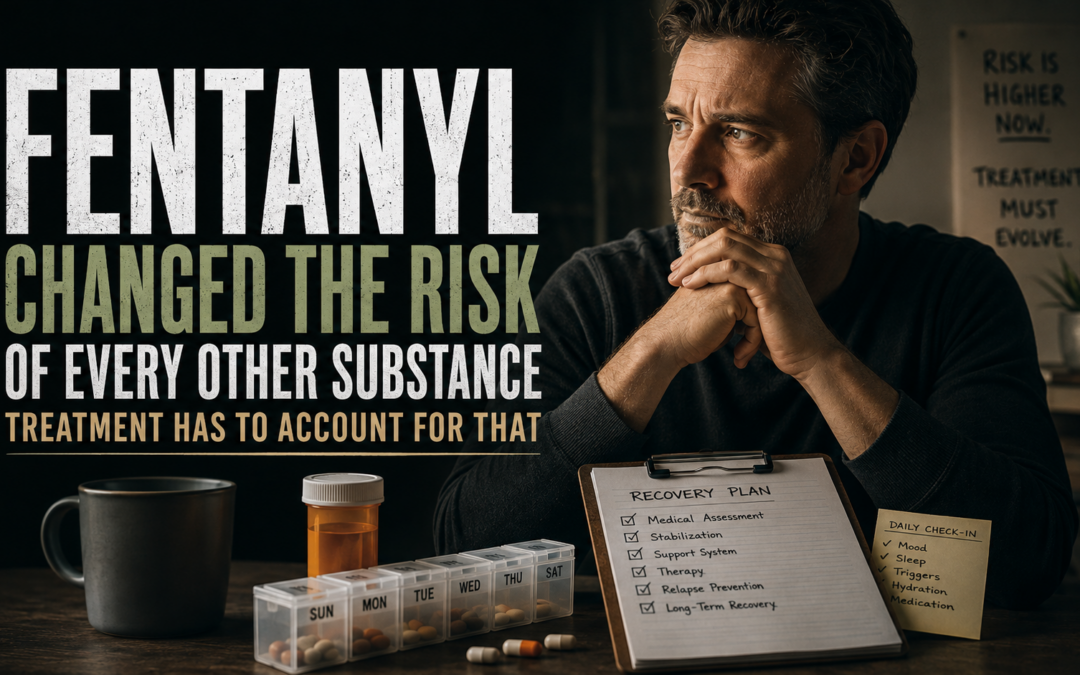
Fentanyl treatment has become one of the most urgent needs in addiction care because fentanyl now touches nearly every part of the drug supply. If you or someone you love uses substances, you may feel a new and frightening layer of uncertainty that was not there a few years ago.
That fear is valid, and it reflects a real shift in how dangerous substance use has become. Fentanyl does not stay in one lane, and it often shows up where people least expect it.
You deserve honest information and compassionate support, not judgment or scare tactics. Let’s look at what this shift means, why it changes the risks around every other substance, and how treatment can meet this moment with care built for today.
What Does Fentanyl Treatment Look Like Today?
Fentanyl treatment today combines medical support, therapy, and ongoing care designed to address both the physical dangers and the deeper causes of substance use. It reflects a drug landscape where fentanyl can appear in almost anything a person uses.
This care starts with keeping you safe. Because fentanyl is so potent, medical supervision plays a larger role than it once did.
Think of it as care that has evolved to match a changing reality. The old assumptions no longer hold, so treatment has to be sharper, more informed, and more responsive.
What Is Fentanyl and Why Is It So Dangerous?
Fentanyl is a synthetic opioid that is far more potent than many other substances, which makes even tiny amounts dangerous. A dose too small to see can be enough to cause serious harm.
This potency is what sets fentanyl apart. People who use substances may have no way of knowing whether fentanyl is present or how much they are actually taking.
Understanding this danger is not about creating fear. It is about giving you the clear information you need to make safer choices and seek support.
Who Needs Fentanyl Treatment?
Fentanyl treatment is for anyone whose life has been affected by fentanyl, whether through opioid use or exposure through other substances. This includes people who never intended to use fentanyl at all.
It also helps families who are frightened for someone they love. When the drug supply feels unpredictable, professional guidance can bring both safety and relief.
You do not need to hit a specific low point to deserve help. If fentanyl has entered your life in any way, support is available.
How Has Fentanyl Changed the Risk Profile of Every Other Substance?
Fentanyl has changed the risk profile of every other substance because it now contaminates drugs that once carried no opioid risk at all. A person using a stimulant or a counterfeit pill may unknowingly encounter fentanyl.
This means the old idea of “knowing what you are taking” no longer applies. Substances that people once viewed as lower risk can now carry hidden, life-threatening danger.
Treatment has to account for this reality. Care built for an earlier era simply does not match the risks people face right now.
What Does Fentanyl Contamination Mean for People Who Use Substances?
Fentanyl contamination means that substances beyond opioids may contain fentanyl without any warning. Counterfeit pills, stimulants, and other drugs can all be affected.
This changes the safety math for everyone. Someone who has never used opioids can still be exposed to fentanyl through a completely different substance.
For families, this reality can feel overwhelming. The good news is that awareness and support can help reduce these risks and open the door to care.
Why Do Substances Once Seen as Lower Risk Now Carry Opioid Danger?
Substances once seen as lower risk now carry opioid danger because fentanyl can be mixed into the wider drug supply. This mixing often happens without the person’s knowledge or consent.
As a result, someone using a stimulant may face opioid-related risks they never anticipated. The body is not prepared for an opioid it did not expect.
This is why modern care treats fentanyl exposure as a possibility across many situations. Treatment planning now considers risks that reach far beyond traditional opioid use.
How Must Treatment Programs Adapt to the Fentanyl Era?
Treatment programs must adapt to the fentanyl era by prioritizing medical safety, education, and care that reflects today’s unpredictable drug supply. The stakes are higher, so the approach has to be more thorough.
This adaptation begins with recognizing how potent and widespread fentanyl has become. Programs that ignore this reality leave people underprepared for the risks they face.
At Evolve Indy, care is built around the whole person and the world they actually live in. Your history, your needs, and your goals shape the plan your team creates with you.
Why Does Medical Supervision Matter More Now?
Medical supervision matters more now because fentanyl makes withdrawal and stabilization more complex and potentially more dangerous. Professional oversight helps protect your safety during this fragile stage.
A trained medical team can monitor your symptoms and respond quickly if complications arise. This support removes much of the risk that comes with trying to manage things alone.
Safe stabilization creates the foundation for everything that follows. Once your body settles, the deeper work of recovery becomes possible.
How Does Education Become Part of Care?
Education becomes part of care by helping you understand the real risks in today’s drug supply. Clear, honest information empowers you to make safer decisions moving forward.
This includes learning how fentanyl can appear in unexpected places. It also means understanding harm reduction and the signs of an opioid emergency.
Knowledge is a form of protection. When you understand the risks clearly, you feel less powerless and more equipped to stay safe.
How Do Co-Occurring Mental Health Conditions Factor Into Fentanyl Treatment?
Co-occurring mental health conditions factor into fentanyl treatment because substance use and mental health struggles often appear together. This overlap, known as a dual diagnosis, is more common than many people realize.
People sometimes turn to substances to cope with anxiety, depression, or past trauma. Treating only one condition can leave the other unaddressed, which sometimes opens the door to returning to use.
At Evolve Indy, integrated care addresses both together. Treating them at the same time gives you a more complete and lasting path toward feeling well.
Why Does Treating Both Conditions Matter?
Treating both conditions matters because each one can quietly worsen the other. Untreated anxiety or depression can raise the risk of returning to substances, while ongoing substance use can deepen those same symptoms.
When care addresses only the substance use, the emotional weight can pull you backward. When it addresses only the mental health condition, the recovery piece can feel unsupported.
Integrated care closes that gap. Treating both together gives your progress a steadier foundation.
What Levels of Care Support Fentanyl Treatment?
Several levels of care support fentanyl treatment, and the right one depends on your needs and circumstances. Because recovery is rarely a straight line, having options keeps your care aligned with where you actually are.
Some people begin with more intensive support and step down over time. Others move between levels as their situation changes.
This flexibility is a genuine strength. A clear continuum of care means you are never locked into a single setting that no longer fits.
What Is Residential Treatment?
Residential treatment is a level of care where you live at a facility full-time while receiving structured therapy and daily support. It removes everyday triggers so you can focus fully on healing.
This setting suits people who need distance from a difficult environment or benefit from around-the-clock support. The steady routine often brings a welcome sense of calm.
For many, this becomes a strong starting point. It builds a solid foundation before transitioning to lighter care.
What Is a Partial Hospitalization Program?
A Partial Hospitalization Program provides several hours of daily treatment while you return home each evening. It offers intensive support without requiring an overnight stay.
This level of care fits people whose needs are serious yet manageable outside a residential setting. It often serves as a bridge between full-time care and outpatient support.
The daily structure helps steady early recovery. You receive meaningful care while staying connected to home life.
What Is an Intensive Outpatient Program?
An Intensive Outpatient Program offers structured therapy several days a week while you continue living at home. It provides real accountability while leaving room for work, school, and family.
This level of care works well for people with a stable home environment and strong motivation. It also supports those stepping down from more intensive treatment.
The flexibility helps you practice new skills in real life. You heal while staying connected to the routines that support you.
How Do You Know It Is Time to Seek Help?
You know it is time to seek help when fentanyl or substance use has begun to threaten your safety, health, or peace of mind. You do not need to reach a crisis point to deserve support.
Consider these signs as you think about your next step:
- Reaching out makes sense when you worry that the substances you use could contain fentanyl.
- Medical support helps when withdrawal symptoms feel too severe or unsafe to face on your own.
- Care matters when past attempts to stop using have not lasted.
- A dual diagnosis assessment is worthwhile when substance use overlaps with anxiety, depression, or trauma.
- Support is appropriate when loved ones express concern about changes they notice in you.
Trust the program that listens closely and answers your questions honestly. Choosing care is a personal decision, and it should feel supportive from the very first conversation.
Common Questions Before Starting Treatment
Is fentanyl treatment different from other addiction treatment?
Fentanyl treatment shares many tools with other addiction care but places greater emphasis on medical safety and today’s contaminated drug supply. Because fentanyl is so potent, professional supervision often plays a larger role. The overall goal remains the same: safe stabilization followed by lasting healing.
Can I be exposed to fentanyl even if I do not use opioids?
Yes, you can be exposed to fentanyl even if you have never used opioids. Fentanyl can appear in counterfeit pills, stimulants, and other substances without any warning. This is one reason modern treatment considers fentanyl a risk across many situations.
How long does treatment take?
The length of treatment depends on your needs, history, and progress. Some people spend a few weeks in intensive care, while others benefit from months of ongoing support. Your care team works with you to set a timeline built around your goals rather than a fixed rule.
Can treatment address both substance use and mental health?
Yes, many programs offer integrated care that treats substance use and mental health at the same time. People often turn to substances to cope with difficult feelings, so addressing both matters. Treating them together gives you a more complete and lasting recovery.
You Do Not Have to Face This New Risk Alone
Fentanyl treatment has evolved because fentanyl has reshaped the risks around nearly every substance people use today. What you or your loved one is facing is real, and it deserves care built for this moment rather than an outdated approach.
Recovery is possible, and reaching out for help is a sign of strength rather than weakness. You do not have to navigate this uncertainty alone, and you do not have to have every answer before you begin.
If you or someone you love is ready to explore treatment options, the compassionate team at Evolve Indy is here to help. Reach out today to ask questions, learn about your options, or take the next step toward a safer, more hopeful future. You do not have to begin it alone.