
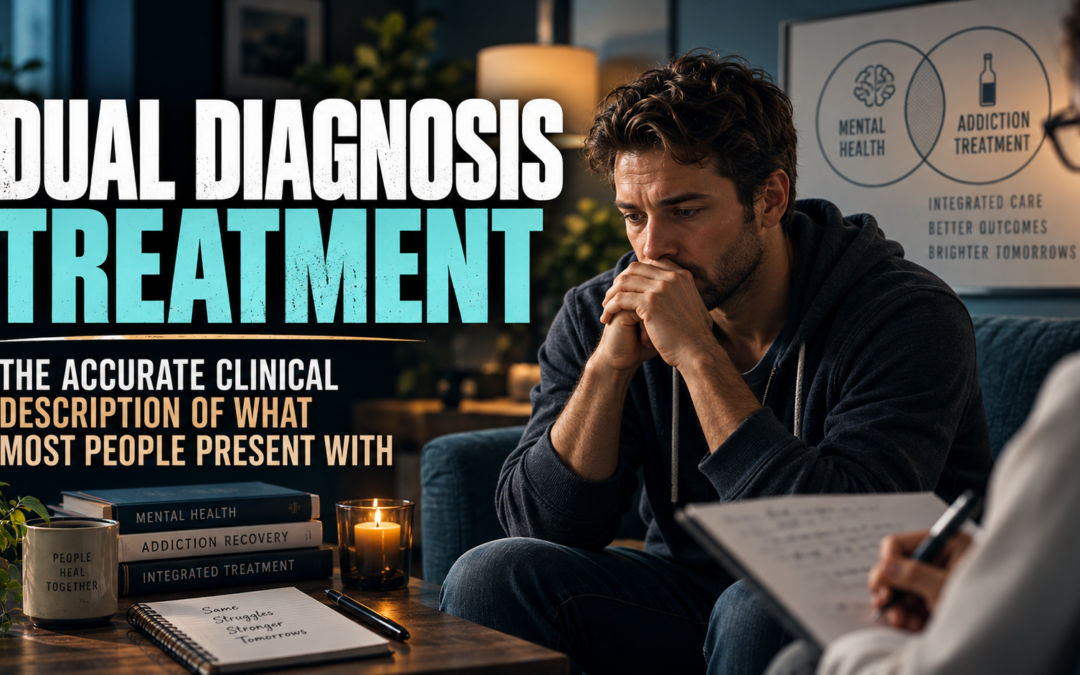
Dual diagnosis is the clinical term for having a mental health condition and a substance use disorder at the same time, and it describes what most people in addiction treatment are truly living with. If you have ever felt that substance use was only part of your story, you were paying attention to something real.
You are not imagining the deeper struggle underneath the surface. Anxiety, depression, trauma or other challenges often sit right alongside substance use, quietly shaping it.
That connection deserves honest, compassionate care. When treatment addresses only one side, relief can feel temporary or incomplete. Understanding this helps replace confusion and self-blame with a clearer path forward. Let’s look at what this term really means, why it is so common in addiction treatment and what care that treats the whole person can look like.
What Does Dual Diagnosis Actually Mean?
Dual diagnosis means a person is living with both a mental health condition and a substance use disorder at the same time. Clinicians also call this a co-occurring disorder, and it describes two conditions that often shape and intensify each other.
The mental health side might include anxiety, depression, bipolar disorder, post-traumatic stress disorder or another challenge. The substance use side involves alcohol or drug use that has become difficult to control.
Think of it as two threads woven together rather than two separate problems. Because they are connected, they often need to be understood and treated together.
Who Does Dual Diagnosis Affect?
Dual diagnosis affects people of every age, background and walk of life. It reaches working parents, students, professionals and retirees, regardless of how their lives look from the outside.
Some people notice the mental health struggle first, then turn to substances for relief. Others develop mental health symptoms as substance use takes a toll over time.
There is no single “right” way this shows up. Your experience is valid, and it is worth addressing with care that sees the full picture.
Why Is It Called an “Accurate” Description?
It is called an accurate description because it names what is really happening rather than a single visible symptom. Substance use is often the part others notice, while the mental health condition stays hidden underneath.
Treating only the visible piece can leave the deeper cause untouched. Naming both conditions gives everyone a clear, honest starting point.
That clarity matters. It allows care to fit the true situation instead of a partial view.
Why Is Dual Diagnosis the Norm Rather Than the Exception?
Dual diagnosis is the norm in addiction treatment because mental health conditions and substance use so often appear together. For many people seeking help, the two are deeply intertwined rather than separate issues.
People frequently turn to alcohol or drugs to quiet difficult feelings like anxiety, sadness or painful memories. That relief tends to be brief, and over time substance use can deepen the very symptoms it was meant to ease.
Understanding this removes a lot of shame. Your struggle makes sense once you see how closely these conditions connect.
How Do the Two Conditions Feed Each Other?
The two conditions feed each other by creating a cycle where one keeps the other alive. Mental health symptoms can drive substance use, and substance use can worsen mental health symptoms in return.
Someone might drink to calm anxiety, then feel more anxious as the effects fade. That rising anxiety can lead to more drinking, and the loop tightens.
Breaking this cycle usually means treating both sides at once. Addressing only one leaves the other free to restart the pattern.
Why Does This Overlap Go Unrecognized So Often?
This overlap goes unrecognized because substance use is usually the most visible part of the struggle. Loved ones and even providers may focus on the drinking or drug use while the mental health condition stays out of view.
Some people also learn to hide their emotional pain. They may not connect their substance use to anxiety, depression or trauma until someone gently helps them see it.
A thorough assessment brings that hidden piece into the light. It helps care reflect the whole person, not just one symptom.
Why Does Treating Only One Condition Fall Short?
Treating only one condition falls short because the untreated condition can quietly pull a person back into old patterns. When care addresses substance use but ignores mental health, recovery often feels fragile.
Imagine completing addiction treatment only to have depression resurface with nothing in place to meet it. That low mood can raise the risk of returning to substances for relief.
The reverse is just as true. Treating a mental health condition while ignoring substance use leaves a powerful trigger fully intact. Lasting recovery usually requires addressing both together.
What Happens When Recovery Feels Fragile?
When recovery feels fragile, people often blame themselves for a relapse that was never really their fault. They may feel they failed, when in truth their care missed part of the picture.
A relapse under these conditions is not a personal weakness. It is a signal that a key piece of healing went unaddressed.
Integrated care closes that gap. By treating both conditions together, it gives recovery a steadier and more complete foundation.
What Does Integrated Care for Dual Diagnosis Look Like?
Integrated care for dual diagnosis treats a mental health condition and a substance use disorder together within one coordinated plan. Instead of addressing one and hoping the other fades, it works on both at the same time.
This approach brings therapists, medical staff and recovery support into a single care team. Everyone works from a shared understanding of your full situation.
At Evolve Indy®, care treats you as a whole person, not a set of separate problems. Your voice and your goals help shape the direction your treatment takes.
What Therapies Support This Kind of Healing?
Several evidence-based therapies support healing by addressing both conditions at once. These approaches focus on lasting change rather than quick fixes.
Cognitive behavioral therapy, a practical approach that helps you notice and shift unhelpful thoughts, teaches you to recognize the triggers behind both substance use and emotional distress. Once you see those patterns clearly, you can learn to respond to them in healthier ways.
Many programs also include trauma-focused therapy, group support and relapse prevention planning. Care is personalized, so your history and goals shape the plan your team builds with you.
How Does Medication Fit Into Care?
Medication can fit into care by easing symptoms that make healing harder to sustain. For some people, the right medication helps stabilize mood or reduce cravings so therapy can do its deeper work.
Any medication is prescribed and monitored by trained professionals. It becomes one part of a broader plan, not a standalone fix.
The goal is balance, not numbness. Medication, when appropriate, clears space for the real work of recovery.
What Levels of Care Support Dual Diagnosis Treatment?
Several levels of care support dual diagnosis treatment, and the right one depends on your needs and circumstances. Because recovery rarely moves in a straight line, having options keeps your care aligned with where you actually are.
Some people begin with more intensive support and step down over time. Others move between levels as their situation changes.
This flexibility is a genuine strength. A clear continuum of care means you are never locked into a single setting that no longer fits.
What Is Residential Treatment?
Residential treatment is a level of care where you live at a facility full-time while receiving structured therapy and daily support. It removes everyday triggers so you can focus fully on healing both conditions.
This setting suits people who need distance from a difficult environment or benefit from around-the-clock support. The steady routine often brings a welcome sense of calm.
For many, this becomes a strong starting point. It builds a foundation before transitioning to less intensive care.
What Is a Partial Hospitalization Program?
A Partial Hospitalization Program provides several hours of daily treatment while you return home each evening. It offers intensive support without requiring an overnight stay.
This level of care fits people whose needs are serious yet manageable outside a residential setting. It often serves as a bridge between full-time care and lighter support.
The daily structure helps steady both mental health and recovery. You receive meaningful care while staying connected to home life.
What Is an Intensive Outpatient Program?
An Intensive Outpatient Program offers structured therapy several days a week while you continue living at home. It provides real accountability while leaving room for work, school and family.
This level of care works well for people with a stable home environment and strong motivation. It also supports those stepping down from more intensive treatment.
How Do You Know It Is Time to Seek Help?
You know it is time to seek help when substance use and mental health symptoms keep feeding each other in ways you cannot control. You do not need to reach a crisis point to deserve support.
Consider these signs as you think about your next step:
- Reaching out makes sense when you use alcohol or drugs to cope with anxiety, depression or painful memories.
- Integrated care helps when past treatment addressed only one condition and relapse followed.
- Support matters when your mood, sleep or relationships shift alongside your substance use.
- A thorough assessment is worthwhile when loved ones express concern about both your mental health and your drinking or drug use.
- Professional help is appropriate when you feel stuck in a cycle that willpower alone has not broken.
Trust the program that listens closely and treats you with respect. Choosing care is a personal decision, and it should feel supportive from the very first conversation.
Common Questions Before Starting Treatment
How common is dual diagnosis in addiction treatment?
Dual diagnosis is very common among people seeking addiction treatment. Mental health conditions and substance use disorders frequently appear together, which is why many programs are built to treat both. This overlap is the norm rather than a rare exception.
Do I need an official mental health diagnosis first?
You do not need an official diagnosis before reaching out for help. A thorough assessment can identify what you are experiencing and guide your care. If a mental health condition is present, your care team addresses it alongside your recovery.
Can both conditions really be treated at the same time?
Yes, both conditions can and often should be treated at the same time. A coordinated care team addresses your mental health and substance use within one unified plan. This keeps either condition from being overlooked or pushed aside.
What if I have relapsed before?
A past relapse does not mean recovery is out of reach for you. It often means an earlier approach missed an underlying condition. Integrated care can address that gap and give your recovery a more complete foundation.
You Deserve Care That Sees the Whole Picture
Dual diagnosis is the accurate clinical description of what most people in addiction treatment are truly presenting with, and lasting recovery depends on treating both conditions together. What you have been carrying is real, and it is treatable with care that sees the full picture rather than a single piece of it.
Healing rarely happens overnight, yet coordinated support can help both conditions ease over time. You deserve care that treats you as a whole person, not a single diagnosis.
If you or someone you love is ready to explore treatment options, the compassionate team at Evolve Indy is here to help. Reach out today to ask questions, learn about your options or take the first step toward a steadier, more hopeful future. You do not have to begin it alone.