
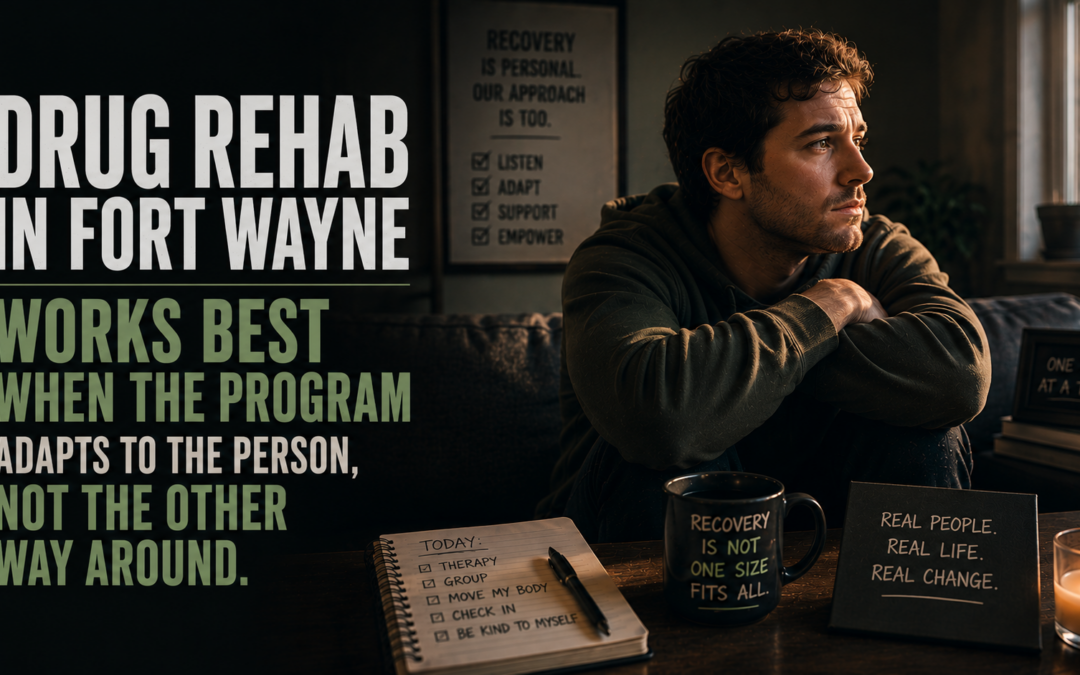
Drug Rehab in Fort Wayne works best when the program bends to fit your life, your history and your goals, instead of forcing you into a rigid mold. If you have been searching for help and worrying that treatment will feel cold, impersonal or one-size-fits-all, that concern is understandable and worth taking seriously.
You are more than a diagnosis, and your recovery deserves a plan shaped around who you actually are. The right program treats you as a whole person, not a checklist to complete.
Below, we look at what individualized care really means, who it helps, what to expect and how to recognize a program that will meet you where you are.
What Does Drug Rehab in Fort Wayne That Adapts to the Person Actually Mean?
Drug Rehab in Fort Wayne that adapts to the person means your treatment plan is built around your specific circumstances, not a fixed formula applied to everyone. Your history, your substance use, your mental health and your goals all shape the care you receive.
This approach starts with a thorough assessment. A care team gathers a full picture of your life before recommending any specific path.
From there, your plan can shift as you grow. Personalized care is not set in stone, and it changes as your needs change over time.
How Is a Personalized Plan Created?
A personalized plan is created through a careful evaluation of your physical health, mental health and personal history. This assessment helps a care team understand what you truly need rather than assuming one path fits all.
The team looks at your substance use patterns, any co-occurring mental health conditions and your support system at home. They also consider your work, family and daily responsibilities.
This detailed picture becomes the foundation for your care. Every recommendation connects back to your unique situation.
Why Does One-Size-Fits-All Care Fall Short?
One-size-fits-all care falls short because no two people arrive at treatment with the same story or the same needs. A rigid model may address the substance use while overlooking the reasons behind it.
When a program treats everyone the same way, it can miss trauma, mental health conditions or personal circumstances that shape recovery. Those gaps sometimes leave a person feeling unseen.
Recovery grows stronger when care fits the individual. A plan built around you tends to hold up better through real-life challenges.
Who Does Individualized Drug Rehab Help?
Individualized drug rehab helps anyone seeking recovery from a substance use disorder, regardless of age, background or how their life looks from the outside. It reaches people who have never tried treatment and those who have relapsed after a program that did not fit.
This approach supports people whose substance use overlaps with anxiety, depression or trauma. It also helps those who need flexibility to keep working, parenting or attending school.
You do not need to hit a specific low point to deserve care. If substance use has begun to affect your health, relationships or peace of mind, personalized support can help.
What If Past Treatment Did Not Work?
If past treatment did not work, that does not mean recovery is out of reach for you. It often means the previous approach missed something important about your situation.
Many people cycle through programs built around a single model before finding care that truly fits. A relapse is not a personal failure, and it does not erase the progress you made.
A program that adapts to the person can address the gaps left behind. This time, your plan can reflect what you have learned about yourself.
What Can You Expect From Individualized Drug Rehab in Fort Wayne?
You can expect a blend of therapy, medical support and skill-building tailored to your specific needs. These pieces work together to address both the behaviors and the deeper causes behind substance use.
Individual counseling gives you private space to explore personal challenges. Group therapy connects you with others who understand your experience, which helps ease shame and isolation.
Care is personalized at Evolve Indy. Your history, your needs and your goals shape the plan your team builds with you.
What Types of Therapy Are Used?
Individualized drug rehab uses evidence-based therapies that address both behaviors and the deeper causes behind substance use. These approaches help you understand your patterns and build healthier ways to cope.
Cognitive behavioral therapy, a practical approach that helps you notice and shift unhelpful thoughts, teaches you to recognize the triggers that lead to substance use. Once you see those patterns clearly, you can learn to respond to them differently.
Many plans also include family sessions, group therapy and relapse prevention work. Each element connects back to your specific goals and history.
How Does Treating the Whole Person Help in Drug Rehab?
Treating the whole person helps by addressing the mind, body and relationships affected by substance use. Drug rehab recovery involves far more than stopping a substance, so care that ignores the rest often feels incomplete. A whole-person approach to drug rehab may include therapy, medical support, family involvement and skill-building. Each piece supports a different part of your healing. When these pieces work together, they create a steadier foundation. You are supported as a full human being, not treated as a single problem to solve.
What Levels of Care Might a Personalized Drug Rehab Plan Include?
A personalized drug rehab plan might include several levels of care that adjust to your needs as you progress. Because recovery is rarely a straight line, having options helps your drug rehab treatment stay aligned with where you actually are. Some people begin with more intensive drug rehab support and step down over time. Others move between levels as their circumstances shift. This flexibility is a strength of quality drug rehab programs. A clear continuum of care means you are never locked into a single setting that no longer fits.
What Is Residential Treatment?
Residential treatment is a level of care where you live at a facility full-time while receiving structured therapy and daily support. It removes the pressures and triggers of everyday life so you can focus fully on healing.
This setting suits people who need distance from a difficult environment or who benefit from around-the-clock support. The steady routine often brings a welcome sense of calm.
For many, this becomes a strong starting point. It builds the foundation before transitioning to less intensive care.
What Is a Partial Hospitalization Program?
A Partial Hospitalization Program provides several hours of daily treatment while you return home each evening. It offers intensive support without requiring an overnight stay at a facility.
This level of care fits people whose needs are serious yet manageable outside a residential setting. It often serves as a bridge between full-time care and outpatient support.
The daily structure keeps momentum strong. You receive meaningful treatment while staying connected to home life.
What Is an Intensive Outpatient Program?
An Intensive Outpatient Program offers structured therapy several days a week while you continue living at home. It provides real accountability while leaving room for work, school and family.
This level of care works well for people with a stable home environment and strong motivation. It also supports those stepping down from more intensive treatment.
The flexibility helps you practice new skills in real life. You heal while staying connected to the routines that support you.
How Do Co-Occurring Disorders Fit Into Personalized Care?
Co-occurring disorders fit into personalized care because mental health and substance use often appear together. This overlap, known as a dual diagnosis, is more common than many people realize.
People sometimes turn to substances to cope with anxiety, depression or past trauma. Treating only one condition can leave the other unaddressed, which sometimes opens the door to relapse.
Individualized care looks at both together. Addressing them at the same time gives you a more complete and lasting path toward feeling well.
Why Does Treating Both Conditions Matter?
Treating both conditions matters because each one can quietly worsen the other. Untreated anxiety or depression can raise the risk of returning to substances, while ongoing substance use can deepen those same symptoms.
When care addresses only the substance use, the emotional weight can pull you backward. When it addresses only the mental health condition, the recovery piece can feel unsupported.
Integrated care closes that gap. Treating both together gives your progress a steadier and more lasting foundation.
How Do You Choose the Right Drug Rehab in Fort Wayne?
You choose the right drug rehab in Fort Wayne by looking for a program that personalizes care, treats co-occurring conditions and offers a clear path forward. The right fit matters, and asking thoughtful questions can help you feel more confident in your decision.
Consider these points as you compare your options:
- A program that personalizes your care means your treatment reflects your specific history, needs and goals rather than a fixed model.
- A team trained in both mental health and substance use means you can get support if anxiety, depression or trauma overlap with substance use.
- A clear continuum of care means you have a plan for moving between levels of support as your needs change.
- Compassionate, qualified staff means you are treated with dignity and respect throughout your care.
- A focus on aftercare means you leave with a plan to maintain your progress over time.
Trust the program that listens closely and answers your questions honestly. Choosing care is a personal decision, and it should feel supportive from the very first conversation.
Common Questions Before Starting Treatment
How do I know if a program is truly individualized?
You can tell a program is individualized when it begins with a thorough assessment and builds your plan around what it learns. Ask how the team tailors care and how the plan adjusts over time. A program committed to personalized care will welcome these questions openly.
Can a personalized plan treat mental health and addiction together?
Yes, individualized care often includes dual diagnosis treatment that addresses mental health and substance use at the same time. This matters because the two frequently appear together. Treating both gives you a more complete path toward feeling well.
What if my needs change during treatment?
If your needs change, a strong program adjusts your care to match where you are. Recovery is rarely a straight line, and flexibility is a sign of good treatment. Your plan can shift between levels of care as your circumstances evolve.
How long does drug rehab take?
The length of drug rehab depends on your needs, your history and your progress. Some people spend a few weeks in intensive care, while others benefit from months of ongoing support. Your care team works with you to set a timeline built around your goals rather than a fixed rule.
Your Recovery Deserves a Plan Built Around You
Drug Rehab in Fort Wayne is most effective when treatment adapts to the person rather than forcing the person to fit a single model. Care that reflects your history, your mental health and your goals gives you a foundation better matched to real life.
Recovery is possible, and reaching out for help is a sign of strength rather than weakness. You do not have to navigate this journey alone, and you do not have to accept care that overlooks who you are.
If you or someone you love is ready to explore treatment options, the compassionate team at Evolve Indy is here to help. Reach out today to ask questions, learn about your options or take the next step toward a healthier, more hopeful future. You do not have to begin it alone.