
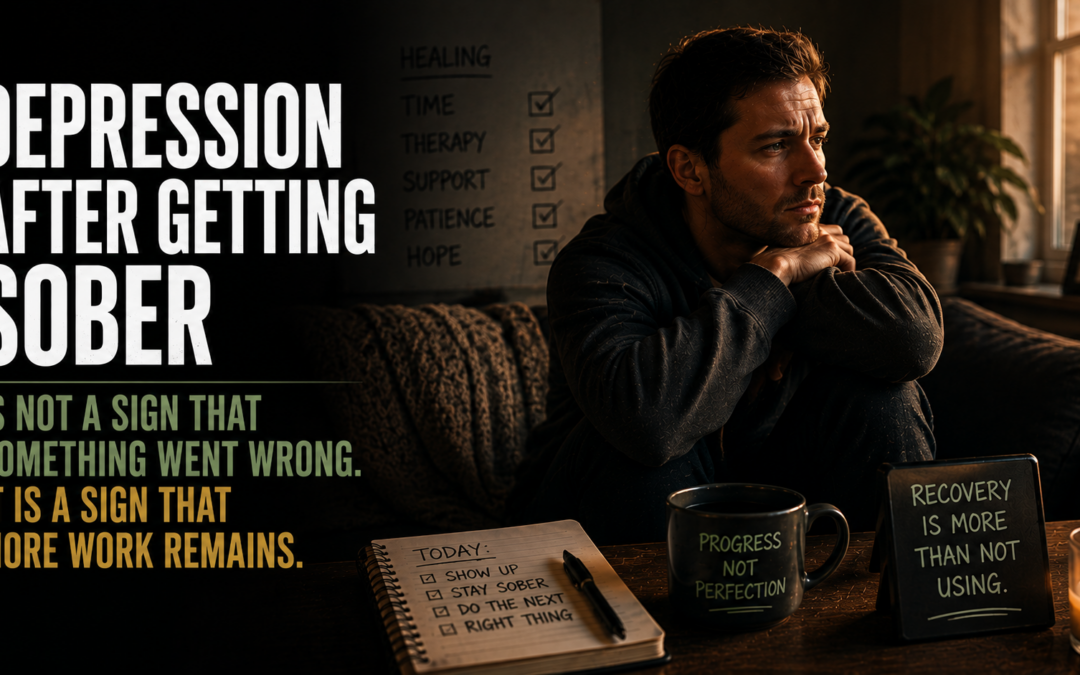
Depression after getting sober is a common and often confusing experience for people who expected to feel better once substances were out of their lives. If you have finally reached sobriety only to feel heavy, empty or unexpectedly low, you are not failing at recovery.
You may feel frustrated, scared or even betrayed by your own progress. You did the hard part, so why does the weight remain?
That confusion is real, and it deserves honest, compassionate care. This experience does not mean recovery is broken. It often means there is deeper healing still ahead. Let’s look at why this happens and what real support can look like.
What Is Depression After Getting Sober?
Depression after getting sober is a low, persistent mood that emerges or intensifies once a person stops using substances. It can bring sadness, fatigue, loss of interest and a sense of emptiness even after the physical work of quitting is done.
This experience is more common than many people expect. Substances often mask emotions, so when they leave, feelings that were buried can rise to the surface.
Think of it as the fog lifting to reveal what was underneath. That clarity can feel painful at first, but it also shows exactly where the next stage of healing needs to happen.
Why Does Depression Show Up After Sobriety?
Depression shows up after sobriety because substances often numbed emotions the brain and body never fully processed. Once that numbing stops, those feelings return with little to soften them.
Your brain chemistry also needs time to rebalance after substance use. Mood, motivation and pleasure can feel flat while your body relearns how to function without the substance.
Underlying pain frequently plays a role too. Grief, trauma or an untreated mental health condition may have been present all along, quietly waiting beneath the surface.
Who Experiences This?
Depression after getting sober can affect anyone in recovery, regardless of age, background or how long they used substances. It reaches people early in sobriety and people who have been sober for months.
Some feel it in the first weeks, when the initial relief of quitting fades. Others notice it later, once daily life resumes and old feelings resurface.
You are far from alone in this. Feeling low after sobriety is a recognized pattern, not a personal failing or a sign that you are doing recovery wrong.
Why Does Depression After Getting Sober Feel So Alarming?
Depression after getting sober feels alarming because most people expect sobriety to bring immediate relief and lightness. When heaviness arrives instead, it can feel like something has gone terribly wrong.
You may have imagined recovery as the finish line. Discovering more work ahead can feel discouraging, especially after everything it took to get here.
That reaction makes complete sense. Yet this low mood is often a signal, not a setback. It points to the parts of healing that substances kept hidden from view.
Is This a Sign That Recovery Failed?
No, depression after getting sober is not a sign that recovery failed. It is a sign that the emotional and mental layers of healing are ready to be addressed.
Quitting substances removes the immediate danger, but it does not automatically heal everything underneath. Recovery is a process with several stages, and mood struggles are often part of the middle chapters.
Seeing this clearly can bring real relief. Your recovery is working. It is simply revealing the next area that needs your care and attention.
What Does It Mean That More Work Remains?
More work remains means there are deeper causes and emotions still waiting to be understood and healed. Sobriety created the space for that work, and now that space can be used.
This might include processing past trauma, treating an underlying mental health condition or building new coping skills. Each of these strengthens the foundation your recovery stands on.
Rather than a burden, this next stage is an opportunity. It is the part of healing that helps sobriety feel sustainable and genuinely worth it.
What Are the Warning Signs Worth Paying Attention To?
The warning signs of depression after getting sober include persistent sadness, low energy and a loss of interest in daily life. When these signs last for two weeks or more, they deserve attention and care.
Watch for changes in sleep, appetite and the ability to concentrate. Notice whether small tasks feel overwhelming or whether the future feels flat and hopeless.
Some signs are quieter and easy to overlook. Pulling away from your support network, skipping meetings or feeling like a burden can all point to depression that needs support.
When Should You Reach Out for Help?
You should reach out for help when low mood starts to interfere with your daily life, relationships or sobriety itself. You do not need to wait until things feel unbearable to deserve support.
If the heaviness will not lift, if you feel disconnected from the people you love, or if you notice cravings returning, that is reason enough. Early support often protects both your mood and your recovery.
If you ever have thoughts of harming yourself, please treat that as an urgent reason to seek help right away. You deserve immediate care and compassion in those moments.
How Is Depression After Getting Sober Treated?
Depression after getting sober is treated through a combination of therapy, medical support and healthy daily habits tailored to your needs. Because this experience connects to both mood and recovery, care works best when it addresses them together.
Talk therapy helps you understand the emotions and patterns that surface in sobriety. Cognitive behavioral therapy, a practical approach that helps you notice and shift unhelpful thoughts, gives you tools to manage low mood.
For some people, medication can help rebalance the brain chemistry that affects mood after substance use. When appropriate, a care team may combine therapy and medication to give you a stronger foundation.
Why Does Treating Both Depression and Recovery Matter?
Treating both depression and recovery matters because each condition can quietly worsen the other. Untreated depression can raise the risk of returning to substance use, while ongoing recovery stress can deepen low mood.
When care addresses only sobriety, the emotional weight can linger and pull you backward. When it addresses only mood, the recovery piece can feel unsupported.
Integrated care closes that gap. Treating both together gives your progress a steadier and more lasting foundation.
What Does Care at Evolve Indy Look Like?
Care at Evolve Indy centers on personalized, compassionate support that treats you as a whole person, not a set of symptoms. Care begins with a thorough assessment to understand your history, your challenges and your goals.
From there, a dedicated team builds a plan that may include individual therapy, group support and medical guidance. For people navigating both a mental health condition and a substance use disorder, integrated care addresses both at the same time.
The goal is to help you feel steady, understood and hopeful. You are never expected to walk this path alone.
What Levels of Care Can Support You?
Several levels of care can support you, and the right one depends on your needs and circumstances. Because recovery rarely moves in a straight line, having options keeps your care aligned with where you actually are.
Some people benefit from more intensive support at first and step down over time. Others move between levels as their situation changes.
This flexibility is a genuine strength. A clear continuum of care means you are never locked into a single setting that no longer fits.
What Is a Partial Hospitalization Program?
A Partial Hospitalization Program provides several hours of daily treatment while you return home each evening. It offers intensive support without requiring an overnight stay.
This level of care fits people whose mood or recovery needs are serious yet manageable outside a residential setting. It often serves as a bridge between full-time care and lighter support.
The daily structure helps steady both mood and sobriety. You receive meaningful care while staying connected to home life.
What Is an Intensive Outpatient Program?
An Intensive Outpatient Program offers structured therapy several days a week while you continue living at home. It provides real accountability while leaving room for work, school and family.
This level of care works well for people with a stable home environment and strong motivation. It also supports those stepping down from more intensive treatment.
The flexibility helps you practice new coping skills in real life. You heal while staying connected to the routines that support your recovery.
How Do You Know It Is Time to Seek Help?
You know it is time to seek help when depression keeps shaping your daily life or threatens the sobriety you worked so hard to build. You do not need to reach a breaking point to deserve support.
Consider these signs as you think about your next step:
- Reaching out makes sense when low mood lingers for weeks despite your steady sobriety.
- Support helps when the emotional weight begins to make cravings or old habits feel tempting again.
- Care matters when loved ones express concern about changes they notice in your mood or energy.
- A thorough assessment is worthwhile when sleep, appetite or focus shift in ways you cannot explain.
- Professional help is appropriate when you suspect trauma or an underlying condition is surfacing in sobriety.
Trust the program that listens closely and treats you with respect. Choosing care is a personal decision, and it should feel supportive from the very first conversation.
Common Questions About Depression After Getting Sober
Is it normal to feel depressed after quitting substances?
Yes, it is common to feel depressed after quitting substances. Substances often mask difficult emotions and disrupt brain chemistry, so low mood frequently surfaces once they are gone. This experience is a recognized part of recovery, not a sign that you are doing something wrong.
How long does depression after sobriety last?
The length varies from person to person and depends on the causes behind it. Some people feel steadier within weeks as brain chemistry rebalances, while others need ongoing support for underlying conditions. A care team can help you understand your timeline and provide relief along the way.
Can treating depression help protect my sobriety?
Yes, treating depression can help protect your sobriety in meaningful ways. Untreated low mood can raise the risk of returning to substances for relief. Addressing both together strengthens your recovery and helps sobriety feel more sustainable over time.
Should I consider medication for depression in recovery?
Medication is one option among several, and the choice always involves you. For some people, it helps rebalance mood so therapy can do its deeper work. A qualified care team can help you decide whether it fits your needs and recovery goals.
You Have Not Failed. There Is More Healing Ahead
Depression after getting sober is not a sign that something went wrong. It is a sign that more work remains, and that deeper healing is finally within reach. What you are feeling is real, and it is treatable with the right kind of care and understanding.
Healing rarely happens overnight, yet steady support can help the heaviness lift over time. You have already shown remarkable courage by reaching sobriety, and you deserve support for this next stage too.
If you or someone you love is struggling with low mood in recovery, the compassionate team at Evolve Indy is here to help. Reach out today to ask questions, learn about your options or take the next step toward feeling steady and hopeful again. You do not have to walk this path alone.