
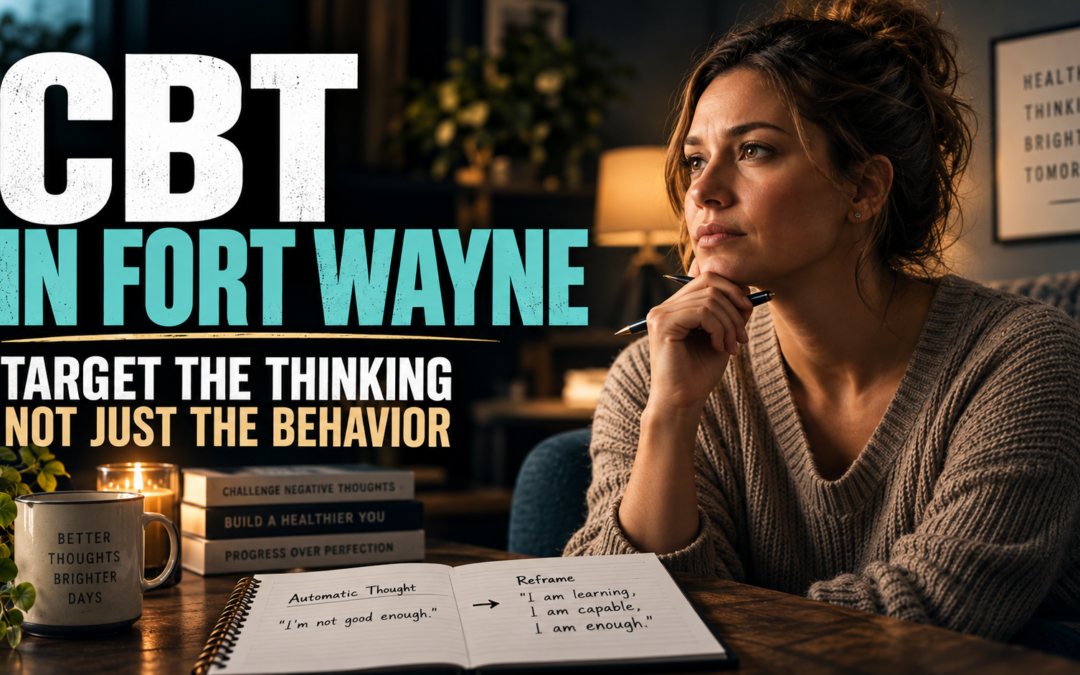
CBT in Fort Wayne is a proven form of therapy that focuses on the thoughts driving your behavior, rather than treating the behavior alone. If you have ever tried to change a habit through sheer willpower, only to find yourself back where you started, that experience makes complete sense.
You are not weak, and you have not run out of options. Behavior often grows from patterns of thinking that run quietly in the background, shaping how you feel and act.
The good news is that those patterns can change with the right support. Let’s look at what this kind of therapy involves and how it can help you or someone you love.
What Is CBT in Fort Wayne?
CBT in Fort Wayne is a structured, evidence-based therapy that helps you recognize and reshape the thoughts influencing your emotions and actions. The letters stand for cognitive behavioral therapy, a widely used approach in mental health and addiction care.
This therapy rests on a simple idea: your thoughts, feelings and behaviors are deeply connected. When you shift an unhelpful thought, your feelings and actions often begin to shift too.
Think of it as adjusting the source rather than the symptom. Instead of fighting the behavior directly, you address the thinking that has been fueling it.
Who Does CBT Help?
CBT helps people facing a wide range of mental health and substance use challenges. It supports those living with anxiety, depression, trauma, or a substance use disorder, among other concerns.
This approach also reaches people who feel stuck in patterns they cannot seem to break. If your thoughts often work against you, this therapy may offer real relief.
You do not need a specific diagnosis to benefit. Anyone who wants practical tools for managing difficult thoughts can find value here.
How Does CBT Actually Work?
CBT works by helping you notice the automatic thoughts that shape your reactions, then gently testing and reshaping them. Over time, this builds healthier patterns of thinking and responding.
Your therapist helps you connect a specific thought to the feeling and behavior that follow it. Once you see that link clearly, you can begin to interrupt it.
This is skill-building, not just conversation. You learn practical tools you can use long after a session ends.
Why Does CBT in Fort Wayne Target Thinking Instead of Behavior?
CBT in Fort Wayne targets thinking because behavior is usually the result of deeper thought patterns, not the root cause. Addressing the behavior alone often leaves the underlying trigger untouched.
Imagine trying to stop a stressful habit without understanding what sets it off. The habit tends to return because the thought driving it never changed.
By working at the level of thought, CBT reaches the source. This helps the changes you make feel more natural and lasting.
What Are Automatic Thoughts?
Automatic thoughts are the quick, often unnoticed reactions that pop into your mind throughout the day. They shape how you feel and act, sometimes without you even realizing it.
These thoughts can be helpful, neutral or unhelpful. When they are distorted or overly negative, they can drive anxiety, low mood or the urge to use substances.
CBT helps you slow down and catch these thoughts. Once you see them clearly, you gain the power to respond differently.
Why Doesn’t Willpower Alone Work?
Willpower alone often falls short because it targets behavior without addressing the thinking behind it. You may push hard to change, yet the underlying thought keeps pulling you back.
Many people try to force change for years before seeking support. Each attempt takes real courage, even when the results feel discouraging.
CBT offers a different path. Instead of relying on willpower, it gives you tools to change the pattern at its source.
What Does a CBT Session Look Like?
A CBT session is a focused, collaborative conversation between you and your therapist, aimed at understanding and reshaping unhelpful thoughts. Sessions are practical and goal-oriented rather than open-ended.
You and your therapist often begin by reviewing recent challenges or progress. Together, you explore a specific situation and the thoughts, feelings and actions tied to it.
This is a partnership, not a lecture. Your therapist guides the process while honoring your pace and your goals.
What Happens During a Typical Session?
During a typical session, you examine a real situation and trace how your thoughts influenced your response. Your therapist helps you spot patterns and test whether those thoughts are accurate or fair.
You might practice new ways of thinking or rehearse healthier responses. These skills are meant to be used in daily life, not just the therapy room.
Many sessions include simple between-session practice. This helps you build momentum and apply what you learn in real moments.
Is CBT Uncomfortable to Talk Through?
CBT is designed to feel safe, supportive and respectful of your comfort. Your therapist moves at a pace that works for you, so you never have to share more than you feel ready to share.
Some sessions may touch on difficult feelings, and that is a normal part of growth. Even then, the focus stays on building skills rather than reliving pain.
You remain in control throughout. This approach is meant to empower you, not overwhelm you.
How Is CBT Different From Other Therapies?
CBT differs from many other therapies because it is structured, practical and focused on the present. Rather than dwelling only on the past, it centers on the thoughts and patterns shaping your life right now.
Some approaches explore history at length to build insight. CBT values that understanding too, yet it emphasizes concrete tools you can use today.
This focus on skills is one of its greatest strengths. You leave with strategies you can rely on well beyond treatment.
How Does CBT Connect to Addiction Recovery?
CBT connects to addiction recovery by helping you recognize the thoughts and triggers that lead to substance use. Once you see those patterns, you can learn to respond in healthier ways.
Substance use is often tied to specific thoughts, emotions or situations. CBT helps you map these connections and build new responses to them.
This makes it a valuable part of many recovery plans. It addresses the thinking that fuels the behavior, not the behavior in isolation.
Can CBT Help With Dual Diagnosis?
Yes, CBT can help people navigating both a mental health condition and a substance use disorder at the same time. This overlap is known as a co-occurring disorder or dual diagnosis.
Many people turn to substances to cope with anxiety, depression or past trauma. Treating only one concern can leave the other unaddressed, which sometimes opens the door to relapse.
At Evolve Indy®, integrated care addresses both together. Treating them at the same time gives you a more complete and lasting path toward feeling well.
How Does CBT Fit Into the Levels of Care at Evolve Indy?
CBT fits into a broader continuum of care that adjusts to your needs as you progress. It works within different levels of treatment, from more intensive support to flexible outpatient options.
Because recovery is rarely a straight line, having options keeps your care aligned with where you actually are. Some people begin with more structured support and step down over time.
This flexibility is a genuine strength. A clear continuum of care means your support can shift as your needs change.
What Is a Partial Hospitalization Program?
A Partial Hospitalization Program provides several hours of daily treatment while you return home each evening. It offers intensive support without requiring an overnight stay.
This level of care fits people whose needs are serious yet manageable outside a residential setting. It often serves as a bridge between full-time care and lighter support.
The daily structure helps steady early recovery. You receive meaningful care while staying connected to home life.
What Is an Intensive Outpatient Program?
An Intensive Outpatient Program offers structured therapy several days a week while you continue living at home. It provides real accountability while leaving room for work, school and family.
This level of care works well for people with a stable home environment and strong motivation. It also supports those stepping down from more intensive treatment.
The flexibility helps you practice new skills in real life. You heal while staying connected to the routines that support you.
How Do You Know CBT in Fort Wayne Is Right for You?
You know CBT in Fort Wayne may be right for you when you feel stuck in patterns that willpower alone has not changed. This approach suits people who want practical tools rather than open-ended conversation.
Consider these signs as you think about your next step:
- This approach makes sense when your thoughts often feel negative, distorted or hard to control.
- CBT helps when past attempts to change a behavior have not lasted.
- Structured therapy fits when you want concrete skills you can use in daily life.
- Integrated care matters when anxiety, depression or trauma overlaps with substance use.
- Reaching out is worthwhile when loved ones express concern about patterns they notice in you.
Trust the program that listens closely and answers your questions honestly. Choosing care is a personal decision, and it should feel supportive from the very first conversation.
Common Questions Before Starting Treatment
How long does CBT take to work?
CBT often shows results within a few months, though the exact timeline depends on your needs and goals. Because it is structured and skill-focused, many people notice progress fairly early. Your care team works with you to set a pace built around your situation.
Can CBT treat mental health and addiction together?
Yes, CBT is often used to treat mental health conditions and substance use at the same time. It helps you address the thoughts driving both concerns within one coordinated plan. This integrated approach supports a more complete and lasting recovery.
Do I have to talk about my past in CBT?
CBT focuses mainly on the present, so it centers on the thoughts and patterns shaping your life now. Your past may come up when it helps explain a pattern, but the emphasis stays on building tools you can use today. You never have to share more than you feel ready to share.
Is CBT only for severe conditions?
No, CBT helps people across a wide range of challenges, not only severe ones. Anyone who wants practical strategies for managing difficult thoughts can benefit. A thorough assessment helps your care team match the approach to your needs.
Change the Thinking, Change the Pattern
CBT in Fort Wayne works because it targets the thinking that has been running the behavior, rather than the behavior alone. By reaching the thoughts at the source, it helps you build healthier patterns that feel more natural and lasting over time.
Recovery is possible, and reaching out for help is a sign of strength rather than weakness. You do not have to navigate this journey alone, and you do not have to rely on willpower alone to carry you through.
If you or someone you love is ready to explore treatment options, the compassionate team at Evolve Indy is here to help. Reach out today to ask questions, learn about your options or take the next step toward a healthier, more hopeful future. You do not have to begin it alone.