
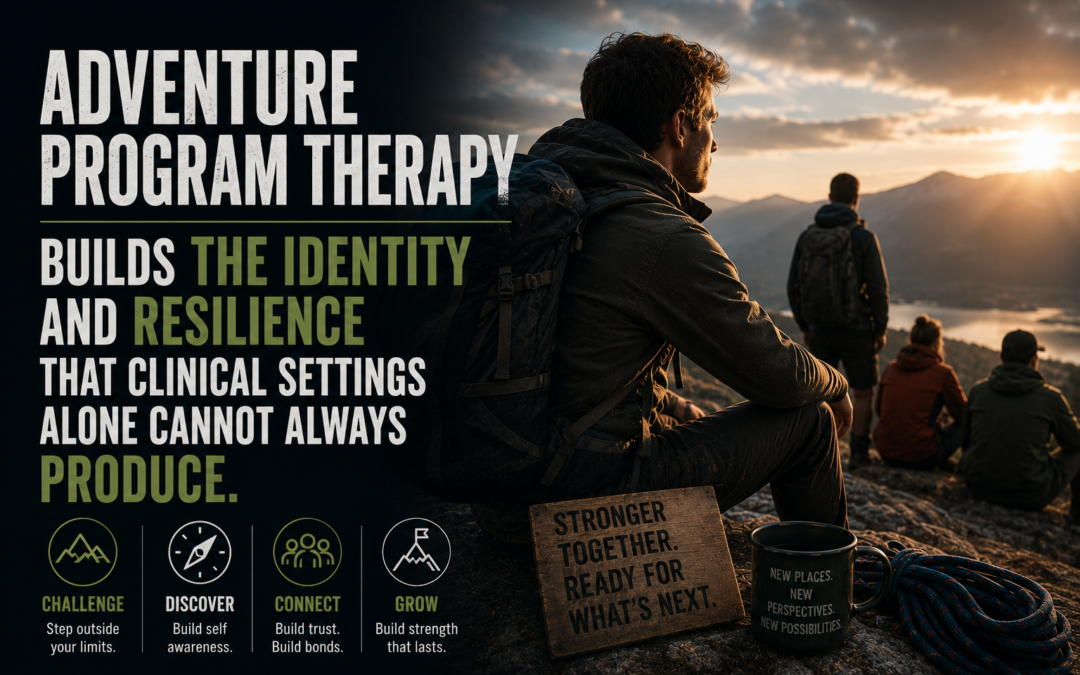
Adventure Program Therapy is a form of experiential care that uses guided outdoor and physical activities to help people in recovery rebuild confidence, connection, and a sense of who they are. If you or someone you love is exploring treatment, you may wonder whether healing really has to happen only in an office or a group room.
It does not. Recovery can also take root on a trail, during a shared physical challenge, or in a quiet moment of accomplishment outdoors.
You may feel unsure, tired, or skeptical that anything new could help. Those feelings are understandable, and they do not mean healing is out of reach for you.
What Is Adventure Program Therapy?
Adventure Program Therapy is a treatment approach that uses structured outdoor and physical activities to support emotional healing and personal growth. It combines movement, nature, and shared experience with the guidance of trained clinical staff.
Instead of sitting in a room and only talking through challenges, you learn by doing. Activities may include hiking, ropes courses, team-based problem solving, or other guided experiences.
Think of it as therapy in motion. The lessons you gain from real experiences often stay with you longer than words alone.
How Does Adventure Program Therapy Work?
Adventure Program Therapy works by placing you in supportive, challenging situations that build skills you can carry into everyday life. Each activity is designed with a clear therapeutic purpose, not just recreation.
When you face a manageable challenge and succeed, your confidence grows. When you work through a setback, you practice resilience in real time.
A trained team guides these moments with intention. They help you connect what happens outdoors to the patterns and goals in your recovery.
Who Is Adventure Program Therapy For?
Adventure Program Therapy is for people in recovery who want a more active, hands-on way to heal alongside traditional treatment. It often helps those who feel stuck in talk therapy or who learn best by doing.
This approach can support people early in recovery as well as those further along in their journey. It also welcomes people who feel disconnected from their bodies, their confidence, or their sense of identity.
You do not need to be athletic or experienced outdoors to take part. Willingness to try matters far more than skill.
Why Do Clinical Settings Alone Sometimes Fall Short?
Clinical settings alone sometimes fall short because lasting change has to work in real life, not only in a therapy room. Talk-based care builds vital insight, yet insight does not always translate into action on its own.
A treatment room offers safety and structure, and that matters deeply. Even so, real growth often takes root when you apply what you learn in new and unfamiliar situations.
Adventure Program Therapy fills that gap by turning ideas into lived experience. You do not just talk about resilience. You practice it with your whole body.
What Can Experiential Care Reach That Words Cannot?
Experiential care can reach parts of healing that words alone struggle to touch. When you live an experience, the lesson becomes part of you in a way conversation often cannot match.
Completing a difficult hike or solving a group challenge gives you real, felt proof of your abilities. That evidence is harder to doubt than a passing thought.
These moments create lasting memories tied to growth. You can draw on them long after a session ends.
How Does Nature Support Healing?
Nature supports healing by easing stress and creating space for reflection and calm. Time outdoors can lower anxiety and help you feel more grounded in your body.
Being in a natural setting also offers a break from daily triggers and pressures. That distance can make it easier to think clearly and reconnect with yourself.
For many people, nature brings a quiet sense of perspective. Challenges can feel more manageable when you face them under an open sky.
How Does Adventure Program Therapy Build Identity and Resilience?
Adventure Program Therapy builds identity and resilience by helping you rediscover strengths that substance use or mental health struggles may have hidden. Each challenge invites you to see yourself as capable, brave, and worthy of respect.
Recovery often involves rebuilding a sense of who you are. When substance use has shaped daily life for a long time, that identity can feel lost or unclear.
Through shared challenges and small victories, you begin to define yourself in new ways. You become someone who tries, adapts, and keeps going.
How Does It Rebuild a Sense of Self?
It rebuilds a sense of self by giving you experiences that show what you are truly capable of. Accomplishing something meaningful outdoors can remind you of the person recovery is helping you become.
Many people in recovery carry shame or a shaky sense of worth. Real achievements, earned through effort, gently challenge those beliefs.
Over time, these experiences add up. You start to see a fuller, stronger picture of who you are.
How Does It Strengthen Resilience?
It strengthens resilience by teaching you to face discomfort and move through it in a supported setting. Each time you overcome a challenge, you build trust in your ability to handle the next one.
Resilience is not about avoiding hard things. It grows from moving through them and learning that you can.
The trail, the group task, or the physical goal becomes practice for real life. You learn that setbacks are part of the process, not the end of it.
How Does Adventure Program Therapy Connect to Substance Use and Mental Health Recovery?
Adventure Program Therapy connects to substance use and mental health recovery by reinforcing the skills you build in individual and group therapy. What you discover outdoors gives you something concrete to reflect on later.
Substance use and mental health conditions often appear together, an overlap known as a co-occurring disorder or dual diagnosis. Many people turn to substances to cope with anxiety, depression, or past trauma.
Experiential care fits naturally into integrated treatment that addresses both together. It becomes one meaningful piece of a whole-person plan rather than a stand-alone activity.
How Does It Support Dual Diagnosis Care?
It supports dual diagnosis care by giving the mind and body a shared path toward healing. Movement and shared challenges can ease stress and lift mood while therapy addresses deeper causes.
Cognitive behavioral therapy, a practical approach that helps you notice and shift unhelpful thoughts, teaches you to recognize the triggers behind substance use. Adventure-based experiences let you practice new responses in real, active moments.
Together, these approaches care for the whole person. Your thoughts, your body, and your relationships all receive attention.
What Levels of Care at Evolve Indy Include This Approach?
Evolve Indy weaves experiential care into a broader continuum of treatment that adjusts to your needs. Because recovery is rarely a straight line, having options keeps your care aligned with where you actually are.
Your care team designs each experience to match your history, goals, and comfort level. Nothing is one-size-fits-all, and you are supported every step of the way.
Let’s look at the levels of care that surround this approach.
What Is Residential Treatment?
Residential treatment is a level of care where you live at a facility full-time while receiving structured therapy and daily support. It removes everyday triggers so you can focus fully on healing.
This setting suits people who need distance from a difficult environment or benefit from around-the-clock support. Adventure-based experiences add movement and connection to that steady routine.
What Is a Partial Hospitalization Program?
A Partial Hospitalization Program provides several hours of daily treatment while you return home each evening. It offers intensive support without requiring an overnight stay.
This level of care fits people whose needs are serious yet manageable outside a residential setting. It often serves as a bridge between full-time care and lighter support.
What Is an Intensive Outpatient Program?
An Intensive Outpatient Program offers structured therapy several days a week while you continue living at home. It provides real accountability while leaving room for work, school, and family.
This level of care works well for people with a stable home environment and strong motivation. It also supports those stepping down from more intensive treatment.
How Do You Know if Adventure Program Therapy Is Right for You?
You know it may be right for you when traditional talk therapy alone does not feel like enough. This approach suits people who want a more active, hands-on path toward healing.
Consider these signs as you think about your next step:
- This approach makes sense when you learn best by doing rather than only talking.
- Adventure-based care helps when you feel disconnected from your body, your confidence, or your sense of identity.
- Experiential therapy fits when you want to build real skills you can carry into everyday life.
- This care matters when you crave genuine connection with others who understand your journey.
- A whole-person approach is worthwhile when you want your recovery to feel active and hopeful.
Trust the program that listens closely and answers your questions honestly. Choosing care is a personal decision, and it should feel supportive from the very first conversation.
Common Questions About Adventure Program Therapy
Do I need to be physically fit to participate?
No, you do not need to be athletic or physically fit to take part. Activities are adapted to different ability levels, and your care team meets you where you are. The focus is on growth and participation, not performance.
Is Adventure Program Therapy a replacement for traditional treatment?
No, it works alongside traditional treatment rather than replacing it. It complements individual counseling, group sessions, and medical support. Together, these approaches create a more complete and balanced path toward recovery.
Can it help with mental health as well as substance use?
Yes, it can support both mental health and substance use recovery at the same time. Many people find that time in nature and shared challenges ease stress and lift mood. When both conditions overlap, this approach fits naturally into integrated care.
Your Recovery Can Grow Beyond the Treatment Room
Adventure Program Therapy helps you build the identity and resilience that clinical settings alone cannot always produce, using real experiences rather than conversations alone. By combining movement, nature, and guided support, it reminds you of the strength you already carry inside.
Recovery is possible, and each small step forward builds on the courage you have already shown. Healing can feel active, hopeful, and deeply your own.
If you or someone you love is ready to explore treatment options, the compassionate team at Evolve Indy is here to help. Reach out today to ask questions, learn about your options, or take the next step toward a healthier, more hopeful future. You do not have to begin it alone.