
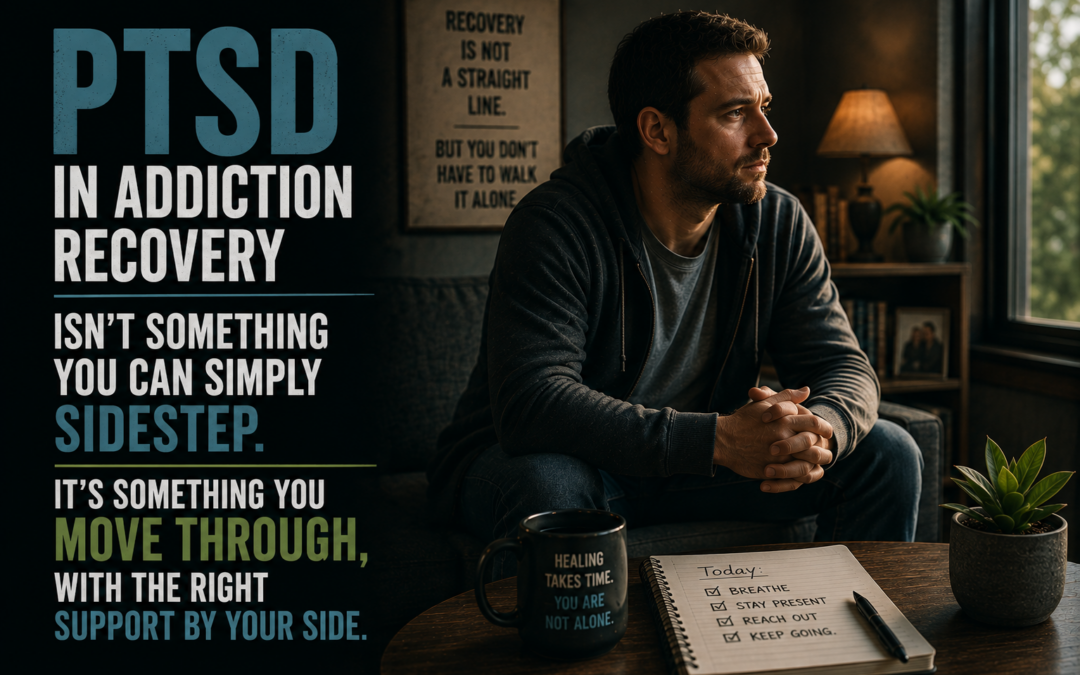
PTSD in addiction recovery is one of the most common and most overlooked challenges people face when they begin healing from substance use. If you have ever felt like you were finally getting sober, only to be blindsided by flashbacks, panic or a constant sense of dread, you are not doing recovery wrong.
You may feel frustrated, scared or exhausted from carrying something you cannot quite name. Many people try to work around their trauma instead of moving through it, hoping it will fade on its own.
That instinct makes sense, and it deserves compassion. Yet PTSD rarely quiets down when it is ignored. With the right support, you can move through it rather than build your recovery around it. Let’s look at what that support involves and how it can help.
What Is PTSD in Addiction Recovery?
PTSD in addiction recovery is the presence of post-traumatic stress disorder alongside a substance use disorder during the healing process. It happens when PTSD symptoms and recovery challenges show up together, often shaping and intensifying each other.
Post-traumatic stress disorder is a condition that can develop after a frightening or overwhelming experience. Its symptoms can include flashbacks, nightmares, anxiety and a constant sense of being on guard.
Think of it as two struggles that share the same roots. When both are addressed together, recovery has a far steadier foundation to stand on.
Who Experiences This?
PTSD in addiction recovery can affect anyone healing from substance use who also carries unresolved trauma. This includes survivors of accidents, violence, abuse, combat, medical trauma or sudden loss.
It also reaches people who cannot point to one single event yet still carry the weight of ongoing stress. Trauma can build gradually over time, not only in one dramatic moment.
You do not need to prove your pain is serious enough to deserve care. If trauma keeps surfacing in your recovery, support can help.
Why Do Trauma and Substance Use Show Up Together?
PTSD and substance use show up together because people often turn to alcohol or drugs to quiet painful symptoms. This overlap is common enough that clinicians have a name for it: a co-occurring disorder or dual diagnosis.
Substances may offer short-term relief from flashbacks, anxiety or sleepless nights. Over time, though, they usually deepen both the trauma and the dependence.
Understanding this connection removes a lot of shame. Your struggle makes sense once you see how these two conditions feed each other.
Why Should You Move Through PTSD in Addiction Recovery Instead of Around It?
You should move through PTSD in addiction recovery instead of around it because unprocessed trauma tends to resurface, often through cravings or relapse. Avoiding it does not make it disappear. It simply pushes the pain into other parts of your life.
When trauma stays unaddressed, the body keeps running its stress response in the background. That ongoing tension can quietly drive the urge to numb or escape.
Moving through trauma with support helps break that cycle. It gives your nervous system the chance to settle and your recovery the chance to hold.
What Happens When Trauma Is Left Unaddressed?
When PTSD is left unaddressed, it often fuels the very substance use a person is trying to overcome. The symptoms do not fade quietly. They tend to grow louder until they demand attention.
You might notice returning cravings, worsening anxiety or a sense that sobriety feels harder than it should. These are not signs of failure. They are signals that a deeper layer needs care.
Recognizing this early can protect your progress. Trauma-informed support helps you respond to those signals with tools rather than substances.
What Does It Mean to Move Through Trauma?
Moving through trauma means gently processing painful experiences in a safe, supported setting rather than avoiding them. It does not mean reliving every detail or forcing yourself to relive the worst moments.
Instead, it involves building skills, understanding your patterns and slowly releasing what has been stored in your body and mind. This work happens at your pace, with guidance every step of the way.
The goal is relief, not retraumatization. Over time, memories lose their grip and calm becomes easier to reach.
What Are the Warning Signs Worth Paying Attention To?
The warning signs of PTSD in addiction recovery include flashbacks, nightmares, anxiety and a constant feeling of being on edge. When these symptoms linger for weeks or interfere with daily life, they deserve attention and care.
Watch for changes in sleep, mood and concentration. Notice whether you avoid certain places, people or memories tied to a painful experience.
Some signs are quieter and easy to overlook. Feeling detached, irritable or emotionally numb can also point to trauma that needs support.
When Should You Reach Out for Help?
You should reach out for help when trauma symptoms start to threaten your recovery, your relationships or your peace of mind. You do not need to wait until things feel unbearable to deserve support.
If cravings return, if sleep slips away, or if you feel stuck in the past, that is reason enough. Early support often makes both recovery and trauma healing feel more manageable.
If you ever have thoughts of harming yourself, please treat that as an urgent reason to seek help right away. You deserve immediate care and compassion in those moments.
How Are PTSD and Addiction Treated Together?
PTSD and addiction are treated together through an integrated plan that addresses trauma and substance use at the same time. This approach combines therapy, medical support and skill-building within one coordinated plan.
Treating both together helps break the cycle where one condition feeds the other. Addressing only the substance use can leave trauma free to pull you backward, and treating only the trauma can leave recovery unsupported.
At Evolve Indy, care treats you as a whole person, not a set of separate problems. Your voice and your comfort guide the direction your treatment takes.
What Therapies Support This Kind of Healing?
Several evidence-based therapies support healing by helping the mind and body process trauma safely. These approaches focus on lasting change rather than quick fixes.
Cognitive behavioral therapy, a practical approach that helps you notice and shift unhelpful thoughts, teaches skills for managing both cravings and trauma responses. Once you see those patterns clearly, you can learn to respond to them differently.
Many programs also include trauma-focused therapy, group support and relapse prevention planning. Care is personalized, so your history and goals shape the plan your team builds with you.
How Does Personalized Care Make a Difference?
Personalized care makes a difference by matching treatment to your specific trauma, substance use and goals. No two people arrive with the same story, so no single plan fits everyone.
A thorough assessment helps a care team understand your full situation before recommending any path. From there, your plan can adjust as you grow and heal.
This attention to detail protects your progress. You receive care that fits your real life, not a generic template.
What Levels of Care Support PTSD in Addiction Recovery?
Several levels of care support PTSD in addiction recovery, and the right one depends on your needs and circumstances. Because healing rarely moves in a straight line, having options keeps your care aligned with where you actually are.
Some people begin with more intensive support and step down over time. Others move between levels as their situation changes.
This flexibility is a genuine strength. A clear continuum of care means you are never locked into a single setting that no longer fits.
What Is a Partial Hospitalization Program?
A Partial Hospitalization Program provides several hours of daily treatment while you return home each evening. It offers intensive support without requiring an overnight stay.
This level of care fits people whose trauma or recovery needs are serious yet manageable outside a residential setting. It often serves as a bridge between full-time care and lighter support.
The daily structure helps steady both trauma symptoms and sobriety. You receive meaningful care while staying connected to home life.
What Is an Intensive Outpatient Program?
An Intensive Outpatient Program offers structured therapy several days a week while you continue living at home. It provides real accountability while leaving room for work, school and family.
This level of care works well for people with a stable home environment and strong motivation. It also supports those stepping down from more intensive treatment.
The flexibility helps you practice new coping skills in real life. You heal while staying connected to the routines that support your recovery.
How Do You Know It Is Time to Seek Help?
You know it is time to seek help when trauma keeps shaping your recovery in ways you cannot control. You do not need to reach a breaking point to deserve support.
Consider these signs as you think about your next step:
- Reaching out makes sense when flashbacks or anxiety keep interrupting your daily life.
- Integrated care helps when past treatment addressed only your substance use and trauma resurfaced.
- Support matters when cravings return alongside painful memories or nightmares.
- A thorough assessment is worthwhile when loved ones express concern about changes they notice in you.
- Professional help is appropriate when you have used substances to numb difficult feelings tied to the past.
Trust the program that listens closely and treats you with respect. Choosing care is a personal decision, and it should feel supportive from the very first conversation.
Common Questions Before Starting Treatment
Can PTSD and addiction really be treated at the same time?
Yes, PTSD and addiction can and often should be treated at the same time. Addressing both together helps prevent the untreated condition from undermining recovery. This integrated approach often leads to steadier, more lasting results.
Will I have to relive my PTSD in therapy?
You will never be forced to share more than you feel ready to share. Trauma-informed care moves at your pace and prioritizes your sense of safety. Your therapist helps you build coping skills first, so the deeper work feels manageable rather than overwhelming.
How long does treatment take?
The length of treatment depends on your needs, history and progress. Some people find meaningful relief in a few months, while others benefit from longer ongoing support. Your care team works with you to set a timeline built around your goals rather than a fixed rule.
What if trauma is what led to my substance use?
If trauma led to your substance use, integrated care is designed exactly for that situation. Treating both together addresses the root of the pattern, not just the surface. This gives your recovery a more complete and lasting foundation.
You Can Move Through This, Not Around It
PTSD in addiction recovery is not something to process around. It is something to move through with the right support, and doing so can protect the sobriety you have worked so hard to build. What you have been carrying is real, and it is treatable with care that sees the full picture.
Healing rarely happens overnight, yet steady, compassionate support can help both trauma and recovery ease over time. You deserve to feel grounded, rested and hopeful about the road ahead.
If you or someone you love is struggling with trauma and substance use, the compassionate team at Evolve Indy is here to help. Reach out today to ask questions, learn about your options or take the first step toward the relief you deserve. You do not have to begin this next chapter alone.