
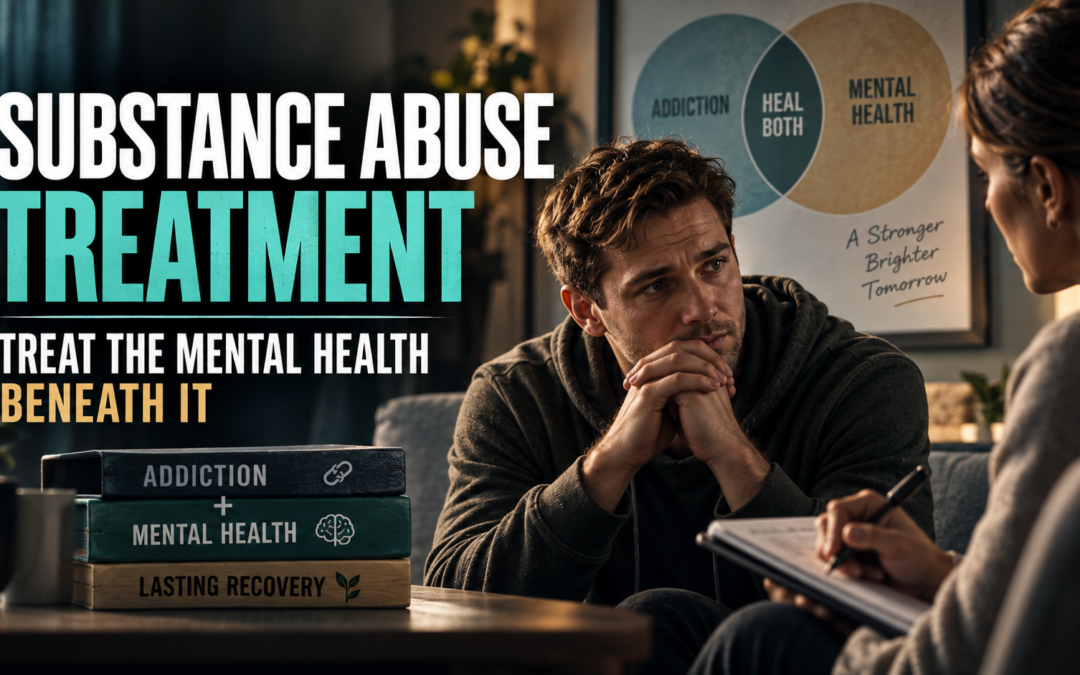
Substance Abuse Treatment that focuses only on stopping the drinking or drug use, while ignoring the mental health struggles underneath, often produces progress that fades soon after discharge. If you or someone you love has completed a program only to return to old patterns, that experience is real and it deserves an honest answer.
You are not weak, and you have not failed at recovery. When treatment addresses the surface while leaving the deeper pain untouched, the foundation can crumble once daily life returns.
The truth is that addiction rarely stands alone. Anxiety, depression and trauma often sit quietly beneath it, shaping the urge to use. Care that treats both together is what helps recovery hold. Let’s look at why this matters and what whole-person treatment can look like.
What Is Substance Abuse Treatment That Addresses Mental Health?
Substance Abuse Treatment that addresses mental health is care that treats a person’s substance use and any underlying emotional struggles at the same time. It looks beyond the drinking or drug use to understand what may be driving it.
This approach recognizes that addiction and mental health are often deeply connected. Treating one while ignoring the other leaves part of the picture unaddressed.
Think of it as tending to the roots, not just the visible branches. When care reaches the deeper cause, the results tend to last longer.
Who Does This Kind of Care Help?
This kind of care helps anyone whose substance use connects to emotional pain, stress or a mental health condition. That includes people living with anxiety, depression, post-traumatic stress or other challenges alongside addiction.
It also helps people who have completed treatment before, only to relapse when hard feelings resurfaced. When mental health went unaddressed, recovery often felt fragile.
You do not need a formal diagnosis to benefit. If your substance use and your emotions feel tangled together, this care may fit your needs.
What Does Whole-Person Treatment Involve?
Whole-person treatment involves therapy, medical support and skill-building tailored to both the addiction and the mental health side. There is no single path that fits everyone, which is why personalized care matters so much.
Care usually begins with a thorough assessment of your history, symptoms and goals. From there, a care team builds a plan designed around your specific situation.
At Evolve Indy, care treats you as a whole person, not a set of symptoms. Your voice and your goals help shape the direction your treatment takes.
Why Is Mental Health So Often Beneath Addiction?
Mental health is so often beneath addiction because people frequently use substances to cope with emotional pain they cannot escape. Alcohol or drugs can offer brief relief from anxiety, sadness or difficult memories.
That relief rarely lasts. Over time, substance use tends to deepen the very feelings it was meant to quiet.
Understanding this connection removes a lot of shame. Your struggle makes sense once you see how these two experiences feed each other.
What Conditions Commonly Sit Beneath Substance Use?
The conditions that commonly sit beneath substance use include anxiety, depression, trauma and other mood-related challenges. Each can make daily life feel heavy enough that substances seem like the only escape.
Anxiety can drive a person to drink to calm racing thoughts. Depression can leave someone reaching for relief from a constant, draining emptiness.
Past trauma often plays a quiet but powerful role. Painful memories can resurface in ways that make numbing feel necessary.
What Is Dual Diagnosis?
Dual diagnosis is the term for living with a mental health condition and a substance use disorder at the same time. Clinicians also call this a co-occurring disorder, and it is more common than many people realize.
When both conditions are present, they tend to shape and intensify each other. Treating one alone often leaves the other free to disrupt progress.
Recognizing dual diagnosis helps care fit the real situation. It shifts the focus from a single behavior to the whole person behind it.
What Happens When the Mental Health Picture Goes Untreated?
When the mental health picture goes untreated, recovery often feels fragile and hard to sustain after discharge. The substance use may pause, yet the deeper pain keeps pulling a person backward.
Imagine completing a program only to have anxiety or depression return with nothing in place to meet it. That emotional weight can quickly reignite the urge to use.
This is not a personal failure. It reflects care that addressed the symptom while missing the source.
Why Does Progress Collapse After Discharge?
Progress collapses after discharge because the trigger driving the substance use was never fully addressed. A person leaves treatment with new sobriety but the same untreated pain.
Daily stress, old relationships and familiar routines can reawaken difficult emotions. Without tools to manage those feelings, relapse can follow.
Integrated care closes that gap. By treating the mental health side too, it helps recovery stand firm when life gets hard again.
Why Is Relapse Not a Sign of Weakness?
Relapse is not a sign of weakness because it often signals that a key part of healing went unaddressed. It reflects a gap in care rather than a flaw in the person.
Many people relapse after treatment that focused only on the substance use. Their effort was genuine, but the deeper cause stayed active.
Seeing relapse this way replaces blame with clarity. It points toward the more complete care that can finally help.
What Does Integrated Substance Abuse Treatment Look Like?
Integrated Substance Abuse Treatment looks like one coordinated plan that treats addiction and mental health together rather than in separate silos. A single care team works from a shared understanding of your full situation.
This approach brings therapists, medical staff and recovery support into the same conversation. Everyone works toward your recovery as a whole, not one piece at a time.
At Evolve Indy, this whole-person care treats you with dignity at every step. Your history and your goals guide the plan your team builds with you.
What Therapies Support This Kind of Healing?
Several evidence-based therapies support healing by addressing both conditions at once. These approaches focus on lasting change rather than quick fixes.
Cognitive behavioral therapy, a practical approach that helps you notice and reshape unhelpful thoughts, teaches you to recognize the triggers behind both substance use and emotional distress. Once you see those patterns clearly, you can learn to respond to them in healthier ways.
Many programs also include trauma-focused therapy, group support and relapse prevention planning. Care is personalized, so your history and goals shape the plan your team builds with you.
How Does Medication Fit Into Care?
Medication can fit into care by easing symptoms that make healing harder to sustain. For some people, the right medication helps steady mood or reduce cravings so therapy can do its deeper work.
Any medication is prescribed and monitored by trained professionals. It becomes one part of a broader plan, not a standalone fix.
The goal is balance, not numbness. Medication, when appropriate, clears space for the real work of recovery.
What Levels of Care Support Substance Abuse Treatment?
Several levels of care support Substance Abuse Treatment, and the right one depends on your needs and circumstances. Because recovery rarely moves in a straight line, having options keeps your care aligned with where you actually are.
Some people begin with more intensive support and step down over time. Others move between levels as their situation changes.
This flexibility is a genuine strength. A clear continuum of care means you are never locked into a single setting that no longer fits.
What Is Residential Treatment?
Residential treatment is a level of care where you live at a facility full-time while receiving structured therapy and daily support. It removes everyday triggers so you can focus fully on healing both conditions.
This setting suits people who need distance from a difficult environment or benefit from around-the-clock support. The steady routine often brings a welcome sense of calm.
For many, this becomes a strong starting point. It builds a foundation before transitioning to less intensive care.
What Is a Partial Hospitalization Program?
A Partial Hospitalization Program provides several hours of daily treatment while you return home each evening. It offers intensive support without requiring an overnight stay.
This level of care fits people whose needs are serious yet manageable outside a residential setting. It often serves as a bridge between full-time care and lighter support.
The daily structure helps steady both mental health and recovery. You receive meaningful care while staying connected to home life.
What Is an Intensive Outpatient Program?
An Intensive Outpatient Program offers structured therapy several days a week while you continue living at home. It provides real accountability while leaving room for work, school and family.
This level of care works well for people with a stable home environment and strong motivation. It also supports those stepping down from more intensive treatment.
The flexibility helps you practice new skills in real life. You heal while staying connected to the routines that support you.
How Do You Know It Is Time to Seek Help?
You know it is time to seek help when substance use and difficult emotions keep feeding each other in ways you cannot control. You do not need to reach a crisis point to deserve support.
Consider these signs as you think about your next step:
- Reaching out makes sense when you use alcohol or drugs to cope with anxiety, depression or painful memories.
- Integrated care helps when past treatment addressed only your substance use and relapse followed.
- Support matters when your mood, sleep or relationships shift alongside your substance use.
- A thorough assessment is worthwhile when loved ones express concern about both your emotions and your drinking or drug use.
- Professional help is appropriate when you feel stuck in a cycle that willpower alone has not broken.
Trust the program that listens closely and treats you with respect. Choosing care is a personal decision, and it should feel supportive from the very first conversation.
Common Questions Before Starting Treatment
Why does treating only the addiction often fail?
Treating only the addiction often fails because the emotional pain driving the substance use stays untouched. When that pain resurfaces after discharge, the urge to use can return with it. Addressing both together gives recovery a steadier, more lasting foundation.
Do I need a mental health diagnosis to get this care?
You do not need an official diagnosis to benefit from whole-person care. A thorough assessment can identify what you are experiencing and guide your treatment. If a mental health condition is present, your care team addresses it alongside your recovery.
Can both conditions really be treated at the same time?
Yes, both conditions can and often should be treated together. A coordinated care team addresses your mental health and substance use within one unified plan. This keeps either condition from being overlooked or pushed aside.
What if I have relapsed before?
A past relapse does not mean recovery is out of reach for you. It often means an earlier approach missed an underlying condition. Integrated care can address that gap and give your recovery a more complete foundation.
Recovery That Lasts Starts With the Whole Picture
Substance Abuse Treatment that skips the mental health picture beneath the addiction tends to produce results that do not outlast discharge, because the deeper cause stays active. Care that treats both together is what helps recovery hold long after treatment ends.
Recovery is possible, and reaching out for help is a sign of strength rather than weakness. You do not have to navigate this journey alone, and you do not have to settle for care that treats only part of the picture.
If you or someone you love is ready to explore treatment options, the compassionate team at Evolve Indy is here to help. Reach out today to ask questions, learn about your options or take the next step toward a healthier, more hopeful future. You do not have to begin it alone.