
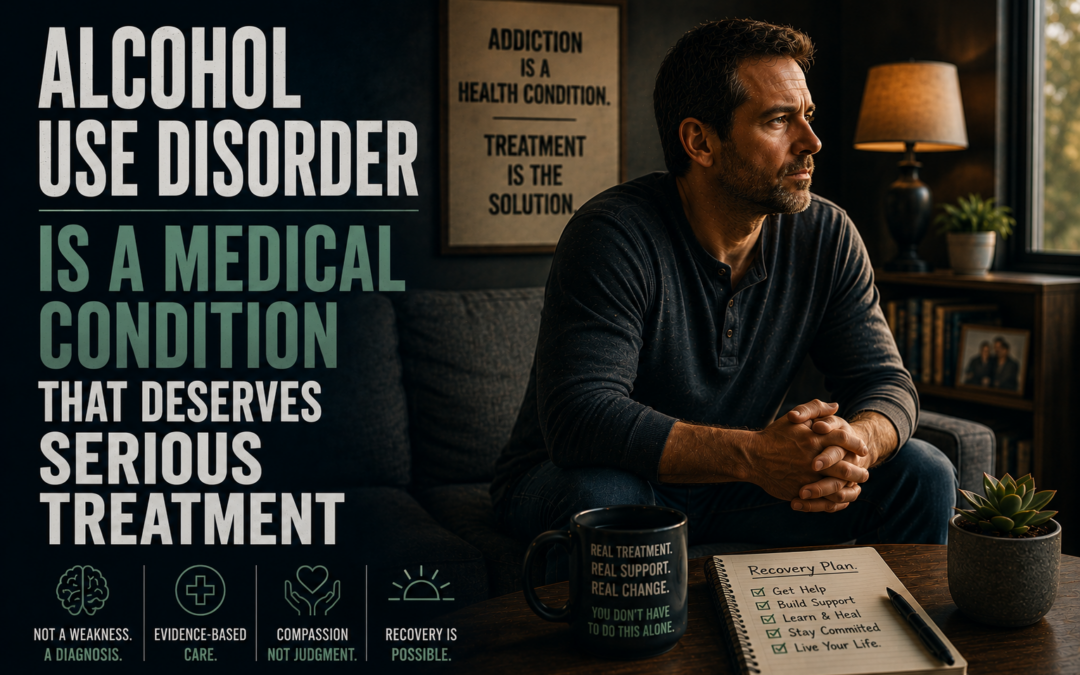
Alcohol Use Disorder Treatment is medical care built to address a genuine health condition, not a personal weakness or a lack of willpower. If you or someone you love has tried again and again to cut back on drinking despite real consequences, you already know how confusing and painful that struggle can feel.
You may feel frustrated, ashamed or unsure where to even begin. Those feelings are valid, and they do not mean you have failed at anything.
Alcohol use disorder is a recognized medical diagnosis. That means it deserves the same serious, structured care as any other health condition. Let’s look at what that care involves and why matching treatment to the seriousness of the diagnosis makes such a difference.
What Is Alcohol Use Disorder Treatment?
Alcohol Use Disorder Treatment is a structured, medical approach that helps a person safely reduce or stop drinking while addressing the causes behind it. It combines medical support, therapy and ongoing care to treat both the body and the mind.
This care recognizes that alcohol use disorder changes brain function and physical health over time. Because of that, real treatment goes far beyond telling someone to simply drink less.
Think of it like care for any chronic condition. A clear plan, professional guidance and steady support give you a strong foundation for healing.
Why Is Alcohol Use Disorder Considered a Medical Diagnosis?
Alcohol use disorder is considered a medical diagnosis because it involves measurable changes in the brain, body and behavior. Health professionals diagnose it using established medical criteria, not personal opinion or judgment.
These criteria look at patterns like losing control over drinking, needing more alcohol to feel the same effect, and experiencing withdrawal. The more of these signs a person has, the more serious the condition tends to be.
Understanding this shifts the whole conversation. It moves the question from “Why can’t I just stop?” to “What kind of medical support do I actually need?”
Who Experiences Alcohol Use Disorder?
Alcohol use disorder can affect anyone, regardless of age, background, income or how their life looks from the outside. It reaches people who seem to have everything together and people who are quietly struggling to hold on.
Working professionals, parents, students and retirees all experience this condition in different ways. Some drink daily, while others go through periods of heavy use followed by attempts to quit.
Knowing this condition does not discriminate can ease the shame many people carry. It is a common health issue, not a personal defect.
Why Does Willpower Alone Fall Short?
Willpower alone often falls short because alcohol use disorder involves changes in the brain that affect self-control and reward. These changes are physical, not a reflection of character or effort.
Many people try repeatedly to quit on their own before reaching out for help. Each attempt takes real courage, even when the results feel discouraging.
Effective treatment adds medical and emotional tools to that determination. Support does not replace your effort. It gives your effort a genuine chance to succeed.
What Makes Alcohol So Hard to Stop Without Help?
Alcohol is hard to stop without help because the body can grow physically dependent on it over time. When drinking stops, the nervous system can react strongly, sometimes in ways that feel overwhelming or unsafe.
This dependence creates cravings that willpower alone struggles to quiet. The urge to drink can feel less like a choice and more like a physical need.
Professional care addresses that biology directly. With the right support, those cravings and symptoms become far more manageable.
Why Does Alcohol Use Disorder Treatment Need to Match the Seriousness of the Diagnosis?
Alcohol Use Disorder Treatment needs to match the seriousness of the diagnosis because alcohol dependence can affect nearly every system in the body. Treating it casually risks overlooking real physical and emotional dangers.
Alcohol withdrawal, in particular, can be medically serious and sometimes life-threatening without proper care. This is one reason professional support matters so much in early recovery.
Serious care also addresses the reasons behind the drinking. When treatment matches the depth of the condition, healing has a stronger, steadier foundation.
What Makes Alcohol Withdrawal Different From Other Substances?
Alcohol withdrawal is different because it can cause severe physical symptoms that require medical supervision. For some people, stopping suddenly can lead to dangerous complications.
Symptoms may include tremors, sweating, anxiety, nausea and in serious cases seizures. These reactions reflect how deeply alcohol can affect the nervous system over time.
Because of these risks, safely stopping often begins with medical detox. Professional monitoring helps protect your health during those first difficult days.
What Does Serious Alcohol Use Disorder Treatment Involve?
Serious Alcohol Use Disorder Treatment involves a combination of medical care, therapy and ongoing support tailored to each person’s needs. There is no single path that fits everyone, which is why personalized care matters so much.
Treatment often begins with a thorough assessment of your health, history and goals. From there, a care team builds a plan designed around your specific situation.
At Evolve Indy, this care treats you as a whole person, not a set of symptoms. Your voice and your goals help shape the direction your treatment takes.
What Role Does Medical Detox Play?
Medical detox plays a foundational role by helping you safely manage withdrawal under professional supervision. It focuses on keeping you stable and comfortable during the earliest stage of recovery.
During detox, a medical team monitors your symptoms and provides support as needed. This care helps reduce the physical risks that can come with stopping alcohol use.
Detox is a starting point, not the whole journey. Once your body stabilizes, the deeper work of recovery can begin.
How Does Therapy Support Recovery?
Therapy supports recovery by helping you understand and change the patterns behind alcohol use. It addresses the emotions, triggers and experiences that shape the way you cope.
Cognitive behavioral therapy, a practical approach that helps you notice and shift unhelpful thoughts, helps you recognize the situations that lead to drinking. Once you see those patterns clearly, you can learn to respond to them in healthier ways.
Group therapy adds connection and shared understanding, which reduces isolation. Together, these approaches help you build skills that last well beyond treatment.
How Does Medication-Assisted Treatment Help?
Medication-Assisted Treatment helps by easing cravings and reducing the physical pull toward alcohol. Certain approved medications, prescribed and monitored by professionals, can lower the urge to drink or make drinking less appealing.
These medications work best alongside therapy, not on their own. Together, they support both the body and the mind through recovery.
The goal is stability, not a quick fix. When cravings quiet down, you gain the space to focus on lasting change.
Can Alcohol Use Disorder and Mental Health Conditions Occur Together?
Yes, alcohol use disorder and mental health conditions often occur together. Many people drink to cope with anxiety, depression or past trauma, and treating only one issue can leave the other unaddressed.
This overlap is known as a co-occurring disorder or dual diagnosis. It is more common than many people realize.
At Evolve Indy, integrated care addresses both at the same time. Treating them together gives you a more complete and lasting path toward feeling well.
What Levels of Care Support Recovery?
Several levels of care support recovery, and the right one depends on your needs and circumstances. Because recovery is rarely a straight line, having options helps your care stay aligned with where you actually are.
Some people begin with more intensive support and step down over time. Others move between levels as their situation changes.
This flexibility is a strength. A clear continuum of care means you are never locked into a single setting that no longer fits.
What Are the Main Levels of Care?
The main levels of care range from full-time residential treatment to flexible outpatient support. Each one offers a different balance of structure and independence.
Residential treatment means living at a facility full-time, which removes daily triggers so you can focus fully on healing. A partial hospitalization program offers intensive daily therapy while you return home each evening.
An intensive outpatient program provides structured therapy several days a week while you keep up with work and family. Together, these options let your care grow and adjust with you.
How Do You Know It Is Time to Seek Help?
You know it is time to seek help when drinking begins to interfere with your health, relationships or daily life. You do not need to reach a crisis point to deserve support.
Consider these signs as you think about your next step:
- Reaching out makes sense when you have tried to cut back on your own without lasting success.
- Professional support helps when drinking has begun to affect your health, mood or responsibilities.
- Medical care matters when you notice withdrawal symptoms like shaking, sweating or anxiety when you stop.
- An assessment is worthwhile when loved ones express concern about your drinking.
- Care is appropriate when you drink to cope with anxiety, depression or difficult memories.
Trust the program that listens closely and answers your questions honestly. Choosing care is a personal decision, and it should feel supportive from the very first conversation.
Common Questions Before Starting Treatment
Is alcohol use disorder really a medical condition?
Yes, alcohol use disorder is a recognized medical condition diagnosed using established health criteria. It involves real changes in the brain and body that affect control over drinking. Understanding it this way helps replace shame with a clear path toward care.
Do I need medical detox to stop drinking?
Many people benefit from medical detox because alcohol withdrawal can be physically serious. A professional assessment helps determine whether supervised detox is right for your situation. Your safety always comes first, so a care team guides this decision with you.
Can I get treatment while keeping my job?
Yes, many people continue working during outpatient levels of care. Flexible scheduling exists so you can protect your responsibilities while receiving support. Your care team can help match the right level of care to your daily life.
How long does alcohol use disorder treatment take?
The length of treatment depends on your needs, your history and your progress. Some people spend a few weeks in intensive care, while others benefit from months of ongoing support. Your care team works with you to set a timeline built around your goals rather than a fixed rule.
You Deserve Care That Takes This Seriously
Alcohol Use Disorder Treatment works best when it matches the seriousness of the diagnosis with real medical care, therapy and ongoing support. Alcohol use disorder is a health condition, and it deserves the same compassion and structure as any other.
Recovery is possible, and reaching out for help is a sign of strength rather than weakness. You do not have to navigate this journey alone, and you do not have to carry the weight of it in silence.
If you or someone you love is ready to explore treatment options, the compassionate team at Evolve Indy is here to help. Reach out today to ask questions, learn about your options or speak with admissions about taking the next step toward a healthier, more hopeful future.