
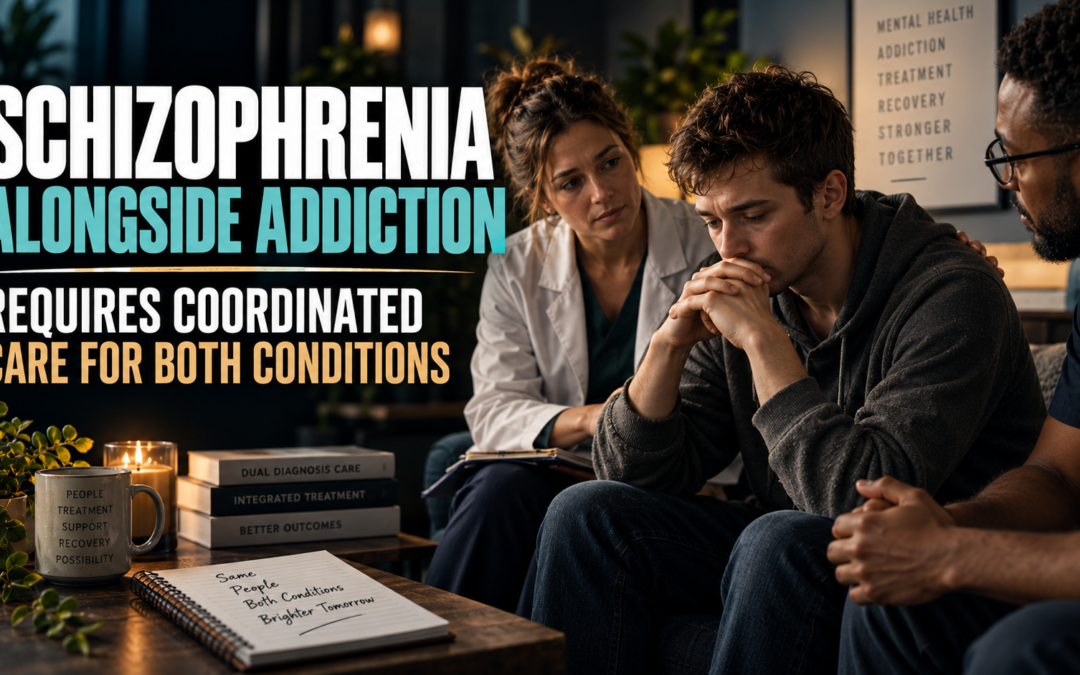
Schizophrenia alongside addiction is one of the most misunderstood combinations in mental health and recovery, and the way it gets treated often decides whether healing holds. If you or someone you love is facing both, you may feel exhausted from being passed between providers who each treat only one piece.
You are not asking for too much, and you are not beyond help. Wanting care that sees the whole person is reasonable, and it is possible.
Too often, treatment tries to handle one condition first and the other later. That sequential approach can leave a person caught in the middle, with neither struggle fully addressed. The better path treats both at the same time, under one coordinated team. Let’s look at why this matters and what compassionate, whole-person care can look like.
What Does Schizophrenia Alongside Addiction Actually Mean?
Schizophrenia alongside addiction means a person is living with schizophrenia and a substance use disorder at the same time. Clinicians call this a co-occurring disorder or dual diagnosis, and it describes two conditions that shape and intensify each other.
Schizophrenia is a mental health condition that affects how a person thinks, feels and perceives the world. Addiction involves alcohol or drug use that has become difficult to control.
Think of these as two threads woven together rather than two separate problems. Because they connect so closely, they usually need to be understood and treated as one picture.
Who Does This Affect?
This affects people of every age and background, along with the families who love them. It reaches those recently diagnosed and those who have managed schizophrenia for years.
It also reaches people who turned to substances to quiet distressing symptoms. That relief tends to be brief, and over time substance use often deepens both conditions.
You are not alone if this describes your situation. Compassionate, coordinated care can make a genuine difference.
Why Do These Two Conditions Appear Together So Often?
These two conditions appear together because people living with schizophrenia sometimes use substances to cope with symptoms, stress or isolation. Substances can seem to offer temporary relief from fear, racing thoughts or unusual perceptions.
That relief rarely lasts, and substances often worsen the very symptoms they were meant to ease. The result is a cycle where each condition feeds the other.
Understanding this connection removes a lot of shame. What you or your loved one is facing makes sense once you see how tightly these conditions link.
Why Does Treating Schizophrenia Alongside Addiction Sequentially Fall Short?
Treating schizophrenia alongside addiction sequentially falls short because handling one condition while ignoring the other leaves a powerful trigger in place. When care addresses only one side, the untreated condition often pulls a person backward.
Many programs ask a person to stabilize their substance use before addressing mental health, or the reverse. This leaves someone waiting for care they need right now.
Recovery rarely works in tidy stages. When both conditions are active, both need attention at the same time.
What Happens When One Condition Is Treated First?
When one condition is treated first, the other often disrupts that progress before it can hold. Substance use can worsen confusion or agitation, while unmanaged symptoms can drive a return to substances.
Someone might stabilize their symptoms only to relapse when nothing addressed the substance use. The setback is not a personal failure. It reflects care that left part of the picture untouched.
This pattern can repeat for years. Each round can chip away at hope, when the real issue was the approach.
Why Does the Sequential Model Persist?
The sequential model persists because mental health care and addiction care have often lived in separate systems. Providers in one system may not be equipped to treat the other.
Families frequently end up bouncing between programs that do not communicate. That fragmentation is confusing, exhausting and unfair to the person seeking help.
Integrated care offers a better way. One team holding both conditions removes that burden and keeps everyone working from the same plan.
How Does Simultaneous, Coordinated Care Work?
Simultaneous, coordinated care works by treating schizophrenia and substance use together within one unified plan led by a single team. Instead of dividing the conditions, it addresses how they interact.
A coordinated team brings psychiatrists, therapists and recovery support into a shared understanding of the whole person. Everyone works toward the same goals rather than in separate pieces.
At Evolve Indy, care treats you as a whole person, not a list of symptoms. Your voice and your comfort help guide the direction your treatment takes.
How Does a Dual Diagnosis Team Carry Both Conditions at Once?
A dual diagnosis team carries both conditions at once by sharing information and adjusting care as a single unit. When a medication changes, the whole team knows. When a new stressor appears, everyone can respond together.
This shared awareness protects progress. Nothing falls through the cracks between providers who never speak.
For families, this coordination brings real relief. It replaces uncertainty with a clear, unified direction.
What Therapies Support This Kind of Healing?
Several evidence-based therapies support healing by addressing symptoms and substance use side by side. These approaches focus on steady, lasting progress rather than quick fixes.
Cognitive behavioral therapy, a practical approach that helps a person notice and reshape unhelpful thoughts, supports coping and daily function. When substance use is present, therapy also addresses the triggers behind it.
Many programs include group support, family involvement and routine-building strategies. Care is personalized, so your history and goals shape the plan your team builds with you.
How Does Medication Fit Into Coordinated Care?
Medication fits into coordinated care by helping steady symptoms so other work can take hold. For schizophrenia, medication is often central to managing the condition over time.
When substance use is involved, a coordinated team watches closely to keep the plan safe and effective. Substances can interfere with medication, so shared oversight matters.
The goal is balance and stability. Medication, when appropriate, clears space for therapy, connection and daily life to grow stronger.
Why Does Coordination Around Medication Matter So Much?
Coordination around medication matters because substances can change how medication works and mask warning signs. A team treating both conditions can spot these effects early.
When providers work separately, medication decisions can conflict or leave gaps. That can make symptoms less predictable and more distressing.
Unified oversight keeps the plan consistent. One team managing both conditions helps medication do its job safely.
What Levels of Care Support Schizophrenia Alongside Addiction?
Several levels of care support schizophrenia alongside addiction, and the right one depends on your needs and circumstances. Because recovery rarely moves in a straight line, having options keeps your care aligned with where you actually are.
Some people begin with more intensive support and step down over time. Others move between levels as their situation changes.
This flexibility is a genuine strength. A clear continuum of care means no one is locked into a single setting that no longer fits.
What Is Residential Treatment?
Residential treatment is a level of care where you live at a facility full-time while receiving structured therapy, medical support and daily guidance. It removes everyday triggers so healing can become the main focus.
This setting suits people who need distance from a difficult environment or benefit from around-the-clock support. The steady routine often brings a welcome sense of calm.
For many, this becomes a strong starting point. It builds a foundation before transitioning to less intensive care.
What Is a Partial Hospitalization Program?
A Partial Hospitalization Program provides several hours of daily treatment while you return home each evening. It offers intensive support without requiring an overnight stay.
This level of care fits people whose needs are serious yet manageable outside a residential setting. It often serves as a bridge between full-time care and lighter support.
The daily structure helps steady symptoms and routines. You receive meaningful care while staying connected to home life.
What Is an Intensive Outpatient Program?
An Intensive Outpatient Program offers structured therapy several days a week while you continue living at home. It provides real accountability while leaving room for work, school and family.
This level of care works well for people with a stable home environment and steady support. It also helps those stepping down from more intensive treatment.
The flexibility lets you practice new skills in real life. Healing continues while your daily routines stay intact.
How Do You Know It Is Time to Seek Coordinated Care?
You know it is time to seek coordinated care when schizophrenia and substance use begin to disrupt daily life, safety or relationships. You do not need to reach a crisis point to deserve support.
Consider these signs as you think about your next step:
- Reaching out makes sense when symptoms feel harder to manage or seem to be worsening.
- Integrated care helps when substance use appears alongside schizophrenia and past treatment addressed only one condition.
- Support matters when medication feels inconsistent or difficult to keep steady.
- A thorough assessment is worthwhile when loved ones express concern about changes they notice.
- Coordinated care is appropriate when you feel stuck moving between providers who never share the full picture.
Trust the program that listens closely and treats you with respect. Choosing care is a personal decision, and it should feel supportive from the very first conversation.
Common Questions Before Starting Treatment
Can schizophrenia and addiction be treated at the same time?
Yes, schizophrenia and addiction can and often should be treated at the same time. Addressing both together helps prevent one condition from undermining progress on the other. This integrated approach often leads to steadier, more lasting stability.
Why is simultaneous care better than treating one condition first?
Simultaneous care is better because both conditions stay active and influence each other in real time. Treating one first often leaves the other free to disrupt progress. Addressing them together closes that gap and protects healing.
What does a coordinated team actually do?
A coordinated team combines medical, mental health and recovery support within one shared plan. Providers exchange information and adjust care together rather than working in isolation. This spares families the burden of coordinating care on their own.
How long does treatment take?
The length of treatment depends on the person’s needs, history and progress. Some people benefit from a few weeks of intensive care, while others need longer ongoing support. A care team sets a timeline built around goals rather than a fixed rule.
You Do Not Have to Carry Both Conditions Alone
Schizophrenia alongside addiction requires coordination across both conditions at the same time, not one after the other, because each condition keeps shaping the other while a person waits. Simultaneous, unified care keeps treatment consistent, reduces confusion and gives both the person and their family a clearer path forward.
Healing rarely happens overnight, yet steady, coordinated support can help daily life feel more stable and hopeful over time. You deserve care that sees the whole picture and treats you with dignity at every step.
If you or someone you love is navigating both conditions, the compassionate team at Evolve Indy is here to help. Reach out today to ask questions, learn about your options or take the first step toward steadier, more coordinated care. You do not have to begin this journey alone.