
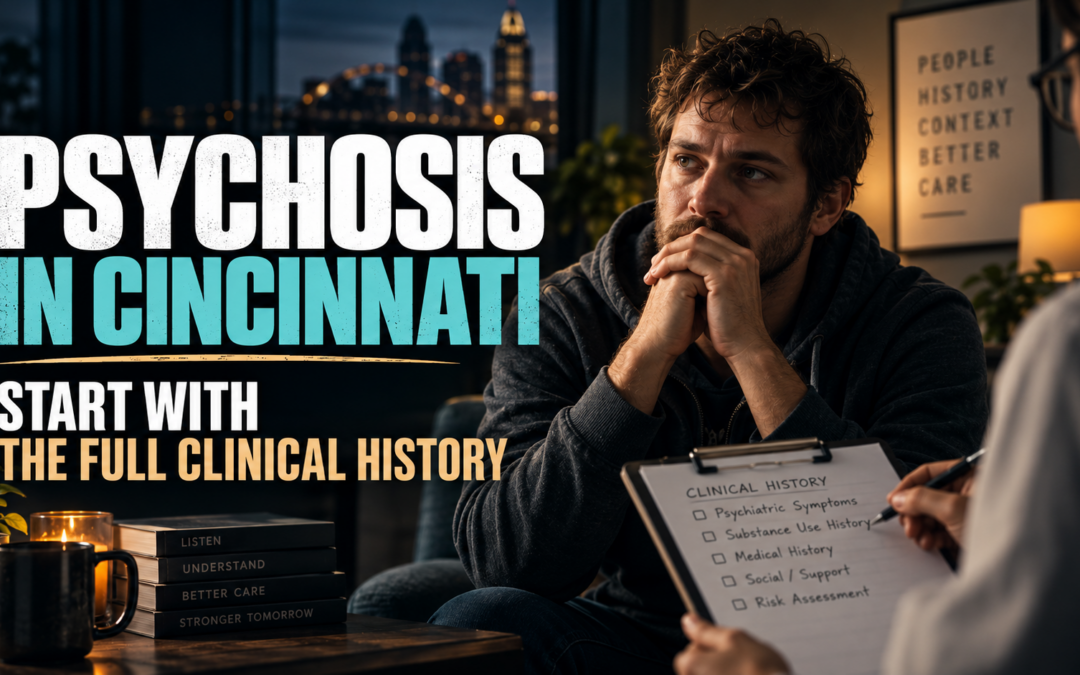
Psychosis in Cincinnati is far easier to understand and treat when a person’s substance history is part of the clinical picture from the very first conversation. If you or someone you love has experienced confusing thoughts, unusual perceptions or a break from reality, that fear is real and it deserves a careful, complete answer.
You may feel scared, overwhelmed or unsure what is actually happening. Those feelings make sense, and they do not mean anyone is beyond help.
An accurate assessment changes everything about the care that follows. When a care team understands the full story, including any alcohol or substance use, treatment can finally fit the real situation. Let’s look at what this kind of care involves and why the starting point matters so much.
What Is Psychosis?
Psychosis is a change in the way a person thinks, perceives or understands reality, often involving confusion, unusual beliefs or altered perceptions. It is a symptom rather than a single diagnosis, which means several conditions or experiences can cause it.
Psychosis can include seeing or hearing things others do not, holding beliefs that feel very real yet are hard to explain, or struggling to think clearly. These experiences can feel frightening for the person and for their loved ones.
Think of psychosis as a signal, not a verdict. It tells a care team that something needs attention, and understanding the cause is the first step toward relief.
Who Experiences Psychosis?
Psychosis can affect anyone, regardless of age, background or how life looks from the outside. It reaches people living with mental health conditions, those going through extreme stress and people whose substance use has influenced their thinking.
It often appears alongside conditions like schizophrenia, bipolar disorder or severe depression. It can also follow the use of certain substances or the process of withdrawal.
You are not alone if this is happening to you or someone you care about. Psychosis is treatable, and compassionate support makes a genuine difference.
What Does Psychosis Feel Like?
Psychosis often feels disorienting, isolating and hard to put into words. A person may sense that something is wrong without being able to explain it clearly.
Some people notice their thoughts racing or scattering. Others feel disconnected from the world around them or convinced of things that others cannot see.
Understanding this experience with compassion removes shame. What a person is going through is real to them, and it deserves gentle, informed care.
Why Does Substance History Matter in Psychosis in Cincinnati?
Substance history matters in psychosis in Cincinnati because certain substances can trigger, mimic or worsen psychotic symptoms. Without that information, a care team is working with only part of the picture.
Some substances can cause temporary psychosis during use or withdrawal. Others can intensify an existing mental health condition, making symptoms harder to read.
When substance use is known from the start, the assessment becomes far more accurate. That clarity helps a care team choose the right path instead of guessing.
How Can Substances Affect Psychosis?
Substances can affect psychosis by causing symptoms, deepening them or masking an underlying condition. Each substance influences the brain differently, so the effects vary from person to person.
For some, psychotic symptoms appear only while using or withdrawing from a substance. For others, substance use worsens a condition that was already present.
Knowing this helps a care team tell the difference. That distinction shapes the diagnosis, the treatment and the road to recovery.
Why Is a Complete History So Important?
A complete history is important because it prevents misdiagnosis and helps care fit the true cause of symptoms. Missing information can lead to treatment that never quite works.
Imagine treating psychosis as one condition when substance use is actually a major factor. The plan may miss the mark, leaving symptoms unresolved.
An honest, thorough conversation protects the person. It allows the care team to build a plan around what is really happening rather than a partial view.
Why Does Integrated Assessment Lead to Better Care?
Integrated assessment leads to better care because it looks at mental health and substance use together rather than in separate silos. This whole-person view gives the clearest possible understanding of what someone is facing.
When these two areas are assessed together, a care team can see how they interact. That insight helps them design treatment that addresses the full situation.
At Evolve Indy, care begins with a thorough assessment that treats you as a whole person, not a list of symptoms. Your voice and your history help shape the direction your treatment takes.
What Happens During an Integrated Assessment?
During an integrated assessment, a trained professional gently explores your mental health, substance use, physical health and personal history. There are no invasive procedures, just a supportive conversation designed to understand you.
You may be asked about your symptoms, your experiences and any alcohol or substance use over time. These details help reveal a pattern that a single moment could never show.
The goal is understanding, not judgment. A clear, complete picture allows your care to fit your real needs from the very beginning.
What Happens When Assessment Misses the Full Picture?
When assessment misses the full picture, treatment can address the wrong cause and leave symptoms in place. This often leads to frustration for the person and their family.
Care that overlooks substance use may treat only the visible symptoms. The underlying trigger stays active, which can bring symptoms back again and again.
A complete assessment closes that gap. It gives everyone a shared, accurate starting point that supports lasting progress.
What Is Dual Diagnosis, and How Does It Connect Here?
Dual diagnosis is the term for experiencing a mental health condition and a substance use disorder at the same time. When psychosis and substance use appear together, this is exactly the situation dual diagnosis care is built to address.
This overlap is more common than many people realize. People sometimes turn to substances to quiet distressing symptoms, and substances can deepen the very experiences they were meant to ease.
Understanding this connection removes a lot of shame. What you or your loved one is going through makes sense once you see how closely these experiences can be linked.
How Does Integrated Treatment Help?
Integrated treatment helps by addressing mental health and substance use together within one coordinated plan. Instead of treating one and hoping the other fades, care works on both at the same time.
A single team brings medical staff, therapists and support together around a shared understanding. Everyone works toward your recovery as a whole, not in separate pieces.
At Evolve Indy, this approach keeps care consistent and centered on you. Treating both together gives your progress a steadier, more lasting foundation.
What Levels of Care Support Psychosis in Cincinnati?
Several levels of care support psychosis in Cincinnati, and the right one depends on your needs and circumstances. Because recovery rarely moves in a straight line, having options keeps your care aligned with where you actually are.
Some people begin with more intensive support and step down over time. Others move between levels as their situation changes.
This flexibility is a genuine strength. A clear continuum of care means you are never locked into a single setting that no longer fits.
What Is Residential Treatment?
Residential treatment is a level of care where you live at a facility full-time while receiving structured therapy, medical support and daily guidance. It removes everyday triggers so healing can become your main focus.
This setting suits people who need distance from a difficult environment or benefit from around-the-clock support. The steady routine often brings a welcome sense of calm.
For many, this becomes a strong starting point. It builds a foundation before transitioning to less intensive care.
What Is a Partial Hospitalization Program?
A Partial Hospitalization Program provides several hours of daily treatment while you return home each evening. It offers intensive support without requiring an overnight stay.
This level of care fits people whose needs are serious yet manageable outside a residential setting. It often serves as a bridge between full-time care and lighter support.
The daily structure helps steady symptoms and routines. You receive meaningful care while staying connected to home life.
What Is an Intensive Outpatient Program?
An Intensive Outpatient Program offers structured therapy several days a week while you continue living at home. It provides real accountability while leaving room for work, school and family.
This level of care works well for people with a stable home environment and steady support. It also helps those stepping down from more intensive treatment.
The flexibility lets you practice new skills in real life. Healing continues while your daily routines stay intact.
How Do You Know It Is Time to Seek Help?
You know it is time to seek help when psychosis or substance use begins to disrupt daily life, safety or relationships. You do not need to reach a crisis point to deserve support.
Consider these signs as you think about your next step:
- Reaching out makes sense when unusual thoughts or perceptions begin to interfere with daily life.
- Integrated care helps when substance use appears alongside psychosis and past treatment addressed only one.
- Support matters when symptoms feel harder to manage or seem to be growing stronger.
- A thorough assessment is worthwhile when loved ones express concern about changes they notice.
- Coordinated care is appropriate when you feel unsure whether substances are part of what is happening.
Trust the program that listens closely and treats you with respect. Choosing care is a personal decision, and it should feel supportive from the very first conversation.
Common Questions Before Starting Treatment
Can substances really cause psychosis?
Yes, certain substances can trigger psychotic symptoms during use or withdrawal. For some people these symptoms fade as the substance leaves the body, while for others they signal an underlying condition. A thorough assessment helps a care team understand the difference and guide the right treatment.
Why does my care team ask about substance use?
Your care team asks about substance use because it directly affects how psychosis is understood and treated. Sharing this history helps them build an accurate picture and choose care that truly fits. This conversation is about understanding, not judgment.
Can psychosis and substance use be treated together?
Yes, psychosis and substance use can and often should be treated at the same time. Integrated care addresses both within one coordinated plan, which helps prevent one from undermining progress on the other. This approach often leads to steadier, more lasting stability.
How long does treatment take?
The length of treatment depends on your needs, history and progress. Some people benefit from a few weeks of intensive care, while others need longer ongoing support. Your care team works with you to set a timeline built around your goals rather than a fixed rule.
You Do Not Have to Face This Alone
Psychosis in Cincinnati is better understood, and better treated, when a person’s substance history is part of the clinical assessment from the very start. A complete picture allows care to fit the real cause, which gives both the person and their family a clearer, more hopeful path forward.
Healing rarely happens overnight, yet accurate, compassionate care can help daily life feel more stable over time. You deserve support that sees the whole story and treats you with dignity at every step.
If you or someone you love is navigating psychosis and substance use, the compassionate team at Evolve Indy is here to help. Reach out today to ask questions, learn about your options or take the first step toward steadier, more coordinated care. You do not have to begin this journey alone.