Indiana Drug & Alcohol Addiction Treatment
Our addiction treatment provides compassionate, personalized care to support recovery and healing. We continually improve our programs to better meet each individual’s needs.
What is Drug and Alcohol Addiction?
Addiction is a complex condition that significantly impacts the brain. Those who struggle with addiction have an intense focus on using or obtaining a particular substance such as alcohol or drugs. This focus persists to the point where it eventually takes over the addict’s life. Unfortunately, they will continue to use alcohol or drugs even when they are well aware of the adverse consequences that come with their use.
There are many substances one can become addicted to, ranging from alcohol and marijuana to opioid painkillers, stimulants, sedatives, and tobacco, among others. Each substance affects the brain and body in different ways. The most common effect is how the substance impacts the reward centers of the brain. When someone initially starts using, their substance of choice affects how the brain releases a chemical called dopamine. Dopamine is a naturally occurring chemical in the body known for causing feelings of euphoria and happiness. Eventually, after ongoing use, someone who is addicted to substances finds that they cannot achieve similar levels of joy and happiness without substances. Also, in time, the amount of the substance required to attain the level of happiness that was found early on continues to increase.
At our drug & alcohol addiction treatment center in Indiana, we offer a caring, compassionate approach to treatment. With us, you are not just another number. Get in touch today & find out why Evolve Indy® is your top choice for an Indiana drug rehab center.
Our Modern Drug & Alcohol Addiction Treatment Facility Has Everything You Need.
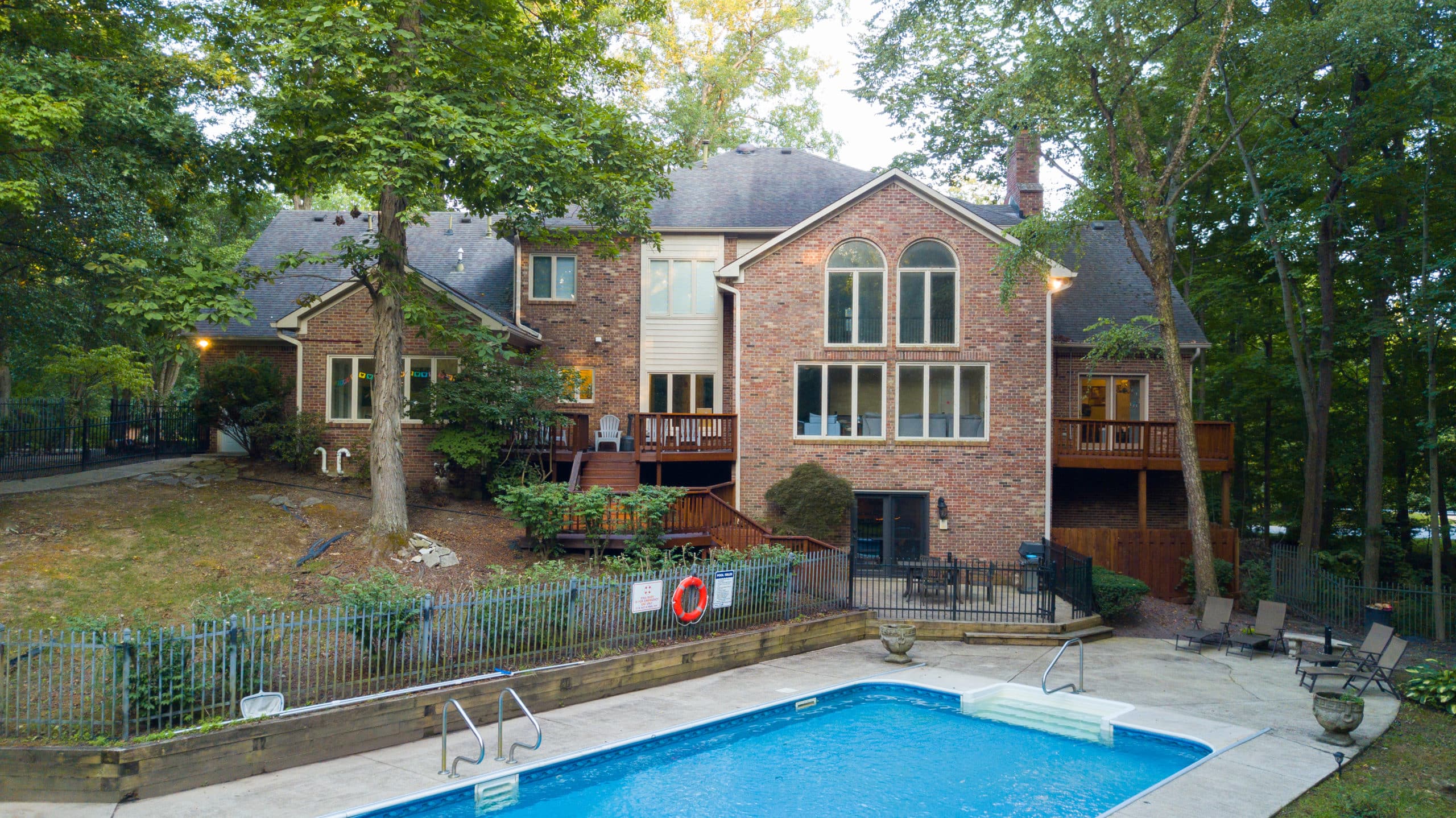
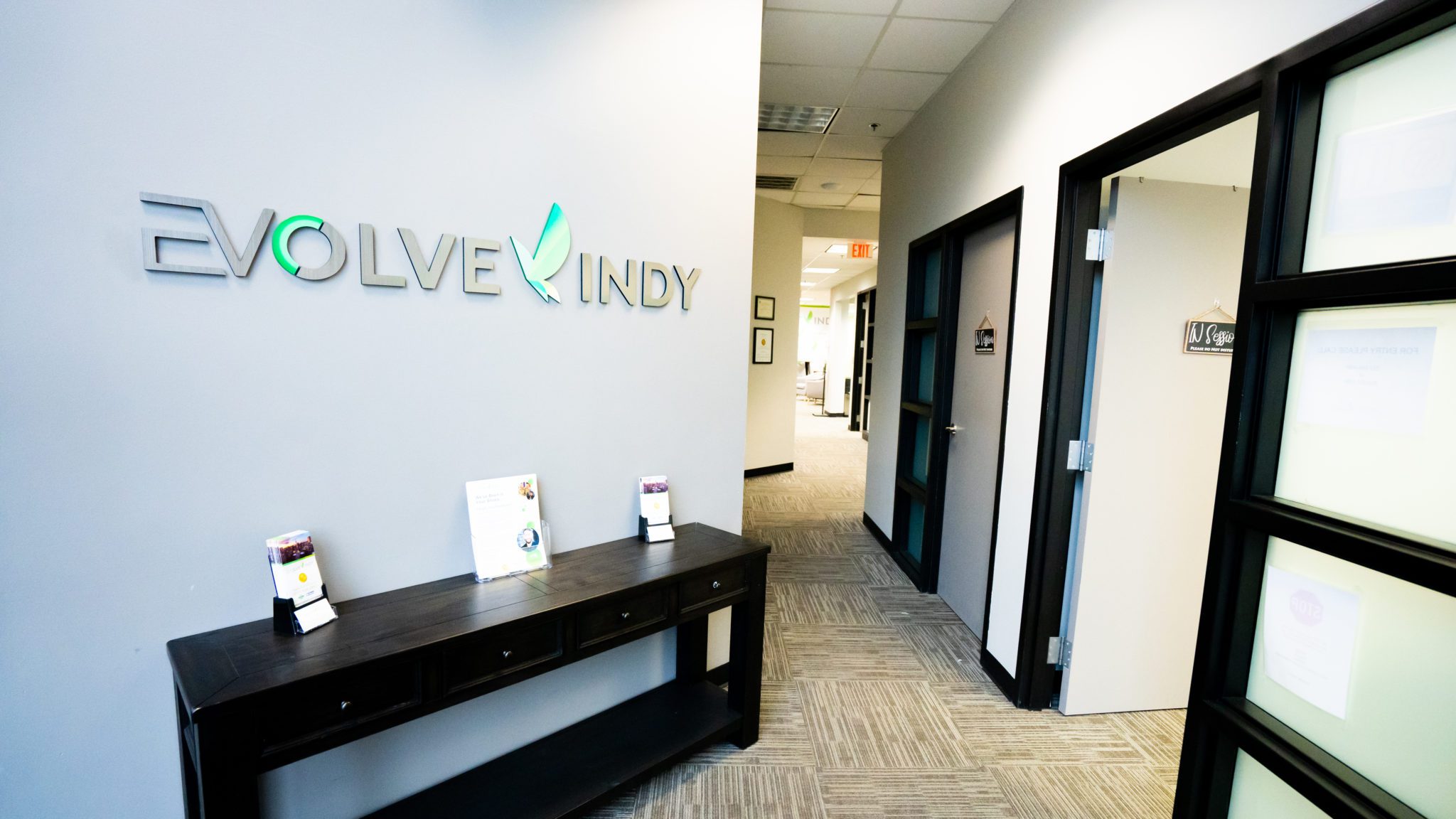
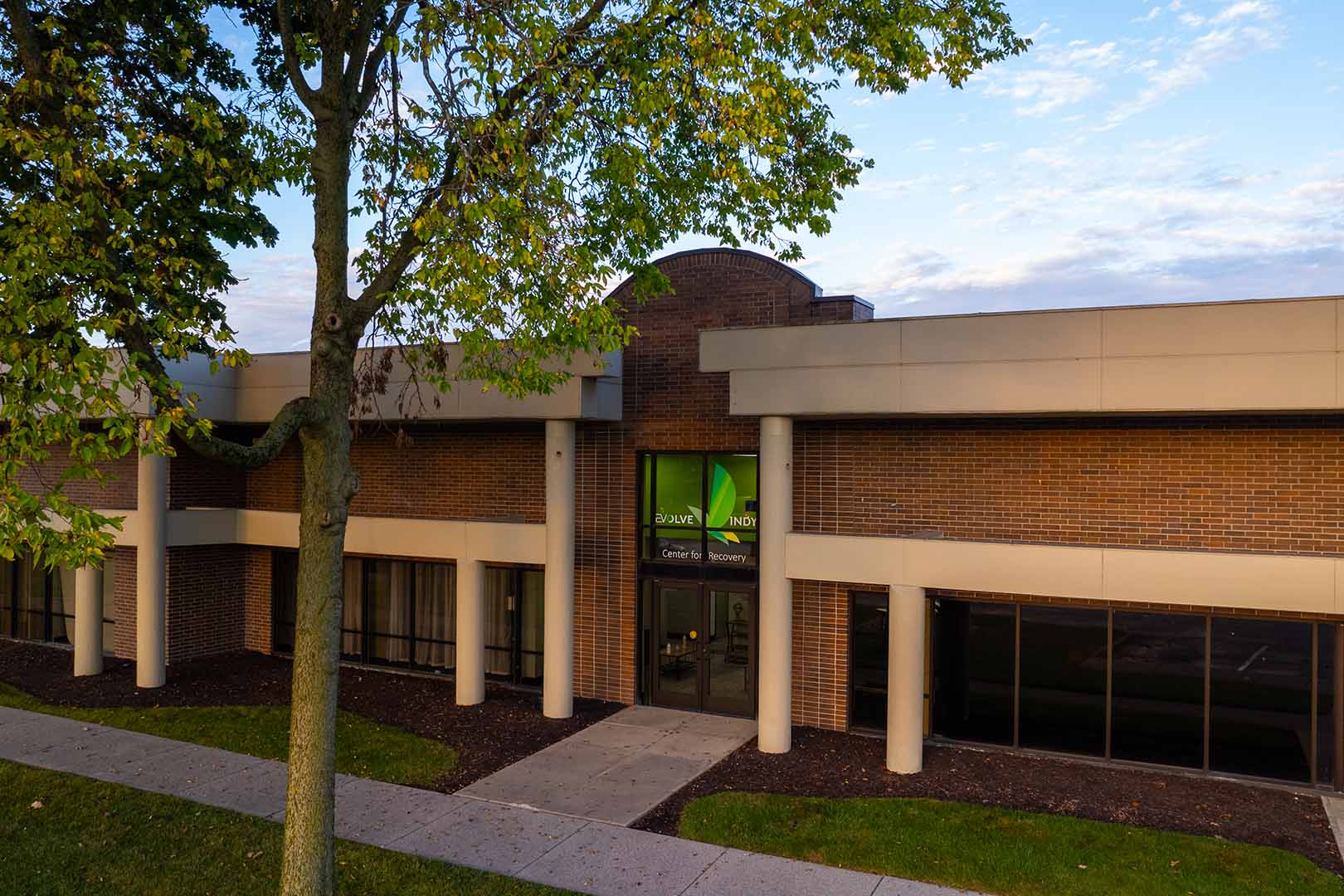
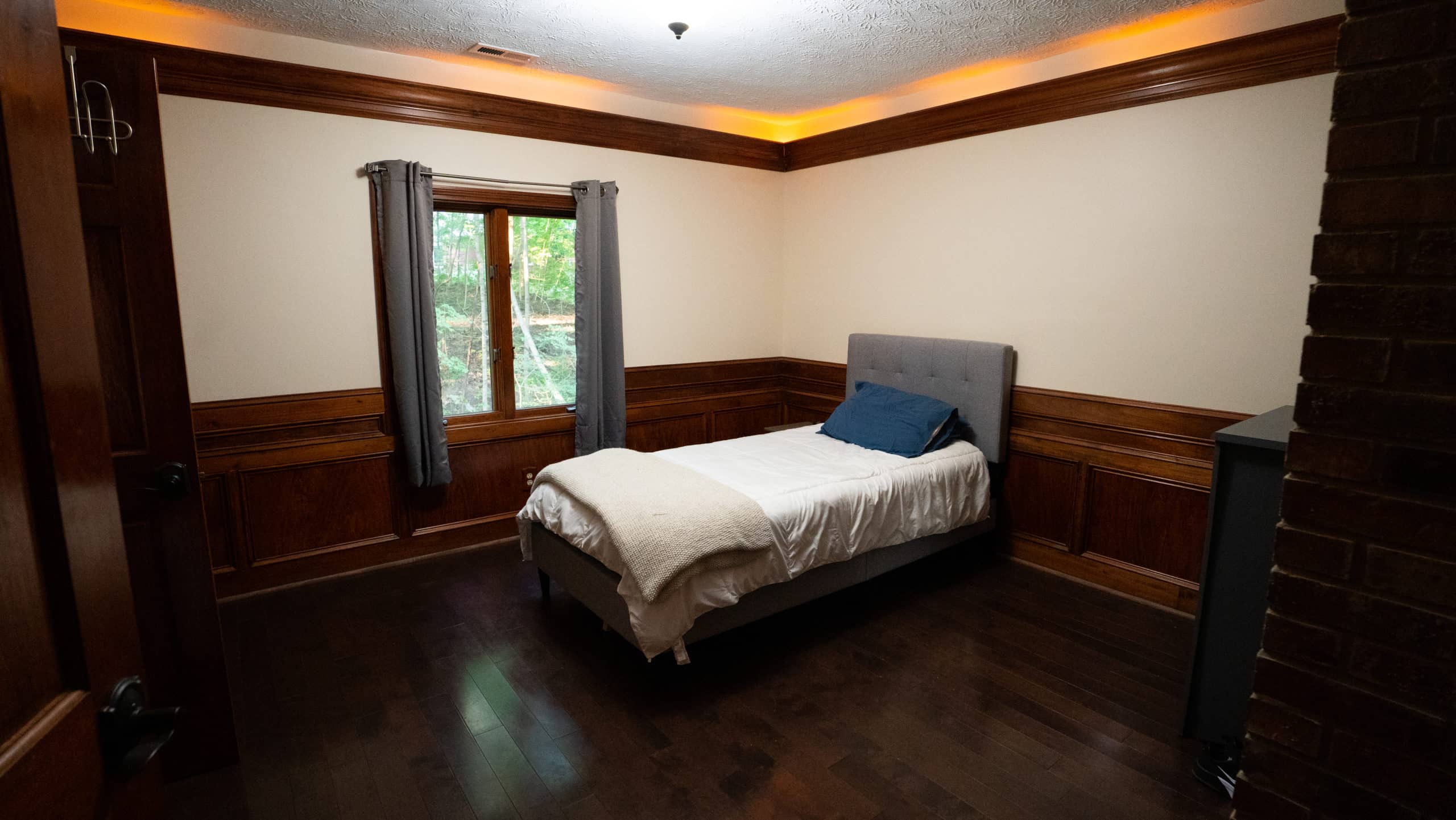
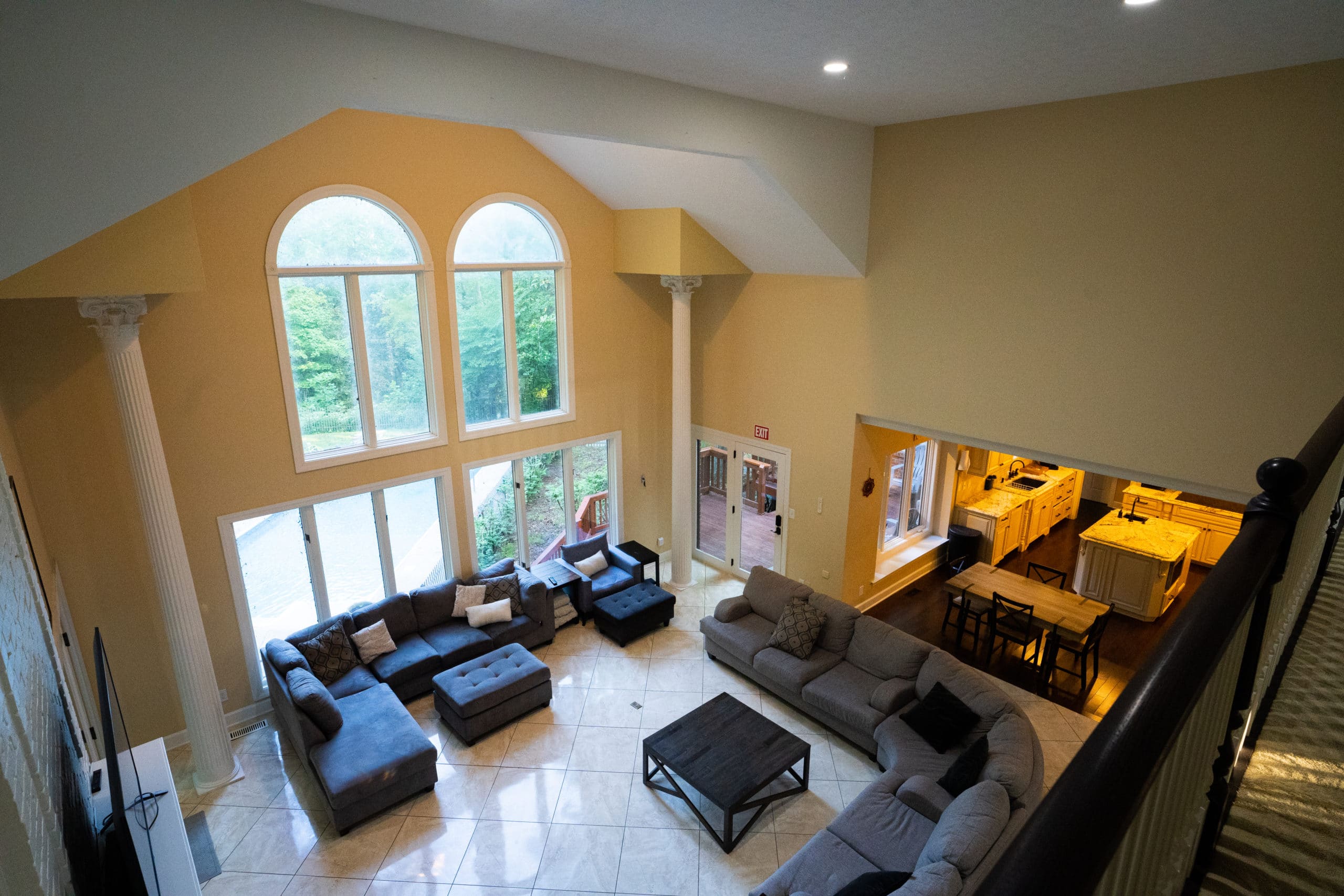
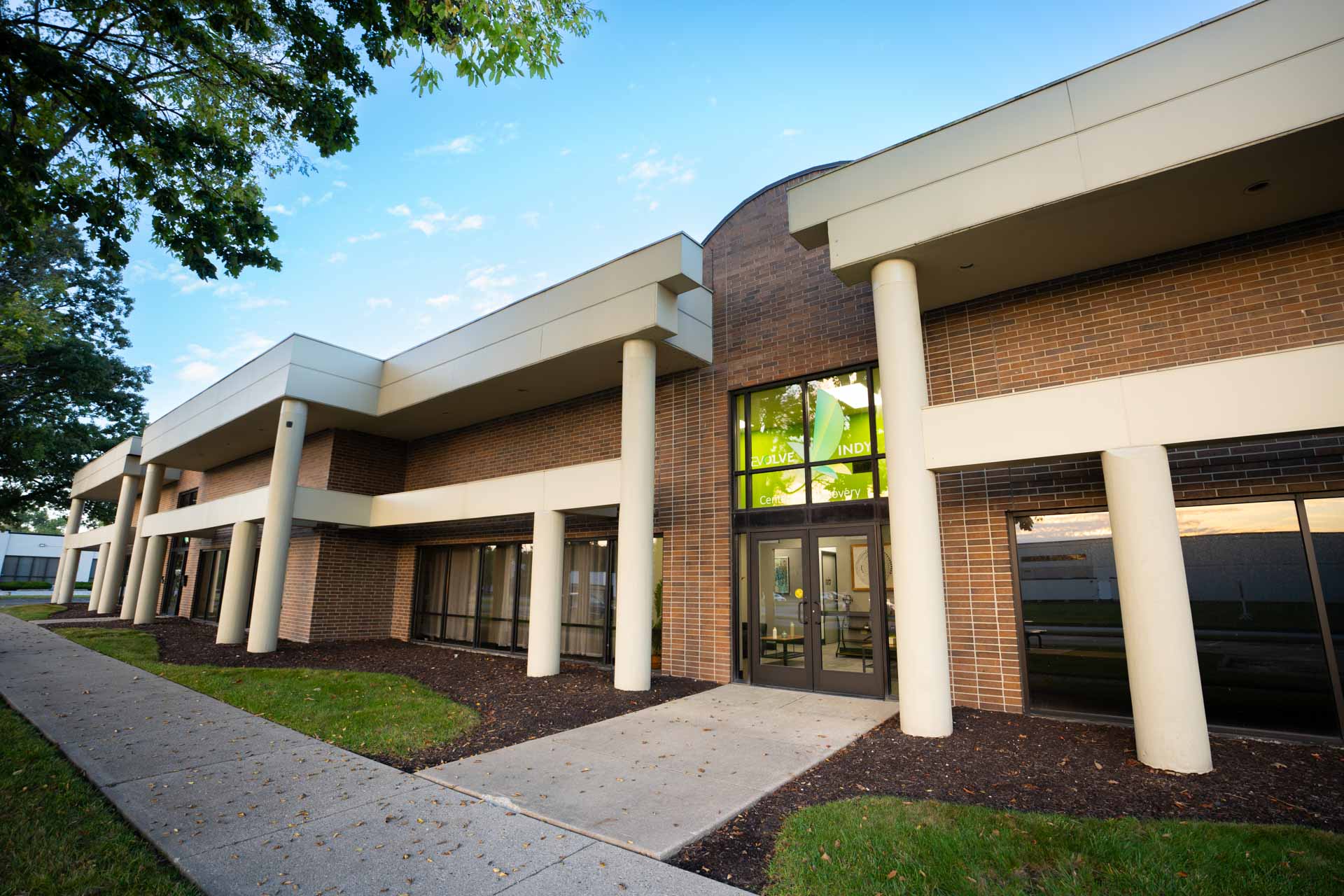
Evolve Indy is centrally located in Indianapolis, Indiana. Our residential compound was designed to help offer quality, evidence-based programming alongside modern amenities. Evolve Indy is a one-stop-shop for lasting addiction recovery.
OUR WORLD-CLASS AMENITIES INCLUDE:
Adventure Program
Semi-Private Rooms
Flat Screen TVs in Every Room
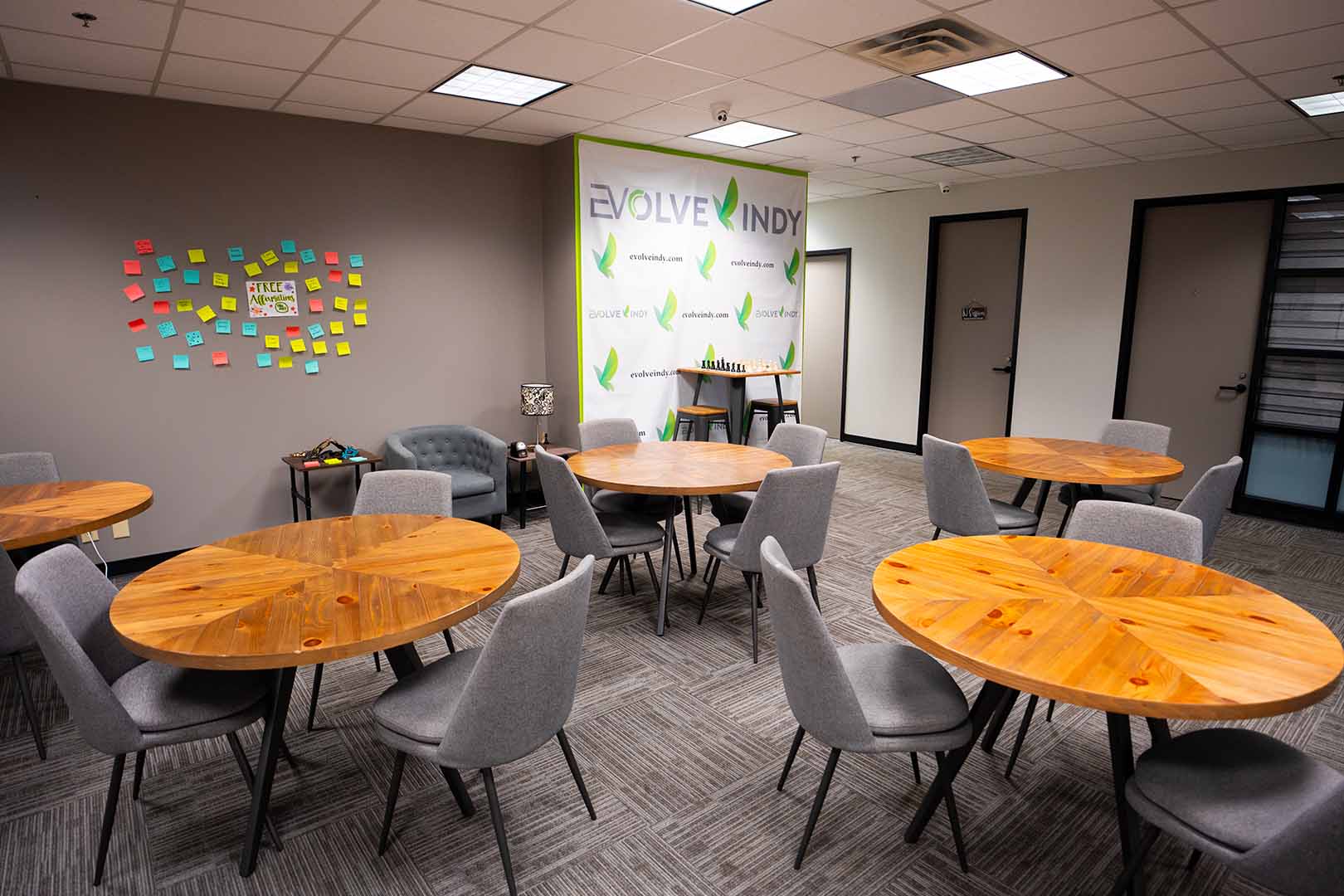
Client Lounge & Library
Catered Nutritious Meals
Wellness Activities
Who We Help With Drug & Alcohol Addiction
Our addiction treatment programs at Evolve Indy is designed for adults 18 and older who need flexible, accessible support while receiving high-quality treatment.
We help:
- People balancing work, school, or parenting
Those who need treatment that fits into a busy schedule. - Individuals in early or continuing recovery
Clients who benefit from ongoing therapy, structure, and accountability at home. - Those seeking privacy and comfort
- Clients transitioning from any level of care
- Individuals wanting evidence-based therapy
At Evolve Indy, our Indiana addiction treatment programs make it possible for adults across Indiana to receive compassionate, structured care.
Indiana Drug Addiction Treatment Center
Individualized & Customized Addiction Treatment Programs

Residential Treatment
Intensive Outpatient Program
Our intensive outpatient program aids individuals struggling with drug and alcohol addiction in discovering a lasting journey to recovery
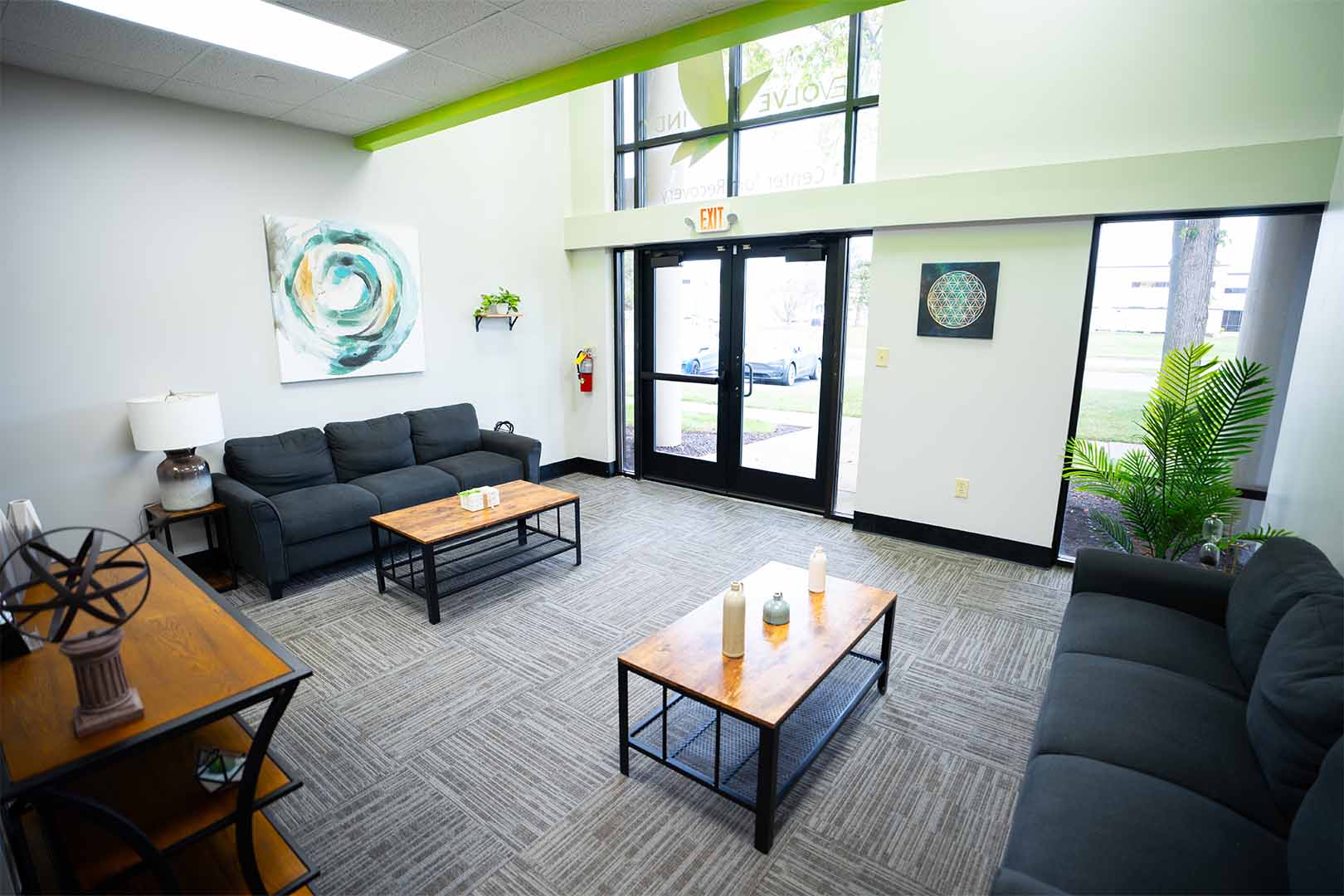
Outpatient Program
The outpatient program at Evolve Indy serves as a reduced intensity level of care, integrating the essential elements of our primary program with a more flexible approach.
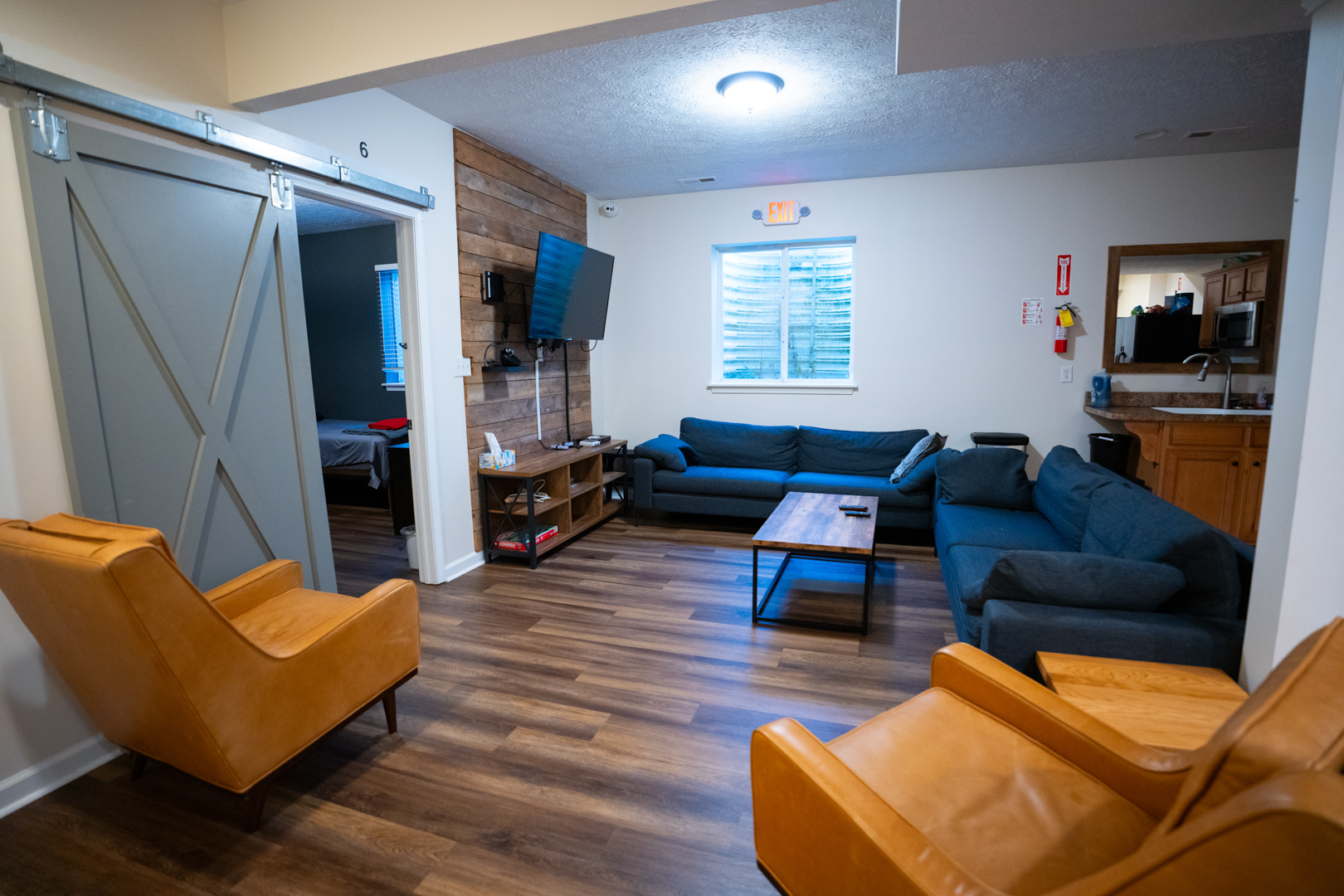
Family Therapy
Family therapy at a drug rehab can be a crucial step on the road to recovery. Not only can addiction take a toll on the individual struggling with substance abuse, but it can also affect their loved ones. By addressing these impacts together, families can rebuild trust and strengthen their relationships.
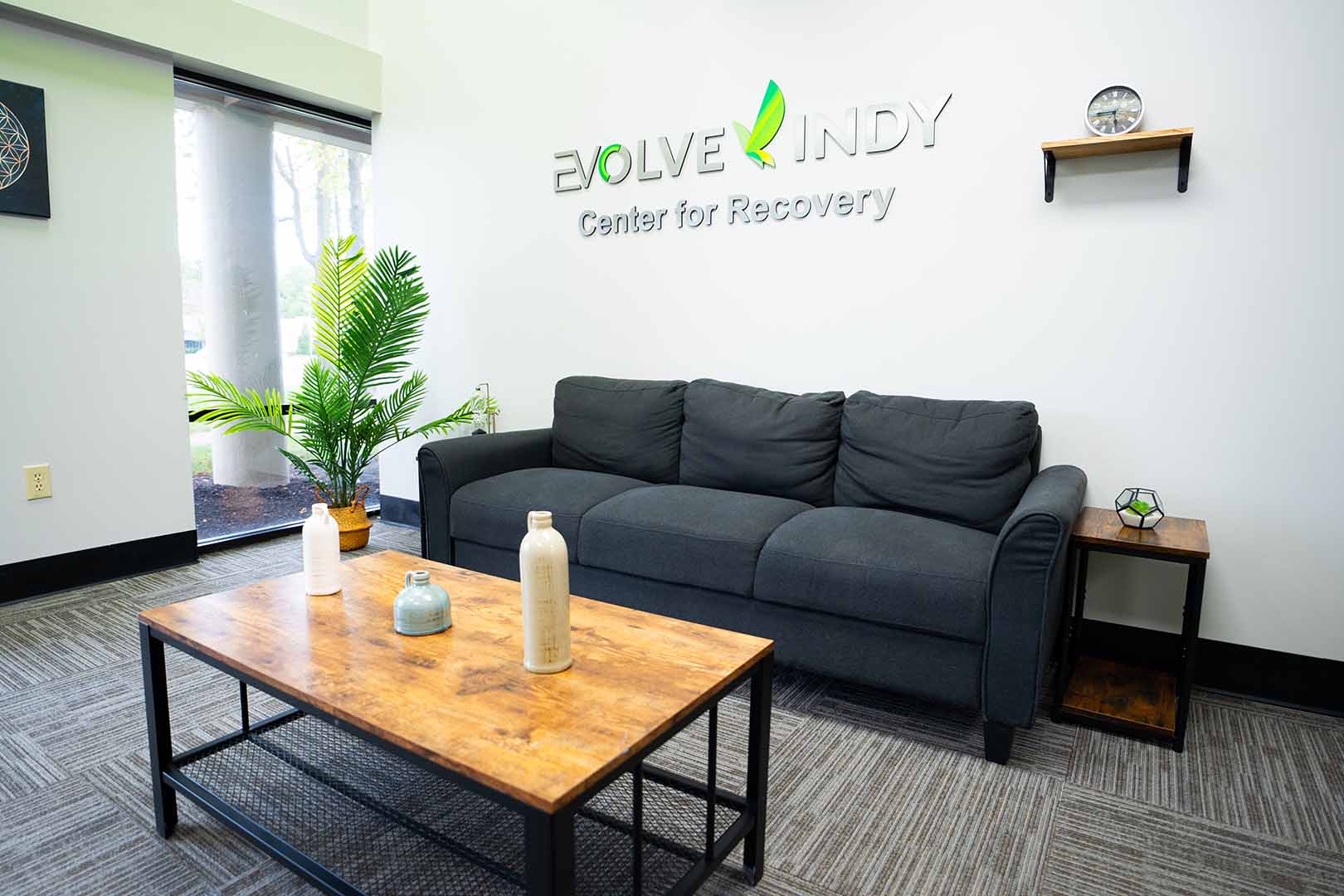
Mental Health Treatment
Although typically used to treat opioid addiction, our mental health program can also be beneficial for those struggling with alcohol or substance misuse. By incorporating this method, patients have a greater chance of regaining control of their lives and triumphing over addiction safely.
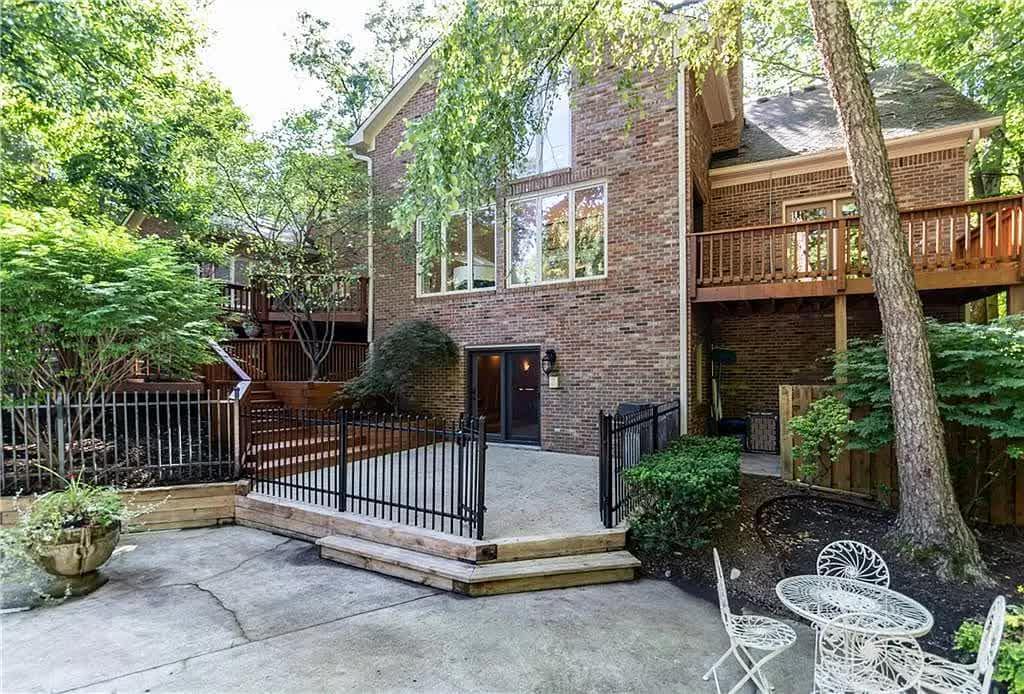
Adventure-Based Treament
Adventure-Based Addiction Treatment is a unique approach to rehab that has been gaining popularity in recent years. Providing a refreshing change of pace from traditional forms of treatment, this approach incorporates activities such as rock climbing, hiking, and rafting.
KNOWING THE SIGNS
Signs & Symptoms of Drug & Alcohol Abuse
How addiction looks will vary depending on the person and their substance of choice. While each drug or substance can cause unique signs of addiction, some common indicators appear across the board regardless of substance. Those typically include difficulties at school or work, physical appearance changes, altered behaviors, lack of energy, spending more or requesting to borrow money, changes in appetite or dramatic weight loss, bloodshot eyes, and a defensive tone when asked about substance use. Some of the more common signs of alcohol addiction include lack of control over how much one drinks, preferring to drink alone, continuing to drink despite adverse effects related to alcohol, mood swings, and other emotional disturbances. These are signs that you need addiction treatment in Indiana.
Insurance Can Help Pay for Drug & Alcohol Treatment
Evolve Indy works with most major insurance providers to ensure the lowest out-of-pocket
costs when you enter treatment at our facility.
Fill out the form to get a free consultation.
One of our caring treatment advisors will
contact you as soon as possible.
What We Treat At Evolve Indy, Indiana Drug Addiction Treatment Center
Individualized & Customized Drug Addiction Rehab Programs Offered
• Adderall Addiction Treatments
• Alcohol Addiction Treatments
• Benzodiazepine Addiction Treatments
• Cocaine Addiction Treatments
• Fentanyl Addiction Treatments
• Heroin Addiction Treatments
• Methamphetamine Addiction Treatments
• Opiod Addiction Treatments
• Oxycodone Addiction Treatments
• Percocet Addiction Treatments
• Xanax Addiction Treatments
Our Indiana Drug & Alcohol Treatment Facility
Our Indiana drug rehab center consists of partial hospitalization, intensive outpatient, outpatient, and family therapy options.
Partial Hospitalization Program (PHP)
Evolve Indy’s Partial Hospitalization Program (PHP) focuses on providing a stable and structured environment for clients who have recently attended detox or residential treatment. This stage in the continuum of care is focused primarily on assisting clients who may still be suffering from post-acute withdrawal symptoms to feel more comfortable so they can start dealing with the physical, emotional, and mental impacts of their addiction. Clients attend various individual and group therapy sessions designed to educate about addiction, understand the issues that contribute to addiction, and start to learn new skills essential to maintaining a sober life.
Intensive Outpatient Program (IOP)
Evolve Indy’s Indianapolis intensive outpatient program’s focus is on enhancing recovery and providing support for clients who have recently attended a PHP program or who are looking for support in their daily lives. This stage in the continuum of care is focused primarily on helping clients develop independently in the community, maintain and sustain mental health, and achieve long-term continuous sobriety after treatment.
Outpatient Addiction Treatment (OP)
Following through to the final step in addiction treatment is important to ensure long-term sobriety. Like our intensive outpatient program (IOP), our Indiana outpatient program (OP) encourages the freedom to resume daily life while progressing through addiction treatment.
Evolve Indy offers Addiction Treatment both with or without Community Housing.
Should you decide to reside in community housing, you will share a sober home with other peers who participate in our treatment program. Evolve Indy offers transportation daily to sites where clinical services are offered. Evolve also works alongside an affiliated Sober Living Community should you choose this course of treatment. Typically, while enrolled in our Outpatient Program, clients will attend one to three group sessions per week and meet with their primary therapist as often as once per week, based on individual needs. Therapy will address coping skills, relapse prevention skills, and addiction triggers. As with PHP and IOP, group therapy sessions are available six days per week to accommodate those who are employed or have other responsibilities. Outside of treatment, clients will be encouraged to maintain involvement with a 12-step fellowship and begin to develop and pursue independence.
Family Therapy & Program
The mission of family therapy in Indiana is to provide individuals and families with support and education on the disease of addiction, cross-addiction, and its impact on the family system. Our addiction and substance abuse family therapy program is designed to assess your family’s needs, educate you about chemical dependence, and offer ongoing family support during and/or after the patient’s substance abuse treatment.
The disease of addiction has significant physical, emotional, and social consequences for the individual seeking addiction treatment and for the family and significant others who have been impacted by the disease. The staff at our Indiana drug & alcohol rehab center views the family as an essential component of a patient’s ongoing recovery program and seeks to involve family members in the addiction treatment and recovery process.
Our Reviews
If you are in need of treatment and are seeking a way out of addiction, you should stop reading and call Evolve Indy. They will provide you with all the necessary tools to get you ready to become the best version of yourself all while staying in comfortable accommodations. The staff is top notch and the therapists are wonderful. Everyone will go out of their way to make sure you feel supported.
Evolve Indy is a true blessing.
• Dual Diagnosis Mental Health Treatments
• Depression Mental Health Treatments
• PTSD Mental Health Treatments
• Anxiety Mental Health Treatments
• Bipolar Disorder Mental Health Treatments
• Support Group For Mental Health Treatments
• Psychiatric Mental Health Treatments
• Suicidal Mental Health Treatments
• Schizophrenia Mental Health Treatments
• Psychosis Mental Health Treatments
• Cognitive Behavioral Therapy Mental Health Treatments
INNOVATION IN TREATMENT
Begin Today at Our Drug & Alcohol Addiction Treatment Center in Indiana
At Evolve Indy, we understand that each addiction and each individual requires unique treatment care. Addiction affects everyone differently, and therefore, individual treatment programs are necessary to ensure the highest chance of treatment success. Our treatment center offers a wide range of programs ranging from inpatient residential programs to outpatient treatment options ensuring there is a treatment option that can fit your treatment needs. Don’t let addiction steal another day. Choose recovery at Evolve Indy’s drug rehab in Indiana.